Treating equipment calibration as a tedious chore is a costly mistake. You should view it as a critical financial and compliance audit for your entire farming operation. Even minor nozzle wear or slight pressure discrepancies quickly lead to massive chemical waste. These hidden errors cause devastat
Purchasing an agriculture sprayer is a critical capital expenditure for any farming operation. The wrong equipment does not just waste your initial budget. It leads to continuous chemical over-application, severe crop burn, yield-destroying downtime, and environmental compliance risks.During the eva
The nozzle is the final, critical point of contact between expensive crop protection chemicals and the field. Even if you operate top-tier agriculture sprayer equipment, incorrect nozzle selection leads to drift liability, poor efficacy, and severe chemical waste. Relying on factory-default setups c
Strapping on a manual knapsack sprayer feels fine for a quick yard spot-treatment. However, as acreage grows, this portable tool rapidly becomes an exhausting bottleneck. Relying on wearable tanks for large-scale applications severely limits your daily productivity. This transition marks a crucial d
Purchasing application equipment is rarely just a basic farm transaction. It functions as a critical margin-protection investment for your entire agricultural business. Over-capitalizing on oversized machinery quickly kills your short-term cash flow. Conversely, under-sizing your equipment or buying
Pest control and disinfection are essential to safeguarding crop yields, environmental safety, and public health in agricultural production. Selecting the right agricultural pest control and disinfection equipment greatly improves efficiency, reduces safety risks, and lowers operational costs. This
Once spraying work grows beyond a small, portable routine, equipment format starts to matter as much as spray output.
One reason the Knapsack Sprayer remains so widely used is that it gives a single operator a practical way to spray efficiently without relying on large equipment.
A sprayer should make work easier, not turn a simple job into a tiring routine. That is why many buyers ask whether an Electric Sprayer is really worth the extra money.
Some spraying jobs are too large for a backpack unit but too scattered for a full-size field machine.
A sprayer can appear ready for work and still perform poorly once the job begins. Weak pressure, uneven output, leaks, or difficult movement usually do not come from nowhere.
Ever wondered how a wheelbarrow sprayer can make farming more efficient? On a farm, these versatile tools are not just for transporting materials—they're essential for irrigation and pest control.
Are you tired of spending too much time and resources on traditional spraying methods? It's time to consider the efficiency of trailer sprayers. In this article, we will explore how trailer sprayers enhance crop management, reduce costs, and increase sustainability.
Have you ever wondered how modern farmers spray chemicals efficiently over vast fields?The ATV Sprayer is the solution many rely on. In this article, we will explore how ATV sprayers work, their different types, and how to choose the right one for your farm.
Are you looking for a more efficient way to tackle your spraying tasks? Knapsack sprayers offer a portable, effective solution for various applications, from gardening to pest control.
Tired of bulky watering cans taking up too much space? Foldable watering cans are the perfect solution! These compact, portable tools combine functionality with space-saving design.
SeeSa manual sprayers are widely used in agricultural planting, gardening maintenance, home cleaning, public disinfection, and other scenarios, thanks to their advantages of no power supply, flexible operation, portability, and durability. They are indispensable practical tools for daily production
How to Choose the Right Pressure Sprayer for Home GardeningA pressure sprayer is a portable tool driven by pre-stored air pressure. Boasting core advantages like stable pressure, uniform misting, and effortless operation, it is widely used in home cleaning, gardening, small-scale agriculture, sanita
Suitable for Home, Gardening, Sanitation | Fix Water Output Issues EasilyHandheld Electric sprayers have become an essential tool for modern households, small businesses, and gardening enthusiasts thanks to their portability, labor-saving design, uniform atomization, and easy operation. However, man
| Availability: | |
|---|---|
| Quantity: | |
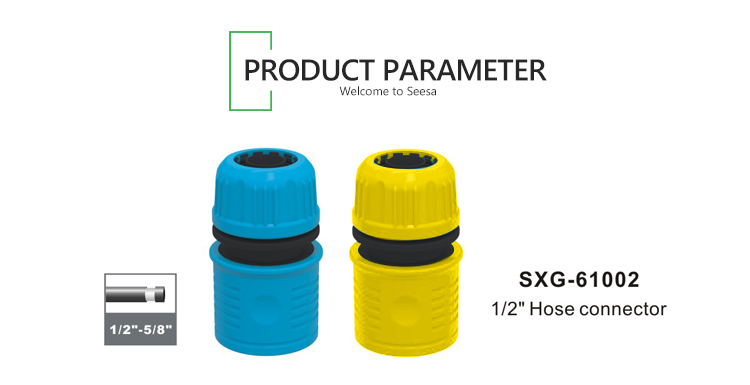
SXG-61002


Mixer Round Hose Tap Connectors are an excellent investment for any garden enthusiast or homeowner. They provide a practical, secure, and leak-proof solution for connecting your garden hose to a tap or faucet, ensuring that water flows smoothly and efficiently through your hose. Moreover, they are easy to use, durable, and versatile, making them a practical and cost-effective solution for your gardening needs.
If you have a hose, then you need a hose tap connector! This simple device screws onto the end of your hose and provides a quick and easy way to connect it to a water source. There are many different types and sizes of hose tap connectors available, so you can find one that is compatible with your particular hose. Some even come with built-in shut-off valves, so you can control the flow of water without having to go back to the faucet.
Hose tap connectors are an essential part of any gardening or lawn care routine. They make it easy to get water to where you need it, without having to lug around a heavy watering can or bucket. And, since they screw onto the end of your hose, they're always handy when you need them.
There are many advantages to using hose tap connectors, including their convenience and affordability. Hose tap connectors make it easy to connect hoses to taps, and they are relatively inexpensive. Additionally, hose tap connectors are available in a variety of sizes and styles to suit any need.
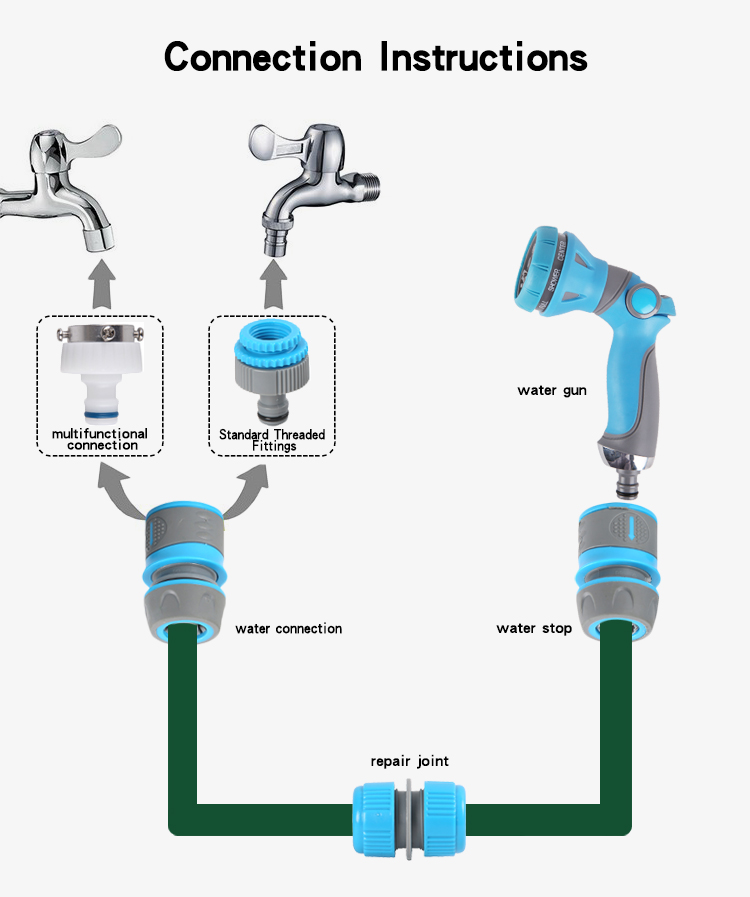
There are a number of different ways that you can use hose tap connectors. One way is to use them to connect two hoses together so that you can water two different areas at the same time. Another way to use them is to connect a hose to an outdoor faucet so that you can water your garden or wash your car without having to go inside. You can also use them to connect a hose to an indoor faucet so that you can fill up a bucket or watering can without having to carry it outside.
Most hose tap connectors have a standard size that will fit most taps. However, there are also some models that are designed to fit specific types of taps. To ensure that you get the right type of connector for your tap, it is important to check the specifications before making a purchase.
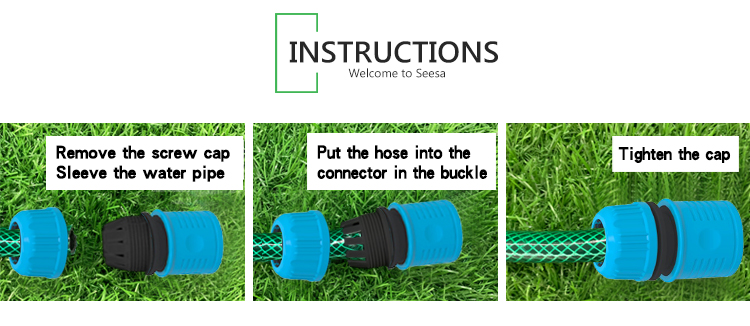
Once you have the correct hose tap connector, simply screw it onto the end of your hose. If your connector has a washer, make sure that this is in place before screwing it on. Once it is tight, open up the tap and turn on the water. You may need to wiggle the hose slightly to get a good seal.
Q: What are the different types of hose tap connectors?
A: Hose tap connectors come in a variety of materials, including plastic, metal, and rubber. They vary in shape and size, but all serve the same purpose: to connect a hose to a faucet or other water source.
Q: How do I choose the right hose tap connector for my needs?
A: Consider the material of your hose and faucet, as well as the size and shape of both. You'll also want to think about how often you'll be using the connector and whether you need a permanent or temporary connection.
Q: Can I use any type of hose tap connector with any type of hose or faucet?
A: No. Be sure to check compatibility before purchasing a connector. Different materials (such as metal and rubber) can corrode or damage each other, so it's important to make sure they're compatible. Additionally, some connectors are only designed for certain sizes and shapes of hoses and faucets.
Q: How do I install a hose tap connector?
A: The installation process will vary depending on the specific model of connector you have. However, most types simply screw on or clip onto the end of your hose or faucet. Consult your product's instructions for specific details.