Effective chemical application requires precise control over fluid dynamics. Minor deviations in equipment settings dictate whether active ingredients reach the target or become environmental liabilities. Operators frequently struggle with off-target drift, poor canopy penetration, and wasted chemical inputs. Inconsistent pressure, incorrect nozzle configurations, and a misunderstanding of droplet retention cause these issues.
Mastering the interplay between pressure settings, nozzle selection, and droplet size transforms a standard knapsack sprayer into a precision tool. This guide breaks down the technical evaluation of sprayer settings. You will learn how to maximize coverage, ensure uniform vertical distribution, and strictly mitigate drift potential.
Pressure Dictates Droplet Size: Increasing operating pressure decreases droplet diameter, which improves coverage density but exponentially increases the risk of off-target drift.
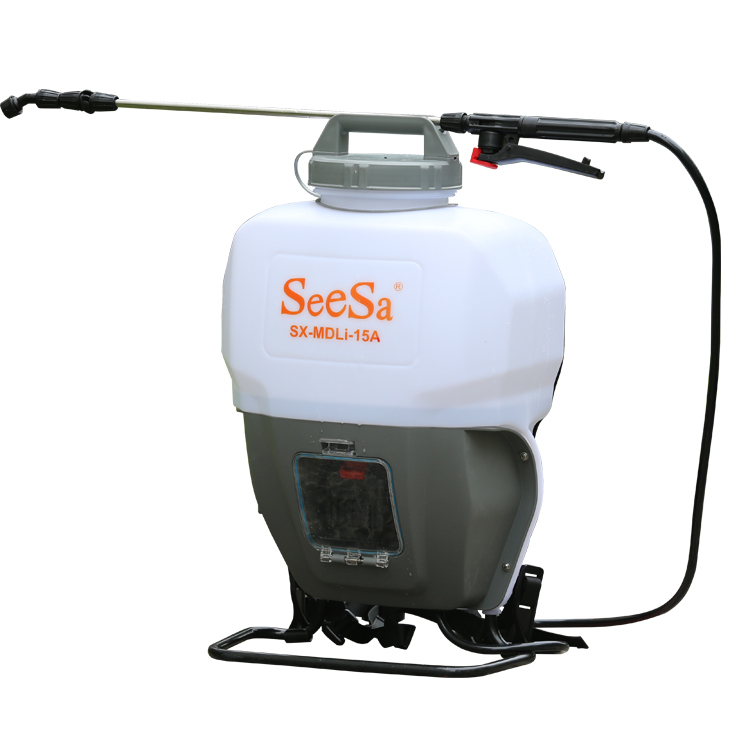
Electric Consistency is Critical: A knapsack electric pressure sprayer eliminates the pressure fluctuations inherent in manual pumping, ensuring uniform droplet generation and predictable application rates.
Nozzle Selection Overrides Pressure: Relying solely on pressure adjustments is inefficient; selecting the correct nozzle type (e.g., air-induction vs. standard flat fan) is the primary mechanism for decoupling droplet size from flow rate.
Environmental Constraints Dictate Settings: Optimal settings are dynamic; high temperatures, low humidity, and wind speeds above 10 mph require immediate shifts toward coarser droplet spectrums to maintain compliance and efficacy.
The Mechanics of Droplet Size in a Knapsack Sprayer
Operators must generate a specific droplet size spectrum to achieve desired biological efficacy. Herbicide uptake requires entirely different fluid dynamics than fungicide contact. Incorrect sizing dictates how much product ultimately reaches the target and stays there. Droplets that are too large lead to runoff, pouring expensive chemicals onto the soil. Droplets that are too small evaporate before impact or blow into neighboring fields. Precision application demands strict control over these variables.
The Inverse Relationship Between Pressure and Diameter
Fluid dynamics dictate a strict inverse relationship between pressure and droplet size. Liquid forced through an orifice at higher pressure shears into finer droplets. This mechanical action breaks the fluid sheet apart rapidly as it exits the nozzle tip. Increasing the pressure reduces the Volume Median Diameter (VMD) of the spray output.
VMD is a standard metric for operators in the field. It represents the droplet size where half the spray volume consists of larger droplets and half consists of smaller droplets. Halving the droplet diameter multiplies the total number of droplets by eight. This exponential increase drastically alters surface interaction. More droplets mean denser coverage across the leaf surface. However, it also exponentially increases drift potential. You must balance this trade-off carefully based on the specific chemical action required.
Operating Pressure (PSI)
Droplet Size Category
Primary Application Use
Drift Risk Level
15 - 20
Coarse / Very Coarse
Systemic Herbicides, Soil Applied Chemicals
Low
30 - 40
Medium
Contact Herbicides, General Insecticides
Moderate
50 - 60+
Fine / Very Fine
Contact Fungicides, Dense Canopy Penetration
High
Categorizing the Droplet Spectrum and Retention
The agricultural industry categorizes droplets into specific classifications based on the ASABE S572.1 standard. These include Fine, Medium, Coarse, and Very Coarse. Each category serves a distinct application purpose. You must map these classifications to your specific chemical requirements before mixing a tank.
Fine/Medium: Ideal for contact fungicides and insecticides. These chemicals require dense coverage across the entire leaf surface because they only protect the exact plant tissue they touch.
Coarse/Very Coarse: Necessary for systemic herbicides like glyphosate. These minimize drift and deliver concentrated active ingredients that the plant absorbs and translocates to the roots.
Droplet retention dynamics dictate application success. Excessively large droplets possess high kinetic energy. They strike the leaf surface with significant force. This energy causes them to shatter and bounce off. The chemical lands on the soil rather than adhering to the plant. Conversely, fine droplets lack the mass to penetrate dense canopies. They often drift away on minor air currents. Selecting the correct spectrum ensures the chemical stays exactly where you need it.
Why a Knapsack Electric Pressure Sprayer Outperforms Manual Models
Evaluating the mechanical delivery of pressure reveals stark differences in application consistency. Manual models rely entirely on human effort, which naturally fluctuates. Electric models utilize regulated power to maintain exact specifications. This distinction directly impacts droplet uniformity and chemical efficacy in the field.
Eliminating Pressure Spikes and Drops
Manual knapsack sprayers suffer from a primary mechanical flaw. The operator's pump cadence creates oscillating pressure. Each pump stroke spikes the pressure inside the pressure cylinder. The pause between strokes drops it. This uneven delivery results in a highly erratic droplet spectrum as you walk down the row.
During a pressure spike, the sprayer produces drift-prone fines. During a pressure drop, it produces heavy, runoff-prone coarse drops. This inconsistency wastes chemicals and damages non-target plants. A knapsack electric pressure sprayer solves this problem entirely. It utilizes a micro-diaphragm pump paired with a rheostat or pressure regulator. This system maintains a perfectly flat pressure curve. The VMD remains constant from the first trigger pull to the last, regardless of operator fatigue.
Battery-Powered Flow Regulation and Scalability
Electric models offer unmatched operational scalability. Operators can lock in a specific PSI setting using a dial or digital interface. This enables precise calibration. The output remains accurate regardless of how many acres you cover in a day. You apply the exact intended rate across the entire field without second-guessing your walking speed or pumping rhythm.
Upgrading to electric systems involves specific operational shifts. You must manage battery charging schedules and keep spare lithium-ion packs ready. However, the benefits far outweigh these minor logistical changes. You achieve significant chemical savings through optimized droplet delivery. You also drastically reduce liability from off-target drift. Consistent flow regulation is a non-negotiable requirement for professional application.
Balancing Coverage and Canopy Penetration
Configuring the sprayer correctly ensures chemicals reach the intended biological target. You must avoid excessive waste while maximizing efficacy. This requires evaluating target surface characteristics and adjusting application techniques accordingly.
Target Surface Characteristics and Droplet Behavior
Leaf morphology dictates the required droplet size for proper retention. Plant surfaces vary wildly in the field. Some leaves are waxy and repel water, causing large droplets to bead up and roll off. Others are hairy and trap droplets above the actual leaf epidermis. Many grow vertically, making them difficult to hit with a standard downward spray angle.
Fine droplets provide superior coverage on complex, hairy surfaces. They settle gently and adhere well. However, they lack mass. They possess very little kinetic energy. Therefore, they cannot penetrate dense crop canopies like mature soybeans or thick brush. They tend to deposit entirely on the upper canopy leaves. Coarser droplets have the momentum to push through the outer leaves. They reach the lower canopy and stems effectively, which is necessary for certain pests and diseases.
Achieving Vertical Coverage Uniformity
Vertical coverage uniformity remains a major challenge in manual application. Operators typically spray straight downward, missing the undersides of leaves. Pests like spider mites and whiteflies, as well as many fungal pathogens, thrive in these hidden areas. If you only coat the top of the leaf, the application fails.
Pairing an electric sprayer with specific wand techniques solves this. Maintain a consistent sweeping motion. Optimize your angle of attack. Point the wand slightly upward when moving through tall crops. Use twin-jet nozzles for complex canopies. These nozzles spray two angled flat fans simultaneously. One points 30 degrees forward, the other 30 degrees backward. This ensures the undersides of leaves and vertical stalks receive uniform chemical distribution as you walk past the plant.
Optimizing Carrier Volume vs. Droplet Size
Operators must adjust carrier volume in tandem with droplet size. Carrier volume is typically measured in gallons per acre (GPA) or gallons per 1000 square feet. You must maintain adequate droplet hits per square centimeter for the chemical to work. If you switch to a coarse nozzle to reduce drift, you produce fewer total droplets. To maintain coverage, you must increase the total water volume.
A common misconception plagues the industry. Many operators believe higher pressure is the best way to increase canopy penetration. This is false. High pressure simply creates finer droplets that drift away or evaporate before reaching the lower canopy. Instead, advocate for higher carrier volumes. Use a coarser nozzle and apply more water per acre. Combine this with appropriate nozzle angles. This framework guarantees deep canopy penetration without increasing drift potential.
Mitigating Spray Drift: Equipment and Environmental Controls
Drift is a primary source of regulatory fines. It causes neighbor disputes and wastes expensive products. Controlling drift is a non-negotiable success criterion for any spray operation. You must implement strict equipment and environmental controls before opening the wand valve.
Distinguishing Particle Drift vs. Vapor Drift
Operators must understand the critical difference between drift types. Particle drift is the physical movement of spray droplets off-target during application. Wind catches small droplets and blows them away from the intended swath. You directly control particle drift through sprayer settings, nozzle selection, and boom height.
Vapor drift is entirely different. It is the volatilization of the chemical into a gas after application. The liquid turns into a vapor and moves off-site, sometimes hours or days later. Sprayer settings cannot stop vapor drift. Operators must select low-volatility formulations to prevent this. Avoid applying highly volatile chemicals like certain ester formulations of 2,4-D during high temperatures.
Equipment-Level Drift Mitigation Strategies
Advanced equipment choices provide robust drift mitigation. Air-induction (venturi) nozzles are highly effective. They draw air into the fluid stream inside the nozzle body through small side holes. This creates larger, air-filled droplets. These droplets are heavy enough to resist wind drift. Upon impact with the leaf, they shatter into finer droplets. This offers coarse droplet drift control combined with fine droplet coverage.
Advanced nozzle selection allows operators to alter droplet size without changing spray pressure. This decouples the two variables for maximum control. You can maintain a specific flow rate while drastically reducing drift.
Drift Retardant Adjuvants: These tank additives alter fluid viscosity. They bind small particles together, reducing the number of fine droplets produced by the nozzle without changing the operating pressure.
Physical Drift Guards: Attach plastic hoods or cones to the wand end. These physically block wind from interacting with the spray pattern, allowing you to spray closer to sensitive borders.
Low-Drift Flat Fans: Utilize pre-orifice designs to drop internal pressure right before the exit orifice, creating larger drops at standard operating pressures.
Environmental Thresholds and Compliance
Micro-climates severely impact application safety. Temperature inversions trap fine droplets near the ground. During an inversion, cold air is trapped under warm air, preventing vertical mixing. Spray particles hang in the air and move unpredictably over long distances. Relative humidity affects evaporation. Low humidity causes fine droplets to evaporate into driftable aerosols mid-air. Wind velocity physically pushes droplets off course.
Operators must establish a go/no-go decision matrix based on real-time environmental data. Never rely on guesswork. Use handheld weather meters to verify conditions at the exact application site.
Environmental Factor
Safe Operating Range
Action Required / No-Go Threshold
Wind Speed
3 to 9 mph
Stop spraying above 10 mph. Shift to coarser nozzles at 8 mph.
Below 40%, increase droplet size to prevent rapid mid-air evaporation.
Temperature Inversion
None present
Absolute No-Go. Never spray during clear, still evenings/early mornings with ground fog.
Implementation Risks and Calibration Framework
The best electric sprayer is useless if improperly calibrated. Poor maintenance ruins application accuracy. You must implement strict calibration frameworks to ensure biological efficacy and environmental safety. Applying too much chemical burns crops and wastes money. Applying too little fails to control the target pest.
Step-by-Step Pressure and Flow Rate Calibration
Accurate calibration matches sprayer output to walking speed. The 1/128th acre method is the industry standard for manual and backpack operations. It simplifies the math required to determine gallons per acre because there are 128 fluid ounces in a gallon.
Measure a test area based on your wand swath width. If your swath is 18 inches, measure a course of 227 feet.
Record the exact time it takes to walk this course at a normal, sustainable working pace. Do this in the actual field conditions, not on pavement.
Set your electric sprayer to the desired operating pressure.
Spray water into a measuring jug for the exact time recorded in step two.
Measure the collected water in fluid ounces. The number of ounces collected equals your application rate in gallons per acre. If you collect 15 ounces, your rate is 15 GPA.
Always verify the actual output against the manufacturer's nozzle chart. If your collected ounces do not match the chart for your selected pressure, your nozzle is likely worn and needs replacement.
Maintenance Factors Influencing Droplet Integrity
Equipment wear directly degrades droplet integrity. Polymer and brass nozzles wear out quickly under high use. Abrasive chemical formulations, like wettable powders, accelerate this process. Orifice degradation increases the flow rate. It also skews the droplet spectrum toward larger, uneven sizes. Inspect nozzles regularly for asymmetrical spray patterns or heavy streaks.
Implement a strict preventative maintenance schedule. Clean inline filters and nozzle screens daily using a soft brush, never a wire or pin. Clogged screens cause pressure drops and uneven flow. Inspect pump diaphragms monthly for signs of fatigue or chemical degradation. Replace worn O-rings in the wand assembly to prevent air leaks and cavitation. Proper maintenance guarantees your equipment performs exactly as calibrated.
Conclusion
Audit your current nozzle inventory and discard any brass or polymer tips showing visible wear or asymmetrical patterns.
Invest in a high-quality calibration jug and a handheld anemometer to measure wind speed accurately on-site.
Transition to a regulated electric sprayer system to standardize your application protocols and eliminate pressure fluctuations.
Establish a mandatory pre-spray environmental checklist for all operators to prevent drift incidents.
FAQ
Q: How does pressure affect droplet size in a knapsack sprayer?
A: Increasing pressure forces liquid through the nozzle orifice faster, shearing the fluid into smaller droplets. Decreasing pressure produces larger, heavier droplets. High pressure improves coverage but increases drift risk.
Q: What is the difference between particle drift and vapor drift?
A: Particle drift is the physical blowing of liquid droplets off-target during spraying, which can be controlled by lowering pressure or using coarser nozzles. Vapor drift occurs when a chemical evaporates into a gas after application and moves off-site, which is dictated by temperature and chemical formulation, not sprayer settings.
Q: What is the best droplet size for herbicide application?
A: Coarse to extremely coarse droplets are ideal for systemic herbicides to minimize off-target drift, while still providing sufficient coverage for leaf absorption without bouncing off the target surface.
Q: Why is my knapsack electric pressure sprayer producing too much mist?
A: Excessive misting is typically caused by operating at a pressure setting too high for the selected nozzle, or using a worn nozzle with a degraded orifice that fails to regulate the fluid sheet properly.
Q: Can I change droplet size without changing the pressure?
A: Yes, the most effective way to change droplet size without altering flow rate or pressure is to switch to a different nozzle type, such as an air-induction nozzle, which mechanically alters the droplet spectrum.
Q: How do temperature and humidity impact spray drift?
A: High temperatures and low humidity cause smaller droplets to evaporate rapidly mid-air, turning them into highly driftable aerosol particles before they reach the target.
Q: How often should I calibrate my knapsack sprayer?
A: Calibration should be performed at the start of every season, whenever switching nozzles, or changing chemical formulations to ensure precise application rates.
Shixia Holding Co., Ltd. was establishes in 1978, that has more than 1,300 employees and more than 500 sets of various injection molding machines, blow molding machines and other advanced equipment.