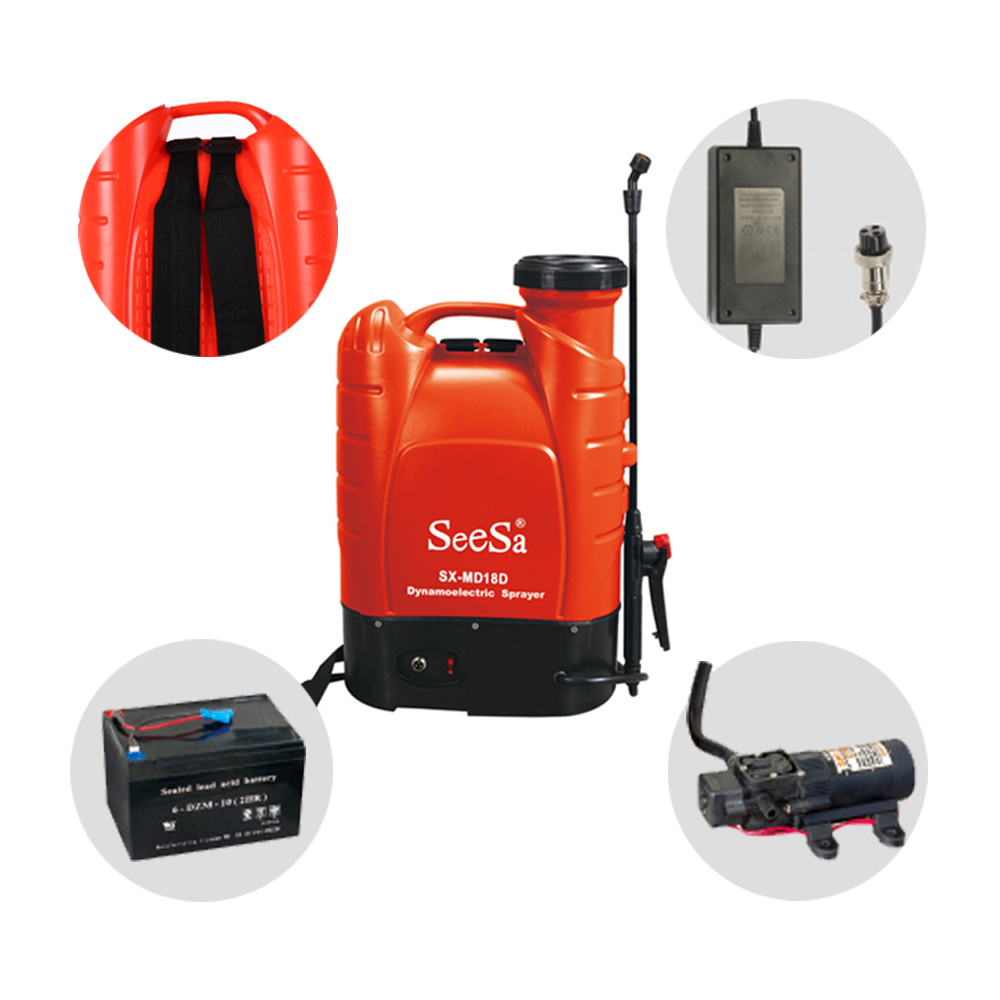
Chemical application presents a fundamental physical conflict. You need droplets small enough to ensure uniform surface coverage, yet large enough to resist wind drift and evaporation. Striking this balance dictates the success or failure of any spraying operation. When droplets are too fine, they drift off-target. This compounding operational problem results in wasted herbicides, regulatory compliance failures, collateral damage to non-target crops, and the severe risk of under-dosing the intended target due to poor coverage.
Resolving this dilemma requires moving away from inconsistent manual equipment. The specific mechanical advantages of a knapsack electric pressure sprayer—namely, consistent PSI output and precise flow control—serve as the primary vehicle for mastering the drift-versus-coverage trade-off. By pairing reliable battery-powered pressure delivery with correct calibration, hardware upgrades, and disciplined application techniques, operators maximize chemical efficacy while keeping every drop exactly where it belongs.
Key Takeaways
Consistent Pressure is Critical: Unlike manual pump sprayers, a knapsack electric pressure sprayer maintains a flat pressure curve, preventing the pressure spikes that create drift-prone fine droplets.
Nozzle Selection Dictates Droplet Size: Upgrading to air-induction or specific coarse-droplet nozzles (e.g., 110-degree wide angle) is the highest-ROI hardware change for drift reduction.
Volume Over Pressure: Increasing carrier volume rather than increasing pump pressure ensures dense target coverage without atomizing the chemical into volatile mists.
Physical and Chemical Safeguards: Utilizing spray shields and drift-reducing adjuvants provides an extra layer of protection without compromising the spray pattern.
Environmental Discipline: Restricting application to specific environmental windows (low wind, high humidity, low temperature) remains a non-negotiable baseline for drift mitigation.
The Drift vs. Coverage Trade-off in Backpack Spraying
Defining Success Criteria for Chemical Application
A successful spray operation relies on hitting strict baseline metrics in the field. You must achieve optimal droplets per square inch (DPSI) to guarantee the active ingredient covers the plant tissue adequately. Contact herbicides typically require 60 to 70 DPSI to burn down weeds effectively. Systemic herbicides, which absorb into the plant vascular system, only need 20 to 30 DPSI. Simultaneously, you must maintain minimal off-target movement to protect surrounding vegetation and water sources. Efficient use of tank volume ensures you cover the maximum area without constantly stopping to refill. Balancing these criteria requires precise control over how the liquid exits the wand.
The Physics of Droplet Size
Understanding the inverse relationship between droplet size and drift potential is mandatory for field operators. Droplet size is measured in microns (µm). Fine droplets provide excellent, dense coverage across leaf surfaces but lack the mass to fall quickly. These lightweight particles are highly susceptible to wind currents and thermal inversions, easily drifting hundreds of feet away from the application site.
Coarse droplets possess enough mass to drop straight down, heavily resisting wind drift. The drawback of excessively coarse droplets is poor surface retention. Large, heavy drops often hit the plant and immediately roll off into the soil, leaving massive coverage gaps on the leaf surface. The goal is to generate a medium-to-coarse droplet spectrum that balances adequate weight for drift resistance with enough dispersion for thorough coverage.
Droplet Category
Micron Range (µm)
Drift Potential
Ideal Application Scenario
Fine
100 - 200
Very High
Indoor greenhouse, zero wind conditions
Medium
200 - 300
Moderate
Contact herbicides, calm weather days
Coarse
300 - 400
Low
Systemic herbicides, standard field use
Very Coarse
> 400
Very Low
Soil-applied pre-emergents, liquid fertilizers
Why Electric Sprayers Offer a Unique Advantage
Manual pump sprayers inherently suffer from human-induced pressure variations. As the operator pumps the handle, pressure spikes inside the chamber. These sudden surges in PSI force liquid through the nozzle at high velocities, instantly atomizing the mixture into volatile, drift-prone fines. As the operator tires and pumping slows, pressure drops, resulting in heavy, ineffective streams.
A knapsack sprayer powered by a battery eliminates this human error. Battery-powered diaphragm or piston pumps allow operators to lock in the exact lower-end pressure required to maintain coarse droplets. The pressure curve remains completely flat from a full tank down to empty. This mechanical consistency means the droplet spectrum remains uniform, allowing the operator to focus entirely on wand height and walking speed rather than fighting the equipment.
Hardware Optimization: Configuring Your Knapsack Sprayer
Selecting the Right Nozzle for Coarser Droplets
The nozzle is the final point of control before the chemical hits the environment. Standard flat fan nozzles often produce a high percentage of driftable fines, especially if the pressure creeps up. Upgrading your nozzle technology is the most effective hardware change you can make to protect your application.
Air-induction nozzles, also known as Venturi nozzles, represent a massive leap in drift control. These nozzles feature a small hole on the side of the casing. As fluid rushes past, it draws ambient air into the chamber, mixing it with the chemical. This creates larger, heavier droplets filled with tiny air bubbles. Because they are heavy, they fall quickly through the wind. Upon impacting the leaf surface, the air bubbles shatter the droplet into smaller pieces, offering the drift resistance of a coarse drop during flight and the coverage of a fine drop upon impact.
Spray angle also plays a major role in drift reduction. Utilizing 110-degree wide-angle nozzles allows the operator to significantly lower the wand height while maintaining the exact same spray swath as an 80-degree nozzle held higher up. Lowering the release point directly reduces the time the droplet spends in the air, drastically cutting drift exposure.
Modern electric backpacks feature variable pressure dials or rheostats. Utilizing this dial correctly is just as important as selecting the right nozzle. The universal rule of thumb for drift mitigation is to operate at the lowest possible pressure that still maintains a uniform, fully formed spray pattern for your selected nozzle.
If the pressure is too low, the spray pattern collapses, causing heavy edges and poor center coverage. If the pressure is too high, the liquid atomizes into a mist. Start at the lowest setting and slowly increase the dial until the fan pattern visually connects without spitting. Locking the rheostat at this exact point ensures maximum droplet size. Running the pump at lower pressures also significantly extends battery life and reduces internal wear on the pump seals.
Wand Height Management and Physical Shields
The geometry of drift is unforgiving. Doubling the release height of the spray wand does not just double the drift distance; it exponentially increases the distance droplets travel downwind. Keeping the wand close to the target is mandatory for safe application.
Operators should maintain a wand height of 18 to 24 inches above the target canopy. Maintaining this height ergonomically during long shifts requires practice and a properly adjusted backpack harness to prevent lower back fatigue. Integrating physical spray shrouds provides an immediate mechanical advantage. Adding hooded cones or wand shields to the end of the lance blocks ambient wind from hitting the spray pattern as it exits the nozzle.
Select a 110-degree air-induction nozzle for a wide, low spray pattern.
Attach the nozzle cap and ensure the fan aligns parallel to the ground.
Slide the physical spray shroud over the wand assembly.
Secure the shroud exactly one inch above the nozzle tip to prevent spray interference.
Adjust the backpack harness so your arm rests naturally at an 18-inch wand height.
Application Techniques to Maximize Surface Coverage
Calibrating Walking Speed and Output
Maintaining a constant travel speed interacts directly with the fixed output of an electric pump to guarantee uniform application rates. If you slow down, you over-apply. If you speed up, you under-apply. Because the electric pump delivers a steady flow, your walking pace is the only variable altering the coverage rate.
Executing a practical calibration method ensures you deliver the exact label rate before mixing active chemicals. The 1/128th acre method is highly effective for backpack sprayers. This method translates fluid ounces collected directly into gallons per acre (GPA).
Measure a test area of exactly 340 square feet (e.g., 10 feet by 34 feet) on dry pavement.
Fill the tank with exactly one gallon of clean water.
Set your operating pressure and walk the test area at your normal field pace using a steady sweeping motion.
Record the exact time in seconds it takes to cover the 340 square feet.
Spray into a graduated measuring cup for that exact number of seconds.
Read the fluid ounces collected; this number equals your application rate in GPA.
During application, utilize a steady, rhythmic wand sweeping motion. Maintain a calculated overlap of 30 to 50 percent on each pass. This overlapping technique prevents striping, ensures dense coverage, and eliminates missed zones across the turf or field.
Adjusting Carrier Volume and Application Rates
A common field mistake is cranking up the pump pressure to force more chemical into a dense canopy. High pressure simply creates mist, which blows away before penetrating the foliage. You waste chemical and endanger surrounding plants.
Instead of increasing pressure, increase the carrier volume. Swap to a nozzle with a larger orifice and mix your active ingredient with a higher volume of water. This approach delivers more total liquid mass to the plant surface, carrying the active ingredient deep into the canopy without generating drift-prone fines. High-volume, low-pressure applications always yield better coverage in dense brush than low-volume, high-pressure misting.
Incorporating Drift-Control Adjuvants
When mechanical adjustments reach their limit, chemical safeguards take over. Incorporating drift-control adjuvants into the tank mix alters the physical properties of the liquid itself. These products are highly effective for sensitive boundary spraying.
Chemical thickeners and polymer-based adjuvants increase the viscosity and cohesion of the droplets. By binding the liquid molecules tighter together, these additives effectively reduce the percentage of fine droplets produced at the nozzle. The spray pattern remains intact, but the misting effect is suppressed. Always add adjuvants to the tank last to prevent excessive foaming during the agitation process.
Environmental Factors and Timing (Risk Mitigation)
Wind Speed and Micro-climates
No amount of hardware optimization can overcome severe weather. Establishing hard operational limits for wind speed is a non-negotiable baseline. Applications should generally be restricted to wind speeds between 3 and 10 mph. Dead calm conditions can actually be dangerous due to the risk of thermal inversions, while winds over 10 mph guarantee off-target movement.
Wind Speed (mph)
Visual Indicator
Spraying Recommendation
0 - 2
Smoke rises vertically
Do not spray (High inversion risk)
3 - 5
Leaves rustle slightly
Ideal spraying conditions
6 - 9
Leaves and twigs in constant motion
Proceed with caution, use physical shields
10+
Small branches move
Stop spraying immediately
Operators must read localized field conditions. Utilize natural windbreaks like tree lines, structures, or hillsides to shield the application zone. Always adjust your walking direction relative to wind currents, ensuring you are walking crosswind and keeping the wand downwind of your body to prevent walking through the spray cloud.
Temperature and Evaporation Risks
High temperatures and low humidity create a hostile environment for spray droplets. As a droplet travels from the nozzle to the plant, dry, hot air causes the water to evaporate mid-flight. The droplet rapidly loses mass, shrinking from a coarse drop into a driftable fine before it even hits the target. Field operators monitor Delta T (the difference between wet bulb and dry bulb temperatures) to gauge this evaporation risk.
To combat evaporation, schedule applications for early morning or late afternoon. These windows capitalize on higher ambient humidity and lower temperatures, preserving droplet size. However, operators must remain vigilant for thermal inversions during early morning hours. An inversion occurs when a layer of cold air is trapped under warm air, preventing spray particles from settling. If smoke or dust hangs flat in the air rather than dissipating, an inversion is present, and spraying must be delayed.
Evaluating Trade-offs: Efficacy vs. Efficiency
Chemical Costs vs. Application Time
Analyzing the return on investment for drift reduction reveals a clear trade-off. Utilizing slower walking speeds, larger nozzles, and higher carrier volumes requires more frequent tank refills. This undeniably increases labor time and slows down the overall efficiency of the daily operation.
However, this increased labor cost must be contrasted with the financial savings of precision application. Eliminating wasted chemicals directly lowers material costs. More importantly, preventing drift eliminates the catastrophic liability of off-target damage to neighboring crops, organic farms, or residential landscaping. The time lost to extra tank refills is negligible compared to the cost of a ruined adjacent crop.
Scalability and Equipment Limitations
A standard 4-gallon tank has absolute payload limits. Carrying 33 pounds of liquid on your back is physically demanding, and high-volume applications drain the tank rapidly. Operators need a decision framework for equipment scaling to maintain productivity.
A battery-powered backpack is the optimal tool for spot spraying, navigating complex terrain, greenhouse work, and precision edging around sensitive boundaries. When the application area scales up to broadacre fields, or when the required carrier volume exceeds what can be reasonably carried on foot, it is time to transition to ATV-mounted boom sprayers or air-assisted rigs. Recognizing the payload limits of your backpack ensures you do not force the wrong tool into a large-scale job.
Conclusion
Perform a water-only calibration test on dry pavement to visually verify your spray pattern, droplet size, and walking speed before mixing active chemicals.
Upgrade your standard flat fan nozzle to an air-induction tip to immediately increase droplet mass and resist wind drift.
Install a physical spray shield on your wand to block ambient wind during sensitive edge work and boundary spraying.
Adjust your rheostat to the lowest possible pressure setting that still maintains a fully formed spray angle to prevent atomization.
Incorporate a polymer-based drift-control adjuvant into your tank mix when spraying in marginal weather conditions.
FAQ
Q: What is the best nozzle to reduce drift on a knapsack sprayer?
A: Air-induction nozzles are the best choice for reducing drift. They draw air into the fluid stream, creating large, heavy droplets that resist wind. Upon impact, these air-filled droplets shatter into smaller pieces. This provides excellent surface coverage without the risk of airborne fines blowing off-target.
Q: How does pressure affect spray drift in electric backpack sprayers?
A: Higher pressure forces liquid through the nozzle at greater velocity. This atomizes the fluid into fine, lightweight droplets that easily drift in the wind. Keeping the pressure at the lowest setting that still maintains a full spray pattern ensures droplets remain large, heavy, and on target.
Q: At what wind speed should you stop using a knapsack sprayer?
A: You should stop spraying when sustained wind speeds exceed 10 mph. The ideal window for application is between 3 and 10 mph. Spraying in dead calm conditions under 3 mph should also be avoided due to the severe risk of thermal inversions trapping particles in the air.
Q: Can I use air-induction nozzles with a knapsack electric pressure sprayer?
A: Yes, provided the sprayer wand accepts standard agricultural nozzles. Air-induction nozzles require a consistent pressure baseline to function correctly. The steady PSI output of a battery-powered pump makes it the perfect power source for maximizing the effectiveness of this specific nozzle technology.
Q: How do I increase coverage without increasing sprayer pressure?
A: To increase coverage without raising pressure, increase your carrier volume. Switch to a nozzle with a larger orifice and mix your chemical with more water. This delivers a higher volume of liquid to penetrate the plant canopy without creating drift-prone mist.
Q: Do drift-reducing adjuvants work effectively in a knapsack electric pressure sprayer?
A: Yes. Drift-reducing adjuvants, such as polymer thickeners, increase the viscosity of the tank mix. This binds the liquid together, reducing the formation of fine droplets at the nozzle regardless of the pump type. It ensures the spray reaches the target safely without altering your hardware.
Q: Why is my electric backpack sprayer producing a mist instead of a spray?
A: Your sprayer produces a mist when the operating pressure is set too high for the installed nozzle. High pressure atomizes the liquid into fine particles. To fix this, turn down the variable pressure dial until the mist disappears and a uniform, heavier spray pattern forms.
Shixia Holding Co., Ltd. was establishes in 1978, that has more than 1,300 employees and more than 500 sets of various injection molding machines, blow molding machines and other advanced equipment.