One reason the Knapsack Sprayer remains so widely used is that it gives a single operator a practical way to spray efficiently without relying on large equipment. It is simple to carry, flexible in different work areas, and useful for many routine treatment tasks. For growers, gardeners, landscapers, and maintenance teams, the value of this sprayer comes from how easily it fits daily work. Shixia Holding Co.,Ltd. understands that users are not only asking what this product is. They are asking what jobs it is truly good for and when it becomes the right tool for the task.
What a Knapsack Sprayer Is Used For in Daily Work
A portable sprayer for mobile, targeted application
A knapsack sprayer is mainly used for mobile spraying where the operator needs to move freely and apply liquid directly to a target area. Because the tank is carried on the back, the user can walk through gardens, crop rows, greenhouse aisles, orchards, and narrow spaces without dragging larger equipment behind them.
This format makes the sprayer especially useful for work that requires control rather than broad mechanical coverage. Instead of treating a large field in one pass, the operator can focus on specific plants, rows, edges, or problem areas. That is one of the main reasons the product remains popular in both agriculture and general land care.
Why it remains popular across different industries
The strength of a knapsack sprayer is its balance of mobility, flexibility, and practical ease of use. It can be used in farms, nurseries, gardens, landscaping projects, and sanitation work because many of these jobs require movement more than machine size.
Users also value the fact that it can handle regular treatment work without demanding a large vehicle or towing system. For many smaller and medium-scale applications, that convenience is exactly what makes the sprayer useful.
Using a Knapsack Sprayer for Pesticides and Insect Control
Why it works well for crop and garden protection
One of the most common knapsack sprayer uses is pesticide and insect control. In crop care and garden management, operators often need to treat selected plants, rows, or areas where pest pressure appears. A knapsack sprayer makes this practical because it allows close, controlled application while the user moves through the work area.
This kind of spraying is especially useful when accuracy matters. The operator can direct the spray where it is needed instead of relying on broader equipment for smaller targets. That helps make the work more manageable in routine field and garden care.
Best-fit situations for smaller and medium spray zones
A knapsack sprayer for pesticide work is most suitable when the spray zone is too large for a hand bottle but too limited or too detailed for large-scale equipment. Vegetable plots, greenhouse crops, nurseries, orchards, and managed gardens are all common examples.
In these settings, the sprayer provides enough mobility to cover the area efficiently while still keeping the application targeted. That combination is one of the main reasons it remains a practical choice for daily crop protection.
Using a Knapsack Sprayer for Herbicides and Weed Control
Spot spraying and row-side management
A knapsack sprayer is also widely used for herbicides and weed control. This is often one of the easiest applications for users to understand because many weed problems appear in specific places rather than across an entire field. The operator may need to treat row edges, pathways, fence lines, corners, or scattered patches of unwanted growth.
Because the sprayer moves with the user, spot spraying becomes much easier. The operator can walk directly to the problem area and apply treatment with better control. This makes the machine especially useful for row-side maintenance and selective land care.
Why targeted spraying matters for efficiency
Targeted spraying matters because it reduces unnecessary application. If only certain areas need treatment, broad spraying may waste both product and effort. A knapsack sprayer supports a more direct and efficient approach by allowing the user to focus on the actual problem zones.
This helps save liquid, improve control, and make follow-up work easier. In daily use, that efficiency is one of the most practical benefits of the format.
Using a Knapsack Sprayer for Fertilizers and Plant Care
Feeding plants without oversized equipment
Another common answer to the question of knapsack sprayer use for daily work is fertilizer application. Liquid fertilizers and plant nutrition treatments often need to be applied carefully across manageable areas, especially in gardens, nurseries, and smaller agricultural settings.
A knapsack sprayer for fertilizer work is useful because it lets the operator move through planting areas without needing larger field machinery. This makes it a practical option when plant care is regular but the scale does not justify a bigger system.
Why even application improves plant response
Even application matters in plant care because users want a more consistent result across the treated area. If one section receives too much and another too little, the treatment becomes less effective. A knapsack sprayer helps support more controlled and even application in smaller and medium-scale work.
That control is especially helpful when spraying is part of routine crop or garden management. Instead of treating fertilizer work as a separate heavy-duty task, the operator can handle it as part of normal plant care.
Using a Knapsack Sprayer for Fungicides and Preventive Treatment
When consistent coverage matters most
Fungicide and preventive spraying often require regular, repeated work rather than one-time treatment. In these situations, the value of a knapsack sprayer comes from its ability to support routine movement and practical coverage across the same work zones.
This kind of application often appears in orchards, nurseries, vegetable rows, and managed gardens where users need to return to the same areas again and again. The sprayer helps make that repeated work more manageable.
A practical tool for routine crop care
Routine crop care depends on tools that are easy to carry, easy to use, and suitable for repeated treatment schedules. A knapsack sprayer fits that role well because it supports daily or seasonal work without adding too much complexity.
That is one reason the product remains relevant across many growing environments. It handles common treatment needs in a way that stays efficient for one operator.
Using a Knapsack Sprayer Beyond Agriculture
Horticulture, landscaping, and sanitation work
A knapsack sprayer is not limited to agricultural use. It is also used in horticulture, landscaping, and sanitation work where mobility and controlled spraying are both important. Landscapers may use it for weed control or plant treatment, while maintenance teams may use it for disinfectant or sanitation-related applications in suitable environments.
This wider range of use makes the product attractive to buyers who want flexibility rather than a single-purpose tool. The same portable format works well in several industries because the operating need is similar: mobile, targeted spraying.
Why portability makes it useful in many environments
Portability is the key reason the sprayer adapts so well. If the job involves narrow access, repeated walking, or treatment in separated areas, a backpack-style sprayer is often easier to manage than larger systems. The user can move freely and apply product where it is needed without extra transport equipment.
That is why the knapsack format continues to serve both traditional and non-traditional spraying tasks.
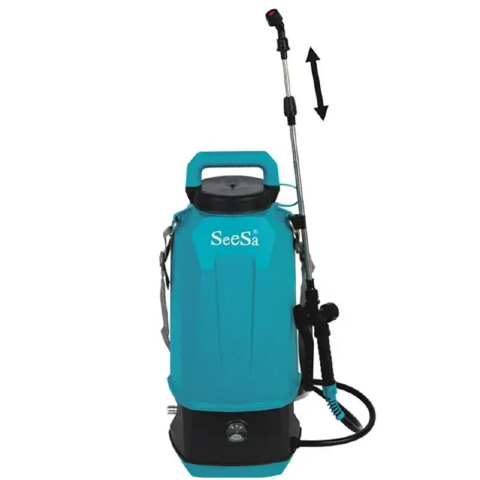
Why Many Users Move to an Electric Knapsack Sprayer
Less pumping, more comfort, more consistent spraying
Many users eventually move from manual models to an electric knapsack sprayer because the upgrade reduces physical effort. Repeated pumping can slow the work and create fatigue during longer jobs. A battery-powered unit helps make spraying more continuous and more comfortable.
This matters most when the sprayer is used regularly. Users who handle repeated pesticide, herbicide, fertilizer, or fungicide work often feel the difference quickly once pumping effort is reduced.
When battery-powered performance is worth the upgrade
Battery-powered performance is usually worth the upgrade when the operator sprays often enough to notice the limits of manual use. If the work area is moderate, the job is repeated, and user comfort matters, electric spraying becomes easier to justify.
That is why more buyers are interested in electric knapsack sprayer options. The goal is not simply to own a powered product. It is to make daily spraying smoother and more efficient.
Common Knapsack Sprayer Uses
Application Type | Main Spray Target | Recommended Approach | User Benefit |
Pesticides | Crops, garden plants, nursery plants | Controlled targeted spraying | Better mobility and crop protection |
Herbicides | Weeds, row edges, paths, patches | Spot spraying | Less waste and better control |
Fertilizers | Plants needing liquid feeding | Even application across work area | Practical plant care |
Fungicides | Preventive crop treatment zones | Regular repeat spraying | More efficient routine care |
Sanitation and landscaping | Managed work areas and surfaces | Portable directed spraying | Flexible use in many environments |
Conclusion
A Knapsack Sprayer is used for far more than one task. It is a flexible tool for pesticide work, herbicide control, fertilizer application, fungicide treatment, and even selected sanitation or landscaping uses. Shixia Holding Co.,Ltd. develops products for these real working needs, where users value mobility, practical control, and efficient daily spraying. For growers, gardeners, and maintenance teams who want easier handling and more consistent work, the right backpack sprayer can make a real difference. If you would like to learn more about suitable products for your application, contact us.
FAQ
1. What is a Knapsack Sprayer mainly used for?
A Knapsack Sprayer is mainly used for mobile, targeted spraying in gardens, farms, nurseries, orchards, and maintenance areas where one operator needs flexible control.
2. Can a knapsack sprayer be used for pesticide application?
Yes, a knapsack sprayer for pesticide work is very common. It is useful for crop and garden protection in smaller or medium spray zones where controlled application matters.
3. Is a knapsack sprayer good for fertilizer spraying?
Yes. A knapsack sprayer for fertilizer application is practical for liquid feeding and plant care when the work area does not require larger spraying equipment.
4. When should I choose an electric knapsack sprayer?
An electric knapsack sprayer is a good choice when spraying is frequent, manual pumping becomes tiring, and the user wants smoother, more consistent daily operation.