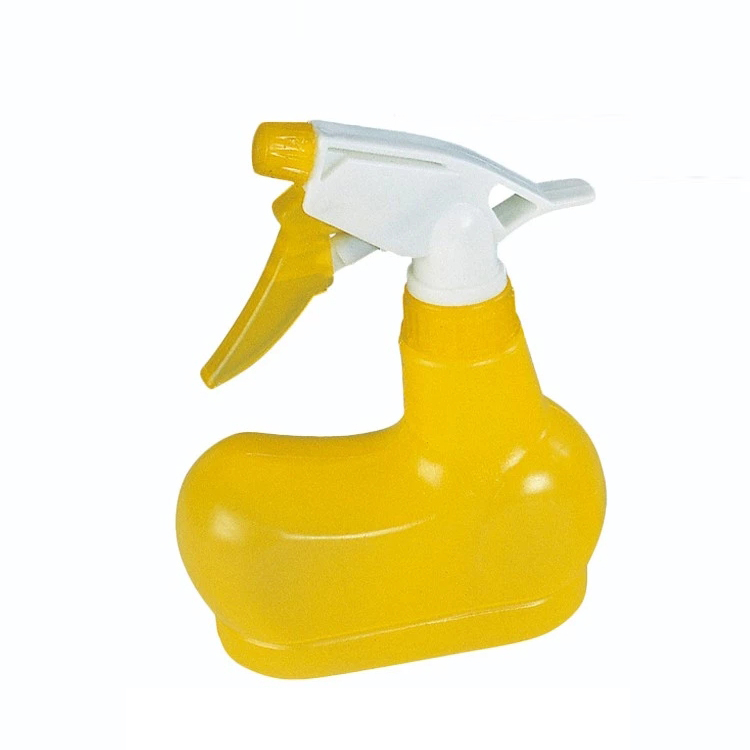
Droplet consistency directly drives end-user satisfaction and dictates overall brand perception. Consumers expect cosmetic sprays, hand sanitizers, and surface cleaners to deliver product flawlessly every time. A poorly functioning dispenser ruins the experience before the liquid even touches a surface. Inconsistent atomization quickly leads to massive product waste and localized over-application. Users often encounter annoying sputtering or "spitting," which causes immense frustration and drives up costly customer complaints.
We must realize choosing a reliable trigger sprayer represents a serious engineering decision. It goes far beyond basic aesthetic packaging choices. You have to carefully evaluate complex fluid dynamics, micro-component tolerances, and strict formulation compatibility. Throughout this article, you will discover exactly how these internal mechanisms function to produce uniform droplets. We will help you navigate component precision, viscosity limits, and commercial scalability requirements to ensure your final product performs perfectly in the hands of consumers.
Key Takeaways
Atomization relies on specific pressure thresholds generated by internal piston mechanics and nozzle restriction.
Pre-compression technology is the critical differentiator in preventing sputtering and ensuring consistent droplet size from the first spray to the last.
A high-quality trigger fine mist sprayer requires precise micro-engineering in the swirl chamber and orifice.
Evaluating sprayer suppliers requires analyzing stroke-to-prime data, dosage variation standards, and chemical compatibility testing.
The Mechanics of Atomization in a Trigger Sprayer
Atomization defines the process of breaking a bulk liquid into tiny, airborne drops. You achieve this by converting mechanical energy into extreme fluid pressure. When a user actuates the lever, they force a piston downward inside the housing. This physical action compresses the trapped liquid rapidly. The fluid seeks an escape route. It travels up through the internal valve system toward the nozzle head. This mechanical transfer represents the fundamental physics behind every spray mechanism.
The Venturi effect plays a massive role in creating the actual mist. Liquid pushes through a rapidly narrowing pathway near the exit. Fluid velocity accelerates aggressively as the space tightens around it. This sudden high velocity effectively breaks the liquid surface tension. A severe pressure drop occurs right at the boundary layer. This specific reaction forces the liquid stream to shatter into hundreds of microscopic drops instantly.
You must understand the immense difference between pre-compression engines and standard pump designs. Standard pumps begin spraying immediately upon trigger pull. They remain highly susceptible to weak internal pressure. If you pull the lever slowly, they produce much larger, uneven droplets. This often leads to messy dribbling down the bottle.
Pre-compression engines operate on an entirely different engineering level. They utilize a spring-loaded internal valve. This chamber holds the liquid temporarily. A specific pressure threshold must build up before anything releases. The valve pops open only when the fluid reaches peak velocity. This guarantees a uniform fine mist every single time. User actuation speed simply does not matter. The engine controls the pressure entirely.
Inside the tiny nozzle head sits the swirl chamber. Engineers frequently call it a vortex chamber. Its primary function involves inducing extreme high-speed rotational flow. Tangential inlet channels force the fluid to spin violently before it exits. Centrifugal force pushes outward against the spinning liquid. This force shears the fluid stream into microscopic pieces. If the vortex geometry fails, you get a solid stream instead of a mist.
Nozzle Orifice Precision
The final exit point dictates ultimate spray quality. Micro-mold tolerances determine the exact droplet micron size. Tiny variations in plastic mold quality cause significant performance issues. A tiny burr on the plastic ruins everything. You will see skewed spray angles. You might experience completely uneven droplet distributions across the target area. Top-tier manufacturers invest heavily in microscopic precision tooling. This ensures every nozzle orifice remains perfectly uniform.
The Piston and Gasket Assembly
This internal assembly serves as your primary reliability marker. It must maintain an absolute vacuum seal during the upstroke phase. A tight seal draws liquid up the tube accurately against gravity. It actively prevents unwanted air leaks inside the main chamber. Trapped air pockets cause the device to sputter during actuation. High-quality gaskets eliminate this frustrating experience and ensure smooth operation.
The Dip Tube and Filter
The dip tube brings implementation reality into sharp focus. It guarantees continuous liquid flow from the bottom of the bottle. Most feature a V-notch or a fine mesh filter at the terminal end. This clever addition prevents particulate matter from entering the pump housing. Clogs alter the spray pattern drastically or stop actuation entirely. We always recommend inspecting micron filter specifications for any particulate-heavy liquids.
Formulation Compatibility and Viscosity Limits
A standard trigger fine mist sprayer performs best handling water-like fluids. It manages slightly viscous liquids fairly well. We measure this thickness in Centipoise (cP). Water sits at exactly 1 cP. Most sprayers handle formulations up to roughly 100 cP efficiently. Highly viscous formulations demand entirely different pump mechanics. Lotions and thick gels require heavy-duty dispensers to avoid severe clogging. You must match fluid thickness to the correct dispensing engine design.
Surface tension factors alter the atomization profile significantly. Different chemical properties behave uniquely under intense pressure. Surfactants lower surface tension, making the liquid foam easily. Alcohols evaporate rapidly during mid-flight. Oils behave sluggishly and resist breaking apart. You often need custom nozzle tuning to compensate for these variables. A standard orifice might easily spray water but shoot a solid stream of essential oils.
Incompatible formulations create massive commercial risk. Harsh household chemicals degrade cheap rubber gaskets very quickly. They cause rigid plastic components to swell inside the housing. This eventually leads to catastrophic pump failure or messy leakage during transit. We solve this by specifying exact polymer materials.
Choose PP (Polypropylene) or PE (Polyethylene) for standard rigid parts.
Select POM (Polyoxymethylene) for high-friction internal moving gears.
Use NBR (Nitrile) rubber gaskets for basic oils and water.
Deploy FKM (Fluoroelastomer) seals for aggressive solvents and harsh chemicals.
Evaluating Trigger Sprayers for Commercial Scalability
Performance and Consistency Metrics
You must measure performance objectively before buying at a massive scale. Dosage accuracy stands out as a critical metric. Assess the precise liquid output per stroke carefully. Typical volume ranges span from 0.3ml to 1.2ml per pull. We consider a ±10% volume deviation limit acceptable across the packaging industry. Quality teams use statistical process control to track this consistency over thousands of actuations.
Next, you must evaluate the stroke-to-prime data carefully. This metric counts how many pulls achieve the very first full mist. A high number frustrates new consumers instantly. Industry standards demand priming under 3 to 5 strokes maximum. Anything higher indicates a weak vacuum seal. It means the internal piston struggles to pull liquid up the tube.
Compliance and Shipping Durability
Modern e-commerce demands incredibly rugged packaging solutions. Leakage prevention requires strict ISTA-compliant testing procedures. We look for rigorous vacuum leak testing data from suppliers. We require extensive drop tests to mimic extreme transit abuse. A bottle might fall several feet during warehouse sorting. The sprayer neck and trigger lever must survive the impact intact.
Specific regulatory markets demand extra mechanical safety features. Cleaning chemicals and commercial pharmaceuticals often require complex child-resistance mechanisms. These prevent accidental ingestion by toddlers. Tamper-evident seals provide crucial consumer safety assurances on retail shelves. Shrink bands or break-away tabs prove the product remains completely pristine.
Sourcing Considerations and Supplier Shortlisting Logic
When shortlisting manufacturing partners, you must scrutinize their production methodologies. Seek suppliers utilizing fully automated assembly lines exclusively. They should integrate in-line pneumatic leak testing for every single unit. Purely manual quality assurance leaves too much room for human error. Automation guarantees every single mechanism meets strict dimensional tolerances flawlessly.
Assess how well the manufacturer handles bespoke engineering needs. A great partner prototypes new ideas rapidly. They can easily adjust the swirl chamber depth. They might widen the orifice diameter slightly for your custom formulation. A highly flexible supplier helps you launch unique products successfully. They provide engineering support rather than just selling commodity plastic parts.
Quality Control Approach
Speed & Output Volume
Defect Detection Rate
Best Application
Fully Automated Assembly
High (Millions per month)
Over 99.9% (Pneumatic sensors)
Global retail & e-commerce brands
Semi-Automated Lines
Medium
95% - 98% (Mixed sensors & visual)
Mid-sized regional product launches
Manual Assembly & QA
Low
Highly Variable (Human eye only)
Small batch or low-risk formulations
You should request detailed inspection reports during the vetting process. Following a structured auditing sequence helps mitigate supply chain risks significantly.
Request samples from three different recent production runs.
Perform in-house compatibility testing using your exact liquid formula.
Review the supplier's ISO certification and cleanroom standards.
Conduct a virtual or physical factory audit focusing on their automation equipment.
Conclusion
Droplet uniformity always represents a highly engineered outcome. It relies entirely on advanced pre-compression mechanics, precise swirl chamber geometry, and strict manufacturing tolerances. Choosing the right mechanism elevates your brand perception immediately. It ensures consumers enjoy a flawless, frustration-free dispensing experience every single time.
Packaging engineers should take immediate, proactive steps. Request comprehensive technical data sheets (TDS) from your shortlisted suppliers today. You must conduct rigorous chemical compatibility tests immediately. Include accelerated aging and environmental stability checks in your protocols. We strongly advise running small pilot line trials before making any full-scale commercial commitment.
FAQ
Q: What is the ideal droplet size for a trigger fine mist sprayer?
A: Ideal sizes depend entirely on your specific application. Cosmetics and fine fragrances usually require 20 to 50 microns for a delicate, invisible feel. Heavy-duty surface cleaners perform best between 50 and 100+ microns. This larger size ensures proper surface coverage while minimizing airborne inhalation risks for the user.
Q: Why does my trigger sprayer produce a stream instead of a mist?
A: A stream usually indicates a specific internal mechanical failure. You might have a clogged swirl chamber or a physically damaged nozzle orifice. Additionally, your liquid formulation might feature a high viscosity profile. If the fluid is too thick, it exceeds the sprayer’s maximum design limits, preventing proper atomization.
Q: What is pre-compression in a trigger sprayer?
A: Pre-compression refers to a specialized internal valve mechanism. It holds the liquid and builds intense internal pressure before releasing it. This ensures the valve only opens at peak velocity. You get a perfectly uniform spray mist regardless of how fast or slow you actuate the finger lever.
Q: How do you test a spray bottle mechanism for leaks?
A: Industry-standard testing utilizes rigorous vacuum chambers to identify microscopic air gaps. Quality assurance teams also perform extreme temperature cycling tests. This process verifies seal integrity under fluctuating environmental conditions. It guarantees the product survives complex e-commerce logistics and rough retail distribution without spilling a drop.
Shixia Holding Co., Ltd. was establishes in 1978, that has more than 1,300 employees and more than 500 sets of various injection molding machines, blow molding machines and other advanced equipment.