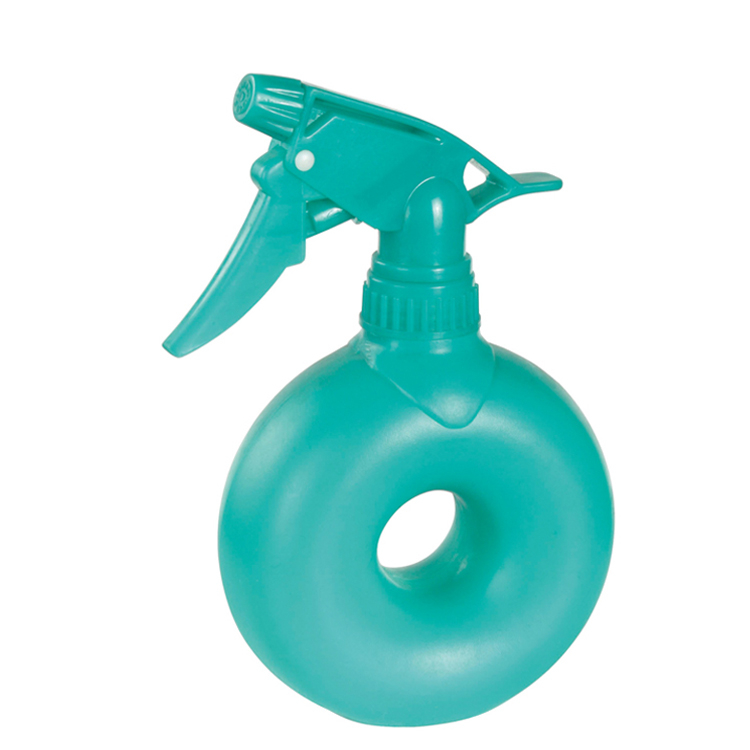
When consumers pull the lever on a bottle, they expect a consistent, powerful spray every time. We often credit the top pump mechanism for this seamless experience. However, the true unsung hero remains a highly engineered component hidden inside: the dip tube. A poorly specified tube acts as a critical bottleneck for your entire product line. Incorrect lengths or improper trim angles lead directly to loss of prime. They cause unexpected vacuum-sealing against the container base. They even trigger costly assembly line jams during automated capping operations.
These silent component failures waste expensive formula, frustrate end-users, and disrupt daily manufacturing efficiency. In this comprehensive guide, we establish a robust technical framework for evaluating dip tube parameters. You will learn how to specify exact length measurements. We also explore how to select optimal cut angles and align these crucial components with specific container geometry. Master these technical details to source the perfect trigger sprayer for your commercial applications.
Key Takeaways
Precision in dip tube length directly dictates the product evacuation rate; leaving residual liquid harms brand perception and value.
A 45-degree or V-shaped cut angle is non-negotiable to prevent the tube from vacuum-sealing against the bottom of the container.
Measurement protocols must always start from the sprayer’s sealing gasket to the deepest structural corner of the specific bottle geometry.
Automated manufacturing limits require strict vendor tolerances for tube curvature and rigidity to prevent capping line jams.
The Operational Risks of Incorrect Dip Tube Specifications
Let us explore what happens when packaging components misalign. The financial and operational fallout hits hard. Brands invest heavily in perfecting chemical formulas. Yet, a mismatched internal tube ruins the product delivery completely. Consumers notice immediately when a liquid fails to dispense.
If the tube extends too far, we call this "bottoming out." It bends sharply against the base of the container. If it falls too short, we call it "shorting." Both physical scenarios mimic a fundamentally broken product. Customers automatically assume the main pump mechanism failed. They rarely blame the invisible plastic hidden inside the liquid. They simply abandon the brand and post negative reviews online. Brand trust erodes quickly when basic packaging fails to function.
Manufacturing teams face equally severe risks on the factory floor. Implementation realities often clash aggressively against poor component choices. Excessively long tubes bend severely during high-speed assembly. This unnatural curvature causes the component to miss the narrow bottle opening entirely. Automated capping machines then jam up. You risk cross-threading caps, spilling expensive chemicals, and halting the production line. A single five-minute jam ruins daily output metrics. Continuous downtime destroys profitability faster than any other operational factor.
Furthermore, poor fluid evacuation rates trigger strict compliance issues. Regulatory bodies heavily scrutinize net volume claims on retail packaging labels. Regulated chemical or cleaning applications must deliver the exact stated fluid ounces to the buyer. Leaving two ounces of inaccessible liquid inside a bottle violates these stringent regulatory standards. It exposes your company to unnecessary legal risk. Quality assurance teams must prevent this by verifying every single physical dimension before assembly.
Evaluating Dip Tube Length for Optimal Evacuation Rates
Measuring component length requires strict industry-standard baseline criteria. You cannot simply guess the distance using a standard ruler. The protocol dictates measuring precisely from the inside of the sealing gasket. This vital gasket sits exactly where the closure meets the threaded bottle neck. You measure diagonally down to the opposite bottom corner of the container.
Here is a standardized measurement protocol you should follow during evaluations:
Remove the entire dispensing unit and hold it perfectly straight.
Locate the internal sealing gasket hidden under the ribbed closure.
Measure from this exact zero-point down to the trimmed tip.
Compare this specific millimeter length against the deepest corner of your target bottle.
Let us analyze the "too short" scenario closely. Precision engineering defines acceptable leftover liquid thresholds. A tube resting just 1/4-inch above the bottom spells absolute disaster for consumers. It can easily leave up to 10% of the formula utterly inaccessible. Buyers hate wasting expensive household cleaning solutions. They despise leaving premium cosmetics trapped inside a heavy glass jar.
The "too long" scenario proves equally problematic for different mechanical reasons. Excess length forces the soft plastic into a severe bow shape. This sharp bowing restricts upward fluid flow through the narrow channel. It strains the internal piston heavily on every single pull. A bent component also pushes back upward against the top closure. This constant upward mechanical pressure compromises the tight seal at the neck finish. Annoying leaks often follow during retail shipping.
Material properties interact closely alongside these rigid length limits. Manufacturers typically extrude these components using Polyethylene (PE) or Polypropylene (PP). PP offers much higher structural rigidity. PE provides far more natural flexibility. High rigidity maintains a straighter vertical path but strongly resists bending. Flexibility allows the component to follow its natural curve smoothly inside the container walls. You must balance material stiffness carefully against the required vertical reach.
Analyzing Dip Tube Cut Angles: The Science of the Trim
The trim angle matters just as much as the overall overall length. A straight flat-cut tip creates immediate physics problems inside the bottle. Imagine a flat opening resting flush against a flat-bottomed glass container. When you squeeze the lever, you create powerful upward suction. This suction forms a perfect vacuum seal against the base. Fluid flow halts instantly. The user mistakenly thinks the bottle is empty.
The industry-standard solution avoids this frustrating trap completely. Manufacturers utilize a standard 45-degree angle trim instead. This angled cut prevents the circular opening from ever sealing flat against any surface. Fluid enjoys constant, easy access into the upward channel. The internal piston keeps working smoothly even if the plastic physically touches the bottom surface.
Some specialized chemical products require a V-cut, also known as a notched trim. Evaluate this alternative carefully for specific high-viscosity applications. Thick gels, heavy lotions, or industrial degreasers need wider intake areas. A V-cut works beautifully for unique container shapes too. Sometimes a standard 45-degree angle might still face obstruction in oddly molded plastic corners. The V-notch guarantees dual intake paths under any physical condition.
Correct trim angles correlate directly to optimal performance outcomes. You guarantee consistent prime retention between long days of disuse. The user experiences uninterrupted, highly uniform spray patterns. They never have to shake the bottle aggressively to restore the broken flow.
We can summarize the primary trim options below to clarify your engineering choices:
Best practice dictates avoiding flat cuts entirely. Always specify angled or notched trims in your official purchase orders to eliminate vacuum risks.
Aligning a Plastic Trigger Water Sprayer with Bottle Geometry
Bottle shape dictates your entire fluid delivery strategy. A standard Boston Round behaves entirely differently than a tall Cylinder. Modern asymmetric designs introduce severe internal slopes. You must map how internal components behave inside these highly specific shapes. A generic one-size-fits-all approach guarantees functional failure.
The primary goal involves targeting the lowest possible point. The channel must reach the deepest structural recess of the container. In most square or cylindrical designs, this target is the bottom corner. It is rarely the dead center of the base. Reaching this specific corner maximizes your total product evacuation rate.
You must also manage curvature control effectively. Factories spool thin plastic tubing onto massive reels before final cutting. This continuous winding creates a permanent natural curve in the finished piece. A properly specified plastic trigger water sprayer utilizes this curve to your distinct advantage. You point the curve strategically toward the deepest edge of the bottle. This ensures the tip lands exactly where residual liquid naturally pools.
Modern asymmetric bottle designs introduce unique challenges here. Some feature slanted bases. Others utilize off-center neck finishes. If you place a perfectly straight component into a slanted bottle, the tip hovers awkwardly in the middle of the fluid. It never reaches the lowest edge. Consumers end up shaking and tilting the container violently just to spray the last few ounces. This ruins the premium feel of high-end household products. You must map out the exact resting position of the plastic tip.
Rollout lessons from failed product launches teach us extreme caution. We strongly warn against purchasing standard "off-the-shelf" lengths blindly. Always conduct rigorous physical fitment tests first. Fill your final production bottles using the actual chemical formula. Insert the dispensing mechanisms manually on a testing bench. Check the curvature orientation, corner reach, and overall sealing integrity.
Shortlisting Suppliers: Testing and Tolerance Criteria
Procurement teams must demand total transparency from potential manufacturing suppliers. Ask for detailed engineering drawings upfront before signing any contracts. Confirm their exact length tolerances in precise millimeters. Inquire deeply about their custom trimming capabilities. If a supplier refuses these basic requests, find another production partner immediately. You need reliable technical partners, not just transactional parts vendors.
Evaluate quality control baselines meticulously during your audits. How does a vendor handle trim consistency day-to-day? Check a random sample batch for highly uniform angles. Inconsistent angles across a bulk order indicate remarkably poor manufacturing controls. You cannot risk random flat cuts slipping into your high-speed production line undetected.
A reliable supplier understands these subtle mechanical nuances. They employ specialized automated cutting machinery. These machines guarantee exact tolerances down to fractions of a millimeter. When reviewing engineering drawings, look closely at the stated variance. An acceptable variance might be plus or minus one millimeter. Anything larger invites the dangerous "bottoming out" risks we discussed earlier.
Define strict next-step actions for your prototyping phase. Mandate a formal physical sampling period. You must mate sample units using filled production containers. Test the prime speed rigorously under real-world usage conditions. Measure the final evacuation percentage using precision digital scales. Verify capping feasibility on your actual automated assembly machinery.
Always weigh total component cost against long-term product reliability. Do not sacrifice exact dimensional specifications for marginal unit cost savings. Cheap, poorly cut plastics lead directly to massive retail product returns. They cause severe manufacturing delays on the factory floor. These massive downstream penalties far outweigh saving a fraction of a cent on cheap parts. Investing in precision engineering protects your brand reputation entirely.
Conclusion
Evaluating a fluid spray system goes far beyond testing the top pump mechanism. The dip tube acts as the true functional lifeline of your entire retail product. If it fails to draw liquid reliably, the entire package fails the consumer.
Your critical component decision matrix involves three strict pillars. First, demand precise length measurements starting directly from the internal gasket. Second, mandate a standardized 45-degree or V-shaped cut to prevent frustrating vacuum locking. Third, enforce strict physical adherence to your specific bottle geometry and pooling points.
We strongly encourage packaging buyers to request component-level specifications early. Always secure physical prototypes for rigorous in-house compatibility testing. Complete these trials long before committing to a massive purchase order. Proper component alignment guarantees seamless automated manufacturing and creates truly happy end-users.
FAQ
Q: How do you accurately measure a dip tube for a trigger sprayer?
A: You must measure from the inside of the sealing gasket down to the deepest point of the bottle. This gasket acts as the true zero point where the sprayer meets the neck. Measure diagonally to the opposite bottom corner, not straight down the center.
Q: What happens if the dip tube is cut straight instead of at an angle?
A: A straight, flat cut risks severe vacuum sealing. If the flat tube rests flush against a flat-bottomed bottle, suction locks it in place. The pump pulls a vacuum against the plastic base, instantly halting all liquid flow and mimicking a broken mechanism.
Q: Can a dip tube be too long if it still fits inside the bottle?
A: Yes. Excess length forces the tube to bow severely against the internal walls. This sharp bending restricts liquid intake and strains the pump mechanism. Furthermore, upward pressure from the bent plastic can break the neck seal, causing messy leaks during transit.
Q: Does bottle shape change how the dip tube should be specified?
A: Absolutely. A standard round bottle pools liquid differently than a square container. Tubes in square bottles must target a deep bottom corner. Asymmetric shapes require highly specific lengths and controlled natural curves to ensure the tube tip reliably finds the lowest fluid point.
Shixia Holding Co., Ltd. was establishes in 1978, that has more than 1,300 employees and more than 500 sets of various injection molding machines, blow molding machines and other advanced equipment.