Handheld Electric sprayers have become an essential tool for modern households, small businesses, and gardening enthusiasts thanks to their portability, labor-saving design, uniform atomization, and easy operation. However, many users encounter water output problems, improper maintenance, and unskilled operation during use, which lead to early equipment failure and reduced efficiency. This guide covers standard usage, maintenance, troubleshooting for common faults, safety tips, and FAQs, applicable to all mainstream models—even beginners can master it quickly.
Core Advantages of Handheld Electric Sprayers
Compared with traditional manual sprayers, handheld electric sprayers are widely used for their perfect fit with users' needs for labor-saving, high efficiency and convenience:
• Labor-saving & Convenient: Electric drive eliminates the need for manual pressing, no obvious fatigue even with long-term operation, suitable for all groups. Solves the pain points of traditional sprayers such as "strenuous pressing and low work efficiency".
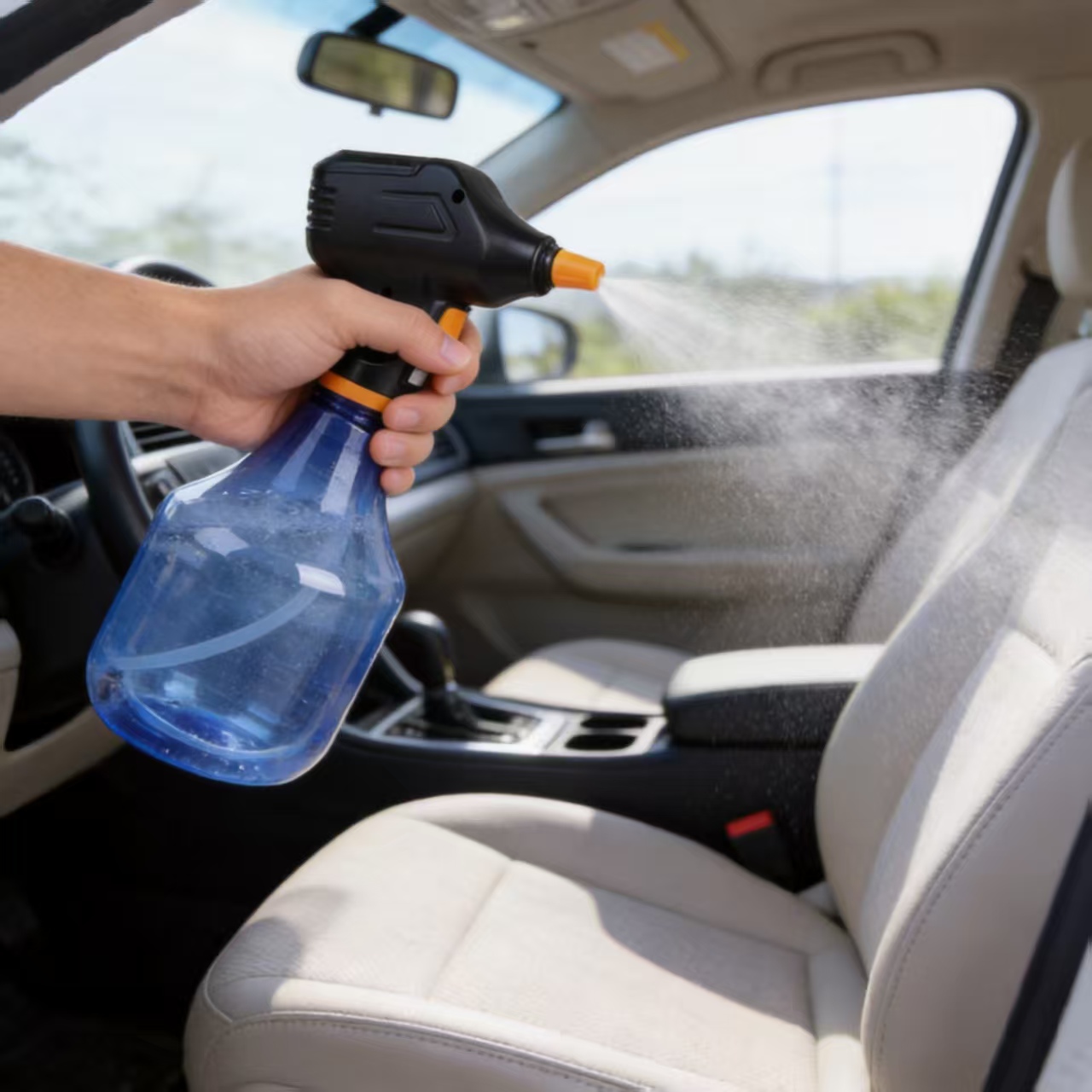
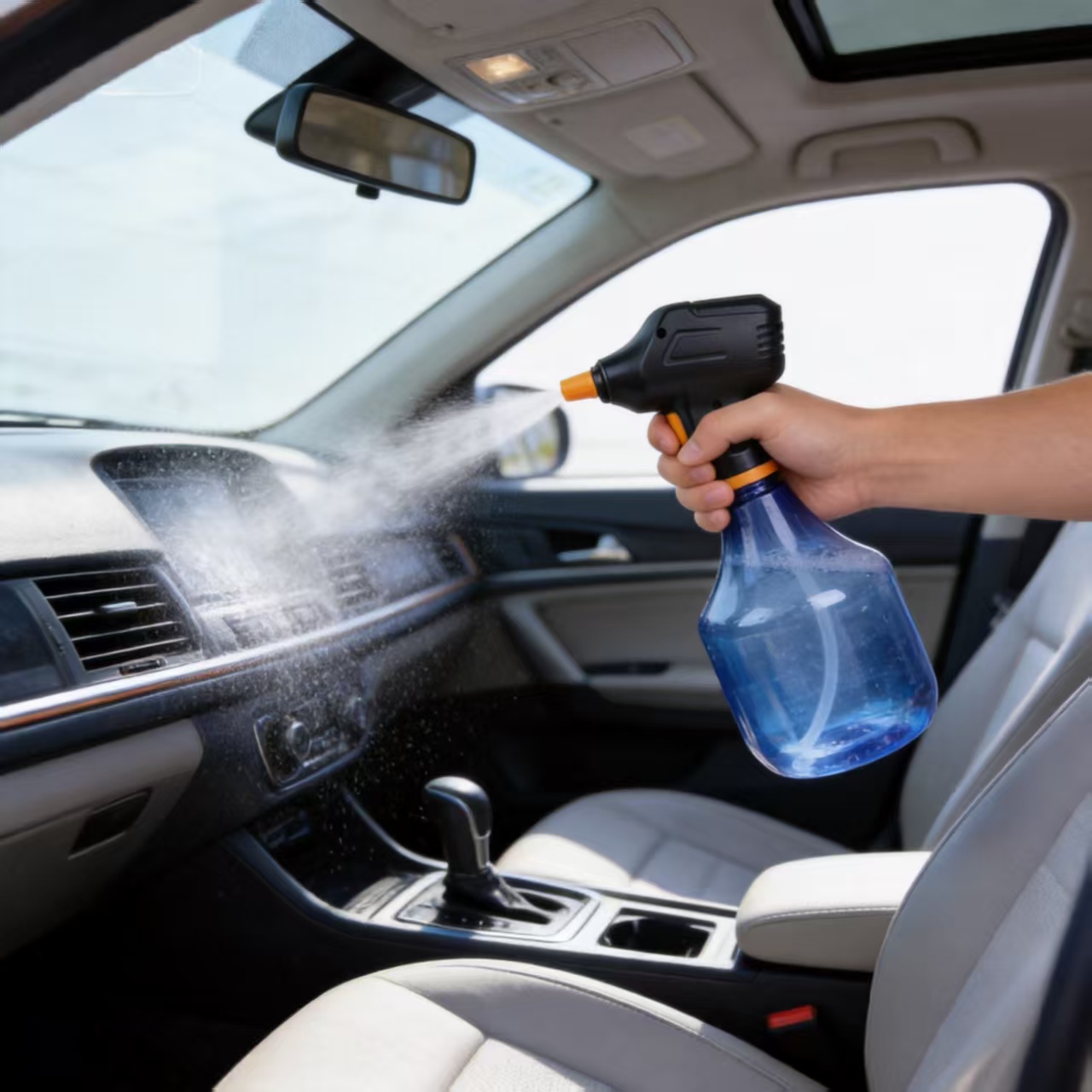
• Uniform Atomization: Most models support 3 adjustable gears (fine mist, medium mist, direct spray) with delicate and evenly distributed droplets. Switch gears flexibly for cleaning, maintenance, disinfection and other scenarios, with a wide range of applications.
• Lightweight & Portable: The whole device is light in weight, without long wire constraints, and can be operated by hand. Suitable for mobile operation scenarios such as outdoor and no AC power, meeting the needs of daily home use and small place operation.
• Durable & Worry-free: Core components are made of corrosion-resistant materials. With proper daily maintenance, the service life can reach 3-5 years, with significantly higher cost performance than traditional manual sprayers.
• Multi-functional Adaptation: Can be filled with clean water, disinfectant, nutrient solution, diluted pesticides and other liquids. One device meets multiple needs such as cleaning, disinfection and maintenance, no need to purchase additional special tools.
Standard Usage Method of Handheld Electric Sprayer
Pre-use Preparation
1. Charging Check (Rechargeable Models): Fully charge the new device for 12 hours; confirm sufficient power before daily use to avoid power failure during operation. Use the original charger only, do not mix chargers of different voltages or brands to prevent battery damage.
2. Comprehensive Equipment Inspection: Check the connections of the nozzle, spray rod and liquid storage pot for looseness and water leakage; ensure the sealing ring is intact and undeformed, and the filter screen is clean and unclogged. Press the power switch lightly to test motor operation and spray fluency.
3. Proper Liquid Preparation: Prepare the corresponding liquid according to actual needs, stir evenly to ensure no sediment. Do not inject undiluted highly toxic or thick liquids to prevent nozzle clogging and motor damage. Filter the liquid through the screen when pouring, and the liquid level shall not exceed the safety water line to avoid overflow during spraying.
4. Protective Preparation: Wear masks, gloves, goggles and other protective equipment when spraying pesticides, disinfectants and other irritating liquids. When spraying flammable liquids such as alcohol, clean fire sources and high-temperature items around the operation area in advance to avoid safety hazards.
Startup Operation
1. Fill & Tighten: Slowly pour the prepared liquid into the liquid storage pot, tighten the pot cover clockwise for good sealing, then install and lock the spray rod and nozzle to prevent water/liquid leakage during operation.
2. Start & Adjust Gear: Long press the power switch to start the device, adjust the gear according to the scenario:
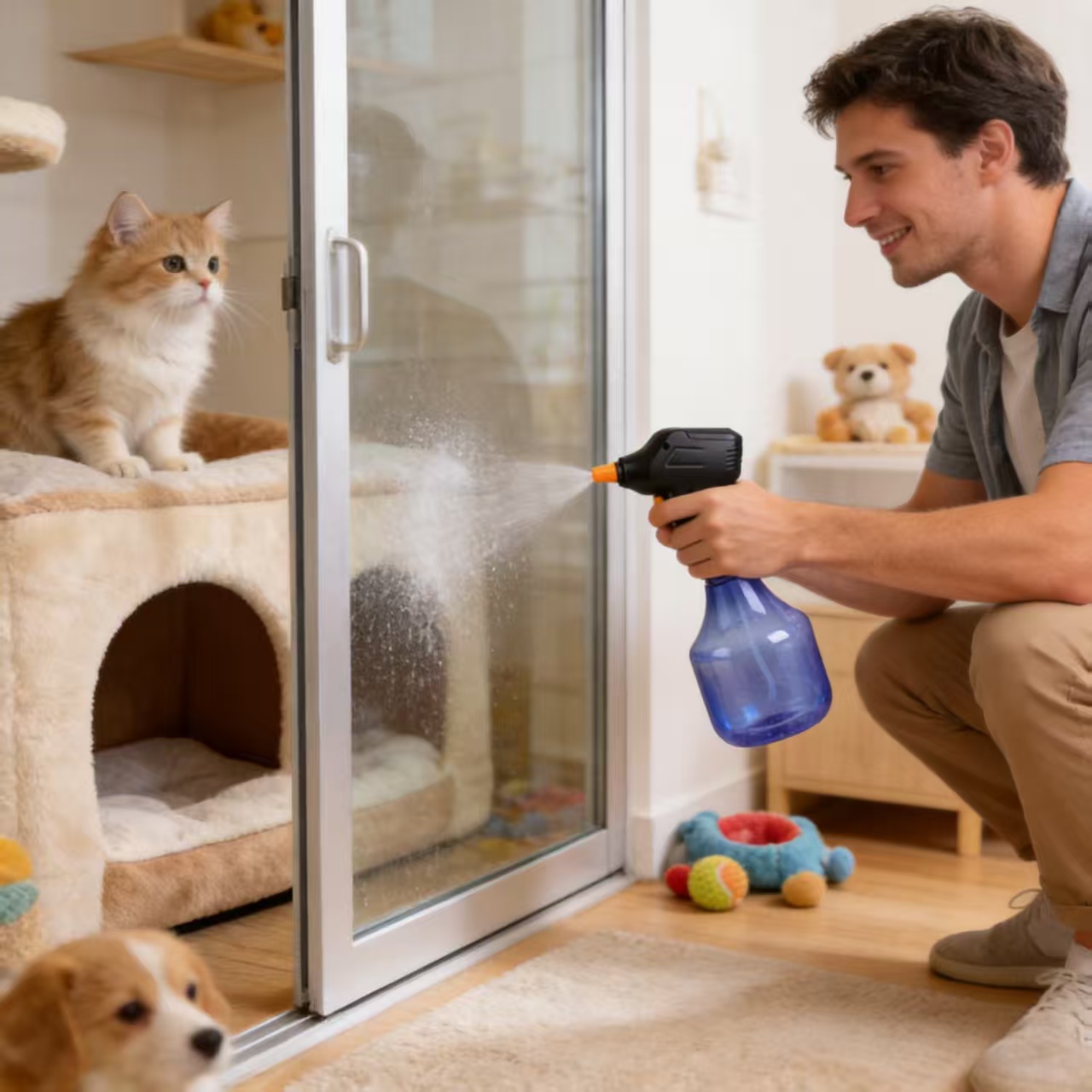
○ Fine mist: Air humidification, pet care, foliar fertilization
○ Medium mist: Daily home cleaning, potted watering
○ Direct spray: Long-distance watering, stubborn stain cleaning
3. Correct Spraying: Keep a distance of 15-30cm between the nozzle and the target, move the device at a constant speed, and avoid spraying the same part for a long time. When spraying pesticides, stay away from the downwind direction and keep the device vertical to prevent uneven spraying or local water accumulation.
Post-use Maintenance of Handheld Electric Sprayer
Neglecting post-use maintenance is the main reason for early equipment failure. Standard maintenance can significantly extend the service life:
1. Thorough Cleaning: Pour out the remaining liquid, fill with clean water, tighten the cover and start the device to spray for 1-2 minutes; repeat 2-3 times until the outflowing water is free of residue. For pesticide spraying, rinse with lye first, then clean with clean water thoroughly. Disassemble the nozzle and filter screen, brush gently with a soft brush—do not poke the nozzle hole with hard objects to prevent damage.
2. Dry Storage: Wipe or air-dry the liquid storage pot, nozzle and spray rod to ensure no water residue, avoiding motor short circuit and part rust caused by humid environment. Store disassembled parts properly to prevent loss or damage.
3. Battery Maintenance: For long-term non-use (more than 1 month), fully charge the battery first, then store in a cool, dry and ventilated environment. Recharge the battery every 1-2 months to avoid damage from low power. Unplug the charger in time after full charge, do not overcharge for a long time.
4. Whole Machine Storage: Assemble the dry device completely, place it out of children's reach, away from fire sources, high temperature and corrosive items. Avoid collision and falling to prevent damage to the body and parts.

Common Faults of Handheld Electric Sprayer: Water Output Abnormalities & Solutions
Water output abnormality is the most common fault, including no water output, uneven water output, water leakage and intermittent water output. Users can troubleshoot and solve it by themselves without professional maintenance:
1. No Water Output (Motor runs but no water / No water at all)
Common Causes: Clogged nozzle/filter screen; insufficient liquid in the pot; insufficient air pressure due to loose pot cover; low battery power; dry/hard, loose or damaged cup leather; internal air not discharged from new devices.
Solutions: Add liquid to the safety water line, clean the nozzle and filter screen; tighten the pot cover and check the sealing ring; fully charge the battery; soak dry cup leather with a small amount of engine oil (replace if damaged); run the new device idle for 30 seconds to discharge internal air before adding liquid.
2. Uneven Water Output / Reduced Mist Volume
Common Causes: Clogged/damaged nozzle; incorrect gear adjustment; sediment in liquid clogging the suction pipe; loose spray rod connection; unstable motor speed due to low battery power.
Solutions: Clean or replace the nozzle, adjust to the suitable gear; filter sediment in the liquid, clean the filter screen and suction pipe; tighten the spray rod connection; fully charge the battery (replace the battery if aged).
3. Water Leakage
Common Causes: Loose liquid storage pot cover; aged, deformed or fallen sealing ring; loose spray rod/nozzle connection; damaged liquid storage pot; worn switch gasket.
Solutions: Tighten the pot cover clockwise; check the sealing ring (replace if aged/deformed, reinstall if fallen); tighten the spray rod/nozzle connection; replace the liquid storage pot with original accessories if damaged.
4. Intermittent Water Output
Common Causes: Poor water absorption due to clogged filter screen; insufficient liquid in the pot; loose/fallen suction pipe; intermittent power supply due to poor battery contact.
Solutions: Clean or replace the filter screen; add liquid to the safety water line; reinstall and fix the suction pipe; check the battery connection (wipe the oxidized interface with a dry cloth to restore normal).
Core Safety Notes
• Do not inject flammable, explosive, highly toxic or strong corrosive liquids (such as gasoline, undiluted alcohol, strong acid and alkali) to prevent fire, explosion or equipment corrosion. Ventilate the operation area in time after spraying flammable liquids, and keep away from fire sources throughout the process.
• Wear complete protective equipment when spraying irritating liquids such as pesticides and disinfectants. Clean hands, face and clothes in time after operation to avoid skin and respiratory tract irritation from residual liquid.
• Keep children, pregnant women, the elderly and pets away from the operation area. Store the device out of children's reach to prevent accidental touch and ingestion.
• Do not use the device in thunderstorms, high temperature exposure (over 40℃), low temperature freezing (below 0℃) to prevent equipment damage or electric shock hazards.
• If abnormal heating, peculiar smell, serious water leakage and other problems are found during use, shut down and cut off the power immediately, troubleshoot or contact after-sales service—do not force continuous use.
Equipment Protection & Daily Use Notes
• Avoid falling, collision and extrusion of the device, focus on protecting core components such as motor and battery to prevent internal structure damage.
• Operate gently when cleaning and disassembling the device, do not hit or unclog the nozzle hole with hard objects to avoid part damage.
• Do not mix liquids for different purposes in the liquid storage pot. Thoroughly clean the device when replacing the liquid type to avoid chemical reactions between different liquids that damage the device or affect the use effect.
• When spraying pesticides, strictly prepare according to the dilution ratio specified in the reagent manual to avoid crop damage or environmental pollution caused by excessive concentration. Thoroughly clean the device after operation, do not use it for food-related spraying.
• Regularly check the equipment parts, replace or adjust in time if aging, damage or looseness is found. Do not disassemble core components such as motor and battery without permission to avoid affecting the product warranty.
FAQ
Q1: The handheld electric sprayer has no water output but the motor runs normally. What is the reason?
A1: The most common reasons are clogged nozzle/filter screen or loose pot cover, followed by abnormal cup leather or undischarged internal air in new devices. First clean the nozzle and filter screen and tighten the pot cover, then check the cup leather state. For new devices, run idle for 30 seconds to discharge internal air, then it can be used normally.
Q2: The mist volume of the handheld electric sprayer is gradually reduced. How to solve it?
A2: The core reasons are clogged nozzle, low battery power or sediment in the liquid. Clean the nozzle, filter liquid impurities and fully charge the battery. Replace the nozzle if the spray hole is damaged.
Q3: The electric sprayer handheld leaks water and the problem is not solved after tightening the pot cover. What to do?
A3: This situation is most likely caused by aged sealing ring or loose spray rod connection. Check and replace the sealing ring, tighten the spray rod connection. Replace the liquid storage pot in time if it is damaged.
Summary
SeeSa Handheld electric sprayers are convenient, efficient and multi-functional with a simple operation process that even beginners can master quickly. Mastering the correct usage method and doing a good job in daily maintenance can effectively avoid common faults such as water output abnormalities, extend the service life of the equipment, and give full play to its application advantages in cleaning, disinfection, maintenance and other scenarios.