The joy of balcony gardening often comes from a "user-friendly" tool—and a manual sprayer is exactly the bridge connecting you to your balcony plants. It not only solves common problems like uneven watering, messy fertilization, and hard-to-reach pest control but also fits perfectly in small balcony spaces with its low cost and high convenience. However, there is a wide variety of manual sprayers on the market, from handheld mini models to small compression ones. How to choose the right one for yourself? This blog will tell you the core purchasing points of balcony manual sprayersl.
Determine What Type of Manual Sprayer You Need
Before purchasing, clarify your own needs and choose the tool based on the size of your balcony, the type of plants, and daily usage. This way, you can avoid wasting money on ill-suited tools:
Choose Capacity Based on Balcony Size and Number of Plants
Different capacities suit different scenarios, ensuring you don't have to refill frequently or struggle with cumbersome equipment:
• Small Balconies (3-5 Potted Plants): Choose a 500ml-1L Handheld Trigger Sprayer. It is suitable for a small number of plants such as succulents, small potted plants, and herbs. Lightweight and easy to operate with one hand, it can complete leaf misting and small-scale cleaning effortlessly. It takes up little storage space.
• Medium Balconies (6-15 Plants): Choose a 1.5-3L Small Compression Sprayer. With a moderate capacity, it eliminates the need for frequent refilling and provides stable pressure. It can meet daily watering needs, spray diluted nutrient solutions and insecticides, making it suitable for most home balconies.
• Large Terraces/Balconies (15+ Plants or Vines): Choose a 3-5L Mini Backpack Sprayer. The backpack design saves effort and has a long battery life, suitable for long-term spraying or large-scale maintenance. It avoids the fatigue of repeated pumping while maintaining portability.
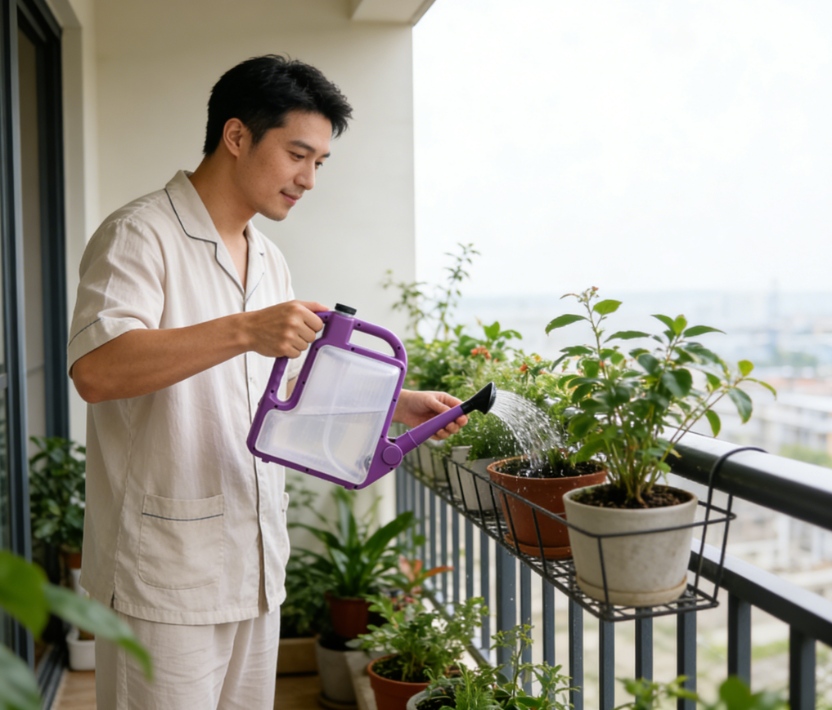
Choose Spray Modes Based on Your Plant Types
The needs of balcony plants determine the core requirements of the sprayer:
• Succulents, Seedlings, Ferns: Prioritize a sprayer with fine mist mode. The fine and uniform mist will not damage delicate leaves or compact the soil, avoiding leaf rot and root rot. It can also increase air humidity, suitable for sensitive plants.
• Potted Flowers, Herbs, Fruits and Vegetables: Choose a model with adjustable multi-modes (fine mist + direct jet + shower). Fine mist is used for hydrating and increasing humidity, direct jet for root watering, and shower mode for quick and thorough irrigation. One tool can meet all balcony maintenance needs.
• Pest Control and Fertilization: Choose a compression sprayer with uniform spray particles and leak-proof design. It ensures that pesticides and nutrient solutions can adhere evenly to the leaf and soil surfaces, avoiding excessive local concentration that damages plants, and preventing leaks from soiling the balcony.
Must-Check Core Configurations: These Details Determine Usage Experience
Don't overlook these details—they are crucial to your user experience:
• Material: Prioritize food-grade PP plastic/HDPE material. Non-toxic and odorless, it is corrosion-resistant, especially suitable for holding chemical liquids such as nutrient solutions and insecticides, and will not pollute plants and the balcony environment. Avoid low-quality recycled plastic, which is prone to cracking and leakage.
• Nozzle: Choose an adjustable copper/stainless steel nozzle. Copper nozzles are wear-resistant and not easy to clog, with a smooth adjustment knob that can accurately control the spray thickness. Although plastic nozzles are cheaper, they are prone to deformation and clogging after long-term use, making them unsuitable for frequent use.
• Pump & Sealing Performance: The pressing feel should be "smooth and effortless" and leak-proof. The pump is the core of the manual sprayer. A high-quality pump is easy to press, maintains pressure for a long time, and sprays continuously without jamming. A sprayer with poor sealing performance will leak liquid, which not only wastes liquid but also may soil the balcony countertop.
Additional Features
These "small designs" can enhance your experience
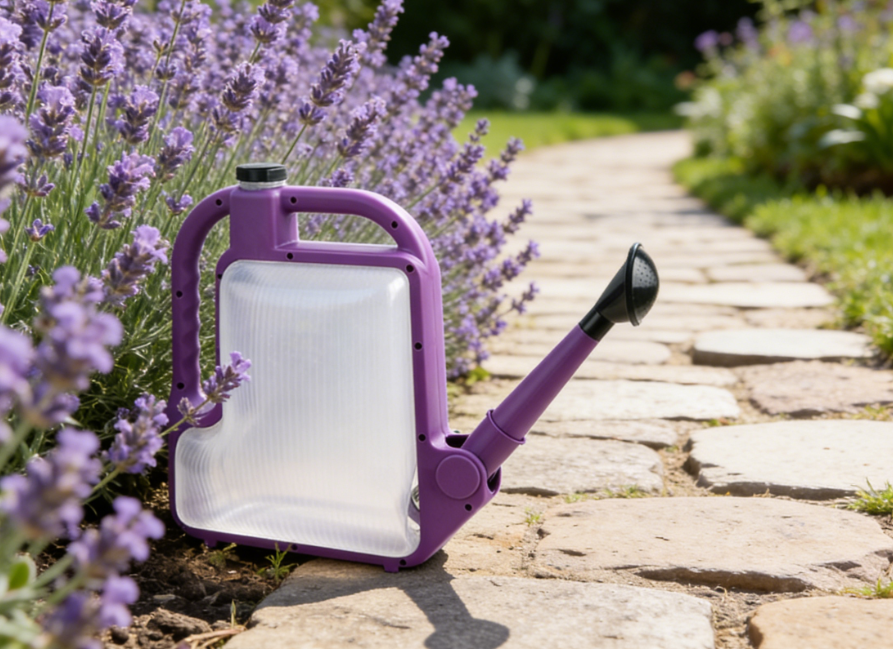
• Non-slip handle: No hand discomfort during long-term use;
• Graduated water tank: Precisely grasp the water addition amount, making it more convenient to mix nutrient solutions;
• Removable nozzle: Easy to clean, avoiding clogging caused by residues;
• Extended hose (optional): Suitable for hanging plants or high balcony corners, allowing spraying without standing on tiptoes.
High-Value Choices and Mistakes to Avoid
3 High-Rated Models Worth Buying
• Entry-Level : 500ml Handheld Trigger Sprayer. Recommended for: Beginners and those who care for a small number of plants. Core advantages: Affordable, easy to use, suitable for daily leaf misting and balcony glass cleaning, with excellent cost performance.
• Mid-Range : 2L Multi-Mode Compression Sprayer. Recommended for: Most home balconies and moderate maintenance needs. Core advantages: Moderate capacity, stable pressure, adjustable spray modes, safe material, balancing practicality and durability, making it a popular "no-brainer" choice.
• Professional-Grade : 3-5L Mini Backpack Sprayer. Recommended for: Large balconies, plant enthusiasts, and frequent maintenance needs. Core advantages: Labor-saving backpack design, long battery life, good sealing performance, and some models are equipped with pressure relief valves for safer use, suitable for long-term and high-frequency use.
3 "Don't Buy" Rules to Help You Avoid Low-Quality Products
• Don't buy low-priced models without brand names or material descriptions: They may contain low-quality plastic, which is prone to leakage and release harmful substances when holding chemical liquids;
• Don't buy models with non-removable nozzles: Residues will accumulate after long-term use, causing clogging and affecting service life;
• Don't buy sprayers with too large or too small capacity: A large-capacity model is cumbersome and difficult to operate for a small balcony; a small-capacity model requires frequent refilling for a large balcony, resulting in low efficiency.
How to Maintain Your Balcony Manual Sprayer
Choosing the right sprayer is not enough; proper use and maintenance can extend its service life and avoid frequent replacement:
1. Before First Use: Rinse the water tank and nozzle with clean water to remove production residues;
2. When Filling Liquid: Do not exceed the maximum scale line of the water tank to avoid overflow during pressurization; after spraying pesticides and nutrient solutions, rinse thoroughly with clean water immediately to prevent corrosion;
3. Routine Inspection: Regularly check if the pump is loose and if the hose is damaged; if the nozzle is clogged, gently unclog it with a thin needle (do not use hard iron wire to avoid damage);
4. Storage Points: Place in a cool and dry place, avoid direct sunlight; empty the liquid in the water tank completely when not in use for a long time to ensure internal dryness;
5. Regular Maintenance: Apply a small amount of lubricating oil to the moving parts of the pump every 3-6 months to keep pressing smooth.
FAQ
Q1: Can I use a manual sprayer for balcony pesticides or fertilizers?
Yes! Manual sprayers are ideal for balcony pest control and fertilization—just choose a compression sprayer with a uniform droplet design (to avoid uneven application). Always use food-grade, chemical-resistant materials (PP/HDPE) and rinse the tank thoroughly after use. Wear gloves and ensure good ventilation when spraying pesticides.
Q2: What's the best manual sprayer for indoor balconies?
For indoor balconies (small spaces with limited storage), it is recommended to choose a 500ml-1.5L handheld or compact compression sprayer. Prioritize leak-proof seals (to avoid spilling on the floor) and quiet operation (no motor noise). A multi-mode design is suitable for both plant maintenance and occasional surface cleaning.
Q3: How often should I clean my balcony manual sprayer?
Clean it after each use if you use pesticides or fertilizers (to prevent clogging and corrosion). If only plain water is used, clean it once a month. Rinse the water tank, nozzle, and hose with warm water—use a small brush to clean the nozzle if residues accumulate.
Conclusion: The Best Balcony Sprayer is the One That Fits You
There is no "one-size-fits-all" best manual sprayer—only the most suitable one. For small balconies or beginners, an entry-level handheld model can meet the needs; plant enthusiasts can choose a multi-mode compression model to balance versatility; large balconies are suitable for mini backpack models, which are labor-saving and efficient.
Although it may not be the most "advanced" maintenance tool, it has become a "must-have artifact" for balcony maintenance with its advantages of precise volume control, portability and flexibility, and high cost performance. Choosing the right seesa manual sprayer will make you find that hydrating, fertilizing, and pest control for plants are no longer troublesome things, but a healing process of enjoying the small "oasis" on your balcony.