Every growing farm eventually reaches a critical tipping point. You must scale up your weed and pest control efforts. Yet, you want to avoid exhausting yourself in the field. This decision-stage dilemma forces you to rethink your equipment strategy entirely. Balancing payload capacity and operator stamina requires careful thought. Topographical constraints also complicate your final choice. Handheld tools severely limit your speed. Mechanized platforms add bulk and require vehicle access. Which path offers the best results for your specific land?
This article provides an objective, evidence-based framework. We help you choose between manual systems and mechanized platforms. Our insights rely on verifiable field realities rather than guesswork. You will discover how terrain compatibility directly affects daily operations. You will also learn how pump mechanics dictate coverage rates. Ultimately, we aim to guide your upgrade strategy so you can manage your property effectively.
Key Takeaways
Acreage Threshold: Properties over 2 acres generally see a positive ROI in time and labor when upgrading from a knapsack to an agriculture ATV sprayer.
Precision vs. Volume: Knapsack sprayers offer superior micro-targeting for spot treatments, while ATV sprayers maximize broadcast spraying efficiency.
Operator Fatigue: The physical toll of carrying 4 gallons (approx. 33 lbs) of liquid on uneven terrain is the primary driver for mechanization.
Cost Realities: An ATV sprayer requires higher upfront capital, basic 12v wiring knowledge, and routine pump maintenance compared to the simpler mechanics of a knapsack.
Defining the Baseline: Manual vs. Mechanized Crop Protection Sprayers
A reliable crop protection sprayer serves as the backbone of property management. We must define the core mechanics of each system first. Understanding these baselines helps you match the tool to your operational needs.
The Knapsack (Backpack) Sprayer
Manual systems rely on straightforward, reliable mechanics. They typically feature either a piston pump or a diaphragm pump. Piston pumps generate higher pressure for fine mists. Diaphragm pumps handle harsh chemicals and wettable powders better. You operate traditional models via a manual hand lever. Newer models integrate lithium-ion batteries. These battery-powered versions eliminate hand pumping entirely.
A standard knapsack tank holds between 3 to 5 gallons of liquid. This capacity keeps the unit portable. They excel in specific environments where precision matters. You should use them for targeted spot spraying around delicate garden beds. They handle greenhouse work beautifully due to their compact size. They also maneuver easily through highly uneven terrain. Densely planted rows require this exact level of localized control.
The Agriculture ATV Sprayer
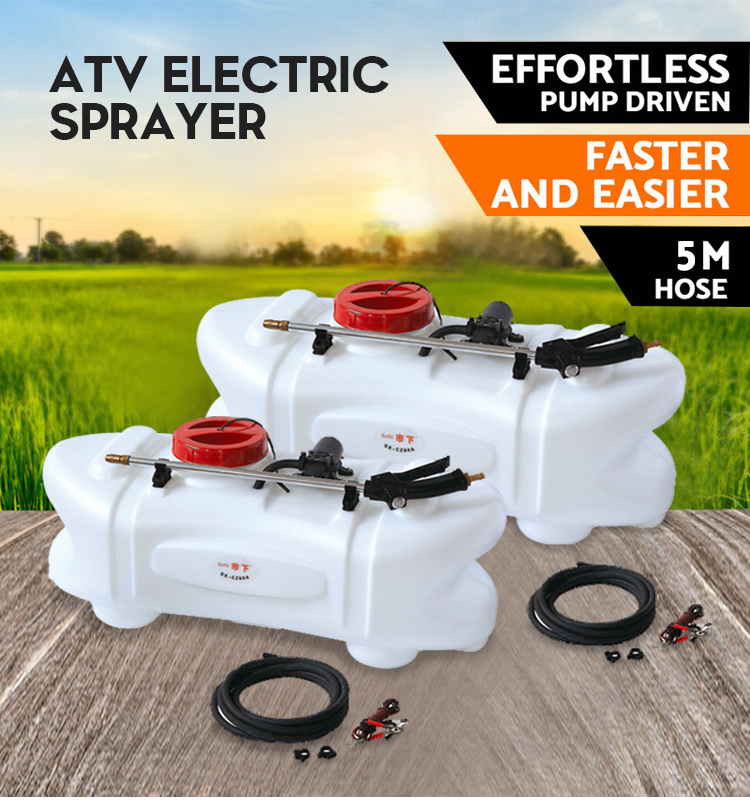
An agriculture ATV sprayer completely changes how you manage land. It mounts directly to the rear rack of a four-wheeler. It utilizes a 12-volt on-demand diaphragm pump. The vehicle battery powers this pump via a quick-connect wiring harness. You can configure the system with a traditional boom for wide coverage. You might also choose boomless nozzles for navigating around obstacles.
Typical capacities range from 15 to 25 gallons. This massive liquid volume suits expansive, open areas. They dominate pastures and long fence lines. Food plots benefit immensely from their rapid coverage. You can manage broadleaf weeds easily across any navigable terrain. They turn a multi-day chore into a brief afternoon project.
Assessing Spraying Efficiency: Time, Coverage, and Fatigue
Evaluating performance goes beyond tank size. You must analyze flow rates, physical strain, and operational downtime. These metrics dictate your true field productivity.
Volumetric Output & Pump Capacity (GPM)
Pump capacity directly dictates your spraying efficiency. We measure this output in gallons per minute (GPM). A manual backpack pump maxes out around 0.4 GPM. You simply cannot pump faster without losing pressure. An ATV pump typically delivers 1.0 to 2.2 GPM. High-capacity models can push even more.
This flow rate vastly outpaces manual pumping. Higher GPM allows you to run multiple nozzles simultaneously. It ensures thorough leaf saturation at higher travel speeds. It directly impacts how much ground you cover hourly. A robust pump also provides better agitation inside the tank. This keeps your chemical mix suspended perfectly during application.
The Reality of Operator Fatigue
Knapsack spraying exacts a high ergonomic cost on your body. Water weighs roughly 8.3 pounds per gallon. A full 4-gallon tank weighs over 33 pounds. You carry this shifting weight directly on your shoulders. You must walk over loose soil and hidden ruts. You navigate hills and dense brush.
This physical strain causes severe fatigue quickly. Fatigue leads to inconsistent walking speeds over time. Inconsistent walking speeds cause uneven chemical application. You might under-apply at the start of the day and over-apply near the end. Riding an ATV eliminates this physical burden. You simply steer the vehicle and monitor your spray pattern. You remain fresh and alert throughout the entire task.
Refill Frequency & Downtime
Mixing and refilling waste valuable daylight. A backpack requires constant trips back to your water source. Let us look at the operational math. A standard 25-gallon tank covers five to six times the area of a knapsack. This massive reservoir reduces your downtime significantly.
Sprayer Type
Average Capacity
Typical GPM
Trips to Water Source (Per 100 Gallons)
Standard Knapsack
4 Gallons
0.4 GPM
25 Trips
Mechanized ATV Unit
25 Gallons
2.2 GPM
4 Trips
You spend more time actively treating crops. You spend far less time measuring chemicals and measuring water. This sustained momentum makes larger properties manageable for a single operator.
Terrain Compatibility and Application Risks
Your landscape dictates your equipment choices. Mechanization works poorly in confined spaces. Conversely, manual labor fails on vast, flat plains. You must match the tool to the environment.
Where the Knapsack Sprayer Wins
Manual units offer unmatched maneuverability. They excel in tightly spaced crop rows. An ATV would simply crush these delicate plants. They also shine on steep inclines. Heavily wooded areas present high roll-over risks for vehicles. You can walk safely where machines cannot travel.
Zero Soil Compaction: Foot traffic does not compress delicate root zones.
Micro-Targeting: You can treat a single weed without hitting the adjacent vegetable plant.
Instant Accessibility: You grab the unit and start working immediately without checking tire pressure.
Where the ATV Sprayer Dominates
Mechanized units dominate expansive flat acreage. They easily handle rolling hills and established pastures. They provide consistent boom height application. This consistency ensures perfectly even chemical distribution. Pre-emergent herbicides require this exact uniformity to work properly.
You can maintain a steady speed using the vehicle throttle. This steady speed guarantees a predictable application rate per acre. You eliminate the human error associated with walking paces. Wide booms allow you to treat a 10-foot swath in a single pass. You finish large fields before the morning wind picks up.
Implementation Risk - The "Slosh" Factor
Mounting liquid to a vehicle introduces specific handling risks. Water is highly dynamic. Adding 120 to 200 pounds of shifting liquid to a rear rack changes vehicle dynamics. This phenomenon is known as the "slosh" factor.
When you brake sharply, the liquid surges forward. When you turn on a hillside, the weight pushes outward. This shifting mass can cause rollover accidents. You must ensure your tank features internal baffling. Baffles reduce fluid movement during transit. You must also verify your vehicle's rear rack weight limits. Never exceed the manufacturer specifications when fully loaded.
Maintenance and Application Realities in a Farm Sprayer Comparison
Conducting a thorough farm sprayer comparison means evaluating daily upkeep. Mechanization introduces complexity. You must prepare for electrical troubleshooting and strict winterization protocols.
Maintenance and Winterization Realities
Mechanized systems require proactive mechanical oversight. The 12-volt electrical system demands clean battery terminals. You must check the inline fuses regularly. The pump pressure switch requires occasional adjustment to prevent rapid cycling. Winterization is absolutely non-negotiable for mechanized units. You must flush the system with RV antifreeze before the first freeze. Failing to do so results in cracked pump manifolds. Replacing a cracked pump halts your spring operations.
Knapsack systems present much simpler maintenance schedules. They generally require only basic care. You must lubricate the rubber O-rings with silicone grease. You must also rinse the tank with clean water after every use. Nozzle screens need occasional scrubbing with a soft brush. If a manual pump fails, you can rebuild it in ten minutes on a workbench.
Chemical Waste and Over-application
Chemical management differs wildly between these platforms. Poor calibration on a mechanized system creates immense waste quickly. A high-output pump will empty expensive herbicides onto the ground in minutes if your travel speed drops. You must calibrate your nozzles and driving speed perfectly.
Measure a test area of 100 feet.
Time how long it takes to drive this distance at a comfortable spraying speed.
Catch the water from one nozzle in a bucket for that exact time duration.
Calculate your actual gallons per acre based on that volume.
Backpacks naturally limit over-application due to their slow pace. You visually confirm coverage on each leaf. If you apply too much, you adjust your hand pressure instantly. This visual feedback loop saves chemicals when treating scattered weed populations.
Decision Framework: Shortlisting Your Ideal System
Resolving the ATV sprayer vs backpack sprayer debate depends on your exact field conditions. Review the following criteria to finalize your decision confidently.
Choose a Knapsack Sprayer if
You should opt for a manual or battery-powered backpack if your primary task involves spot-treating invasive weeds. They work perfectly if you manage less than one or two workable acres. Your terrain dictates this choice if it is highly steep, exceptionally rocky, or heavily forested. Delicate garden spaces and high-tunnel greenhouses absolutely require this localized approach.
Choose an Agriculture ATV Sprayer if
You must upgrade to a mechanized unit if you manage pastures or large food plots. Miles of fence lines require vehicular speed. You need this system if you require consistent broadcast application via a boom. Minimizing operator fatigue should be your primary goal here. Maximizing your hourly coverage allows you to focus on other farm tasks before the sun sets.
The Hybrid Approach
Operational Scale
Primary Equipment Strategy
Small Scale (< 2 Acres)
Single 4-Gallon Knapsack
Mid Scale (2 - 10 Acres)
Hybrid Strategy (ATV Unit + 2-Gallon Handheld)
Large Scale (10+ Acres)
High-Capacity ATV Unit with Boom Configuration
Many mid-sized operations discover that exclusivity fails. They adopt a hybrid approach instead. They keep a mechanized unit for extensive broadcast work. They use it to lay down pre-emergent barriers across pastures. They simultaneously keep a small 2-gallon handheld unit in the barn. They use this smaller tool for localized touch-ups around barn foundations. This dual-tool strategy covers every possible scenario efficiently.
Conclusion
Choosing the right crop protection tool comes down to valuing your time and physical energy. You must weigh these factors against terrain constraints and maintenance willingness. Manual units offer unmatched precision and simplicity. Mechanized systems deliver massive volume and eliminate walking fatigue.
We encourage you to accurately measure your workable acreage before deciding. Assess your vehicle’s payload capacity thoroughly. Inspect your land for steep inclines that might prohibit safe driving. Take action today by reviewing your seasonal weed management goals. Once you define those goals, evaluate specific pump types and nozzle configurations. Browse commercial-grade models suited to your chosen path, and prepare your property for its most productive season yet.
FAQ
Q: Can I use the same chemicals in an ATV sprayer as a knapsack sprayer?
A: Yes, you generally use the same herbicides and pesticides. However, wettable powders require constant agitation to remain suspended. This may necessitate a specific bypass valve setup on your mechanized unit. Without strong agitation, powders will settle quickly and clog your 12-volt pump diaphragm.
Q: How many acres can a 25-gallon ATV sprayer cover?
A: Coverage depends heavily on your driving speed, nozzle size, and pump pressure. Typically, a fully loaded 25-gallon tank covers 1 to 2 acres per fill. You achieve this rate using a standard broadcast calibration of 15 to 20 gallons per acre.
Q: Are battery-powered knapsack sprayers a good middle ground?
A: Lithium-ion backpacks effectively reduce manual pumping fatigue. They maintain consistent pressure without hand cranking. However, they do not solve the volumetric limitations of a 4-gallon tank. They also cannot eliminate the physical weight bearing of walking soft fields with liquid on your back.
Shixia Holding Co., Ltd. was establishes in 1978, that has more than 1,300 employees and more than 500 sets of various injection molding machines, blow molding machines and other advanced equipment.