Selecting the wrong spraying equipment introduces severe operational risks to your farm. Operators suffer from deep physical fatigue, while uneven chemical applications threaten crop health. Frequent pump failures also disrupt your critical spraying windows when timing matters most.
Choosing the ideal agriculture knapsack pressure sprayer requires a delicate balance. You must align the equipment perfectly against chemical compatibility, specific crop density requirements, and user ergonomics. A unit excelling in an open field might fail completely inside a dense, humid enclosure.
This evaluation framework will help you bypass superficial marketing claims. You will discover how to select a robust unit based on strict technical specifications and harsh field realities. Let us dive into the core features guaranteeing effective, consistent crop application.
Key Takeaways
Pump type (diaphragm vs. piston) must be dictated by the specific chemical formulations used (e.g., wettable powders vs. liquid herbicides).
Selecting a high pressure agriculture sprayer requires balancing maximum PSI with battery or manual fatigue limits.
Application environments—ranging from dense orchard spraying to targeted greenhouse pest control—determine the required nozzle types, wand length, and tank capacity.
Total cost of ownership depends heavily on the availability of replacement seals, pump components, and UV-resistant tank materials.
Assessing Your Core Application: Crop Density and Environment
Your operating environment dictates every hardware choice you make. You cannot force a generic sprayer into specialized environments without sacrificing efficiency. Evaluate your primary terrain before reviewing any mechanical specifications.
Greenhouse Pest Control
Working indoors presents unique physical constraints. Operators navigate narrow aisles between delicate plants. Bulky equipment easily damages foliage. Proper greenhouse pest control demands a compact unit offering extreme maneuverability. Precise flow control is absolutely critical here. Over-application in enclosed spaces leads to toxic chemical runoff and wasted resources. Furthermore, you must avoid motorized gasoline units indoors. Toxic engine emissions endanger workers. Battery-operated or manual models remain the only safe choices for enclosed structural environments.
Orchard Spraying
Trees challenge conventional spraying equipment. You must achieve substantial vertical reach to coat upper branches. Standard wands fail to penetrate dense leaf barriers. Effective orchard spraying requires powerful units paired with specialized extension wands. You need enough force to flip leaves and coat their undersides, where pests typically hide. Consequently, orchard operations demand higher capacity tanks and strong pressure capabilities to maintain a continuous, forceful mist.
Field Crops & Weed Control
Open fields require steady, horizontal coverage. Operators walk long rows maintaining a consistent pace. You need reliable boom-style applications to cover wider swaths of ground. Volume requirements increase drastically in open fields. A larger tank minimizes the time wasted walking back to refilling stations. Operator pacing directly affects chemical distribution, making comfortable equipment vital for row crops.
Best Practice: Always measure your narrowest walking path before buying a sprayer. Ensure the tank width provides adequate clearance.
Common Mistake: Buying a massive tank for small enclosures. The extra weight ruins maneuverability and exhausts the operator.
Evaluating Pump Technologies: Piston vs. Diaphragm Systems
The pump serves as the beating heart of your equipment. Selecting the wrong pump architecture guarantees frequent breakdowns. You must match the internal mechanism to your specific chemical mixtures.
Piston Pumps
Piston models operate using a cylindrical plunger mechanism. As you pump, the plunger moves up and down, drawing liquid into a chamber and forcing it out under pressure. They excel at generating high pressure quickly. They easily achieve 90 PSI, creating excellent fine mists. Piston units work perfectly for thin liquid chemicals, standard herbicides, and basic liquid insecticides. However, they possess a fatal flaw. Abrasive solutions destroy them. If you run chalky wettable powders through a piston pump, the grit scores the cylinder walls. This scarring causes immediate pressure loss and internal leaks.
Diaphragm Pumps
Diaphragm systems utilize a thick, flexible rubber membrane. This membrane flexes to create suction and pressure. Crucially, it isolates the chemical mixture from the internal mechanical cylinder. The harsh liquids never touch the inner walls. They handle abrasive solutions, wettable powders, and water-heavy gritty mixtures effortlessly. While highly durable against harsh chemicals, they produce slightly lower maximum pressure than piston models (usually topping out around 60 PSI). You will also need to replace the membrane periodically as it stretches over time.
Piston vs. Diaphragm Pump Comparison
Feature
Piston Pump
Diaphragm Pump
Mechanism
Cylindrical plunger
Flexible membrane
Max Pressure
Up to 90 PSI
Up to 60 PSI
Best For
Liquid herbicides, insecticides
Wettable powders, abrasive grit
Chemical Contact
Touches cylinder walls
Isolated from inner cylinder
Primary Vulnerability
Scratched by abrasive powders
Membrane stretches over time
Choosing the Power Source: Manual, Battery, or Knapsack Power Sprayer
Your power source determines application speed and worker endurance. Each option offers distinct advantages depending on your daily acreage.
Manual (Hand-Pump): These units offer unmatched reliability. You never worry about dead batteries or stale fuel. They cost less upfront and require minimal maintenance. However, the operator must pump continuously. Fatigue sets in quickly during long shifts. As the worker tires, pressure drops, causing inconsistent droplet sizes. They remain best suited for spot treatments and small plots.
Battery-Operated (Electric): Electric models revolutionize daily operations. They utilize lithium-ion or lead-acid batteries to drive the pump automatically. This setup delivers continuous, uniform pressure. Droplet sizes remain perfectly identical from start to finish. Operator fatigue drops drastically since manual pumping is eliminated. You must evaluate the battery Amp-hour (Ah) rating carefully against your required field time. They also carry a heavier base weight due to the battery pack.
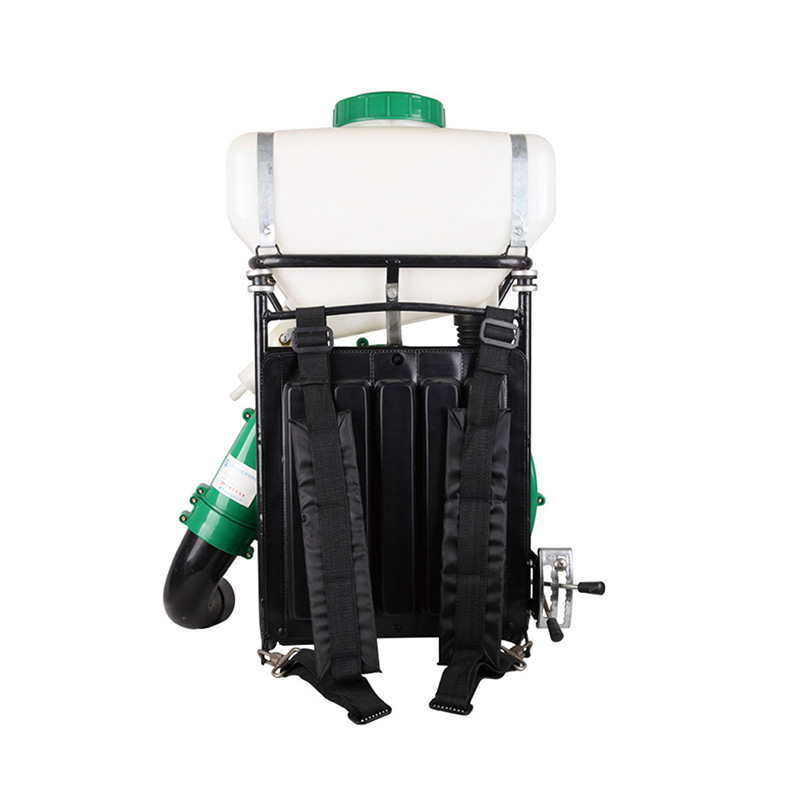
Knapsack Power Sprayer (Gasoline/Motorized): When tackling massive commercial plots, you need maximum output. A motorized knapsack power sprayer utilizes a small gas engine to force air and liquid over vast distances. It proves ideal for heavy mist-blowing and high-volume canopy penetration. Unfortunately, it ranks as the heaviest option. It demands strict fuel management and regular engine maintenance. You must also manage significant noise and toxic emission challenges.
Critical Specifications for a High Pressure Agriculture Sprayer
Do not buy equipment based on tank appearance alone. Look at the hard numbers. The specifications dictate how the unit actually performs in the field.
Pressure Range (PSI/Bar)
Pressure controls droplet dynamics. Understanding this relationship prevents disastrous crop damage. Fine mists require high pressure. Fungicides and insecticides rely on tiny droplets to coat the entire leaf surface uniformly. Conversely, applying herbicides demands lower pressure. High pressure atomizes herbicides into a fog, which the wind easily carries away. This drift kills neighboring, non-target crops. A quality high pressure agriculture sprayer always features a reliable pressure regulator valve to swap between these modes safely.
Tank Capacity and Weight Realities
Buyers often mistakenly purchase the largest tank available. You must analyze the direct trade-off between refill frequency and operator endurance. A standard 20-liter tank holds 20 kilograms (44 lbs) of liquid weight alone. Add the empty hardware weight, and your operator carries over 50 lbs on their back. Heavy loads compromise balance and accelerate exhaustion. Target the 15-liter range for standard daily use unless your operators possess exceptional physical endurance.
Nozzle Versatility
The nozzle acts as the final control point for your chemicals. Never rely on a single, fixed nozzle. Different tasks require entirely different spray patterns. Hollow cone nozzles work perfectly for penetrating foliage with insecticides. Flat fan nozzles deliver crisp, straight lines ideal for weed control along pathways. Adjustable brass nozzles allow quick field transitions. Ensure your chosen equipment accepts standard interchangeable nozzles to avoid buying multiple specialized units.
Expert Tip: Look for equipment utilizing standard ISO-compliant nozzle threads. This ensures you can buy replacement tips at any local farm supply store.
Implementation Risks, Ergonomics, and Shortlisting Logic
Long-term value relies on daily usability and maintenance ease. A powerful machine fails if the operator refuses to wear it or if parts remain unavailable.
Harness and Ergonomics
Poor strap design ranks as the leading cause of operator complaints. Thin, unpadded straps dig violently into the shoulders under heavy loads. This causes severe pain and reduces walking speed. Demand heavily padded, contoured shoulder straps. More importantly, insist on a robust waist belt. A good waist belt shifts the heavy liquid weight away from the fragile shoulders and anchors it firmly onto the hips. A rigid, contoured backplate also prevents the tank from rolling side-to-side during operation.
Material Durability
Cheap plastics shatter in agricultural environments. Constant sunlight exposure degrades weak materials rapidly, making them brittle. You must specify high-density polyethylene (HDPE) for the tank construction. HDPE resists chemical corrosion effectively. Ensure the manufacturer includes UV inhibitors in the plastic blend. This prevents field cracking and extends the life of your equipment significantly.
Serviceability & Parts Availability
Every sprayer eventually leaks. O-rings degrade and seals dry out. A sprayer remains only as good as its replacement seals. Avoid obscure brands without local support. Shortlist only manufacturers offering highly accessible maintenance kits. You want standardized internal O-rings, clear exploded-view diagrams, and transparent warranty terms. If you cannot order a seal kit easily, discard the brand from your list.
Next-Step Action
Stop guessing your requirements. Recommend a strict internal audit before finalizing any purchase order. First, catalog your current chemical inventory to see if you use more powders or liquids. Second, measure your average daily spray duration to calculate battery or fuel needs. Third, weigh your current operators' lifting limits. Build your purchasing profile based purely on this audit.
Sprayer Shortlisting Logic Framework
Audit Result
Required Hardware Path
Heavy use of Wettable Powders
Diaphragm Pump System
Strict Liquid Herbicide Use
Piston Pump System
Indoor/Enclosed Operations
Battery or Manual Driven Units
Tall Tree Canopy Applications
Motorized / Gasoline Powered Units
Long Shift Durations (>4 hours)
Hip-belt Harness + Battery Power
Conclusion
Selecting reliable equipment eliminates daily operational friction and protects your crop investments. You must match your internal pump technology directly to your most used chemical formulations. Choose your power source based on the realistic scale of your daily operations, and match your pressure output to specific crop targets.
Remember that operator comfort drives daily efficiency. Investing heavily in ergonomic harnesses and easily serviceable parts yields massive long-term value. Skip the cheapest upfront options. Prioritize repairability, UV-resistant materials, and proper weight distribution to keep your farm running smoothly all season long.
FAQ
Q: What is the difference between a piston and a diaphragm sprayer?
A: Piston sprayers use a cylindrical plunger to generate high pressure, making them ideal for liquid herbicides. However, they easily suffer damage from abrasive chemicals. Diaphragm sprayers use a flexible membrane that isolates the pump mechanism. They handle abrasive wettable powders perfectly but generally produce slightly lower maximum pressure limits.
Q: What capacity should I choose for standard farm use?
A: The 15 to 20-liter range represents the standard sweet spot for standard farm operations. It balances adequate area coverage with realistic human weight limits. Remember that a full 20-liter tank holds roughly 44 lbs of liquid weight, plus the hardware. Buy smaller 15-liter tanks if operators experience severe fatigue.
Q: How do I maintain consistent pressure during orchard spraying?
A: Manual hand-pumps naturally cause pressure fluctuations as the operator tires. To fix this, install a dedicated pressure regulator valve on your wand to ensure uniform output. Alternatively, upgrading to a battery-operated or motorized unit guarantees continuous, steady flow regardless of operator physical exhaustion.
Q: Are battery-powered sprayers worth the extra cost?
A: Absolutely. They completely eliminate manual pumping, which drastically reduces physical fatigue. This labor saving translates to faster field coverage and happier operators. Furthermore, the continuous automatic pressure guarantees uniform droplet sizes, preventing chemical waste and maximizing your targeted treatment efficacy.
Shixia Holding Co., Ltd. was establishes in 1978, that has more than 1,300 employees and more than 500 sets of various injection molding machines, blow molding machines and other advanced equipment.