You will find that using a spray for roaches works better than a bomb in most cases. Sprays let you target hiding spots where roaches nest, which increases your chance of long-term control. Safety matters, too. Many people report health problems like coughing or nausea after using bombs. Common risks include:
Respiratory irritation and allergic reactions.
Fire hazards from flammable chemicals.
Residue left on surfaces, which can harm children and pets.
Choose methods that keep your home safe and give lasting results.
Key Takeaways
Sprays are better than bombs for roaches. You can spray right where roaches hide. Sprays also last longer and keep working. Roach bombs spread chemicals fast but miss deep hiding spots. Bombs can also be dangerous for health and cause fires. Sprays are safer if you use them in cracks and corners. They work better for getting rid of roaches for a long time. Using bombs first can kill roaches quickly. Then, spraying after helps stop more roaches. This works best for really bad roach problems. Keep your home clean to stop roaches from coming. Seal up holes and cracks so roaches cannot get in. Using baits or calling a pro can also help control roaches.
Roach Bombs
What They Are
Roach bombs are also called foggers. You use them in a room to fight roaches. When you set one off, it makes a mist of chemicals. The mist spreads in the air and lands on things in the room. Most store-bought roach bombs have different active ingredients, such as:
Pyrethrins: These come from chrysanthemum flowers and attack bugs’ nervous systems.
Pyrethroids: These are man-made chemicals like cypermethrin, prallethrin, permethrin, and tetramethrin. They make roaches unable to move and cause death.
Insect Growth Regulators (IGRs): Chemicals like hydroprene or methoprene stop baby roaches from growing up.
Synergists: Things like Piperonyl Butoxide (PBO) and MGK 264 help the insecticides work better.
Inert ingredients: These are not active but help spread the mist.
How They Work
You start a roach bomb by pressing a button or tab. The can lets out a fine fog that fills the room. This fog tries to get into cracks and small hiding places. The chemicals in the fog attack the roaches’ nervous systems and kill them fast. After the fog settles, a thin layer of insecticide stays on surfaces. This layer can kill any roaches that touch it later.
Tip: Always read and follow the label instructions to stay safe.
Here is a quick look at how roach bombs work compared to sprays:
Method | Mechanism of Action | Advantages | Limitations |
Roach Bombs | Make a fine mist or fog of insecticide that spreads everywhere, even into cracks and hard-to-reach spots. It attacks the nervous system and leaves a leftover effect. | Covers big areas fast and evenly. | Might not get deep into all hiding places; can make roaches run away. |
Limitations
Roach bombs may seem strong, but they have some big problems:
The mist often does not get deep inside walls, under appliances, or behind cabinets where roaches hide.
The effect does not last long. Roaches that miss the mist can live and come back.
Roaches can get used to the chemicals, so bombs stop working as well.
Bombs can be dangerous. The chemicals can bother your lungs, skin, or eyes. Some ingredients can catch fire, which is risky.
You might need to clean up after using a bomb, especially if you have kids or pets.
Roach bombs can help if you suddenly see lots of roaches, but they do not fix the problem for good. You will probably need other ways to keep roaches away for a long time.
Spray for Roaches
Types of Spray
You can choose from several types of spray to fight roaches. Each type uses different active ingredients and works in its own way. Here is a table to help you compare the main options:
Spray Type | Active Ingredient | How It Works |
Pyrethrin/Pyrethroids | Pyrethrin, Pyrethroids | Paralyze and kill roaches quickly; safe for people but toxic to fish and reptiles |
Piperonyl Butoxide | Piperonyl Butoxide | Boosts other insecticides; needs careful use due to toxicity at high levels |
Fipronil | Fipronil | Attacks the nervous system; often used by professionals |
Boric Acid | Boric Acid | Roaches crawl through powder and eat it; works as long as it stays dry |
Indoxacarb | Indoxacarb | Used in gel baits; kills roaches and spreads to others through droppings |
Note: Always check the label to make sure the spray is safe for your home and pets.
Application
You get the best results when you use spray in the right places. Roaches hide in cracks, corners, and under appliances. Focus your spray on these spots. Here are some tips to help you:
Spray along baseboards, behind refrigerators, and under sinks.
Use a thin layer. Too much spray can make roaches avoid the area.
Clean the area first so the spray sticks better.
Keep sprays and powders away from food and dishes.
Reapply as needed, especially if you see new roach activity.
You can also use dusts like boric acid in dry, hidden spots. These work slowly but can help control roaches over time.
Residual Spray
Residual sprays keep working after you apply them. Some can last for weeks or even months, depending on the surface and the product. For example, pyrethroid sprays can stay active for 2 to 4 weeks on most surfaces. On wood, some formulas last up to 8 months. Humidity, cleaning, and the type of surface can change how long the spray works.
Residual sprays give you longer-lasting protection than bombs. You may need to reapply if you clean the area or if the spray gets wet.
Sprays are usually safer and more effective for long-term control. They let you target where roaches hide and keep working to stop new bugs from moving in.
Effectiveness
Immediate Results
You want fast results when you see roaches in your home. Roach bombs can kill some roaches on contact. The mist spreads quickly and knocks down bugs that are out in the open. You may notice dead roaches soon after using a bomb. However, this effect does not last. Many roaches hide during the day and avoid open spaces. Bombs often miss these pests.
Sprays also kill roaches on contact. You can aim the spray directly at any roach you see. This gives you control over where the insecticide goes. You can treat cracks, corners, and other places where roaches run. Sprays work fast and let you target the problem areas right away.
Hidden Roaches
Most roaches do not stay out in the open. They hide in cracks, behind appliances, and inside walls. Bombs release a fog that fills the room, but the mist cannot reach deep into these hiding spots. A study from North Carolina State University found that bug bombs do not control cockroach populations because they fail to reach the cracks and crevices where roaches live. Even when you follow the instructions perfectly, bombs have no impact on hidden roaches. The EPA also says that pesticides must touch the pest to work, which bombs cannot do for roaches in hidden places.
Researchers checked homes after using bombs and saw no drop in roach numbers. Roaches from these homes survived bomb exposure, showing that many can resist or avoid the chemicals. Bombs also leave pesticide residue on surfaces where people walk, but not where roaches hide. This increases health risks without helping to control the pests.
Sprays give you a better chance to reach hidden roaches. You can apply the product directly into cracks, behind stoves, and under sinks. This targeted approach helps you attack the root of the problem, not just the bugs you see.
Lasting Control
You want a solution that keeps roaches away, not just a quick fix. Bombs only kill the roaches that come into contact with the mist. They do not leave much protection behind. Roaches that hide during the bombing will come out later and keep the infestation going. Bombs also do not address the real cause of the problem, such as entry points or hidden nests.
Sprays, especially residual sprays, keep working after you use them. Some formulas last for weeks or even months. This means that any roach that walks through the treated area later will also die. You get longer-lasting control and reduce the chance of the roaches coming back. For severe infestations, experts recommend using targeted methods like sprays or gel baits for the best results.
Tip: For the best long-term results, use sprays in cracks and crevices and keep your home clean to prevent new infestations.
Safety
Health Risks
Using roach bombs can be risky for your health. The chemicals inside, like pyrethrins and pyrethroids, can hurt you if you breathe them in or touch them. People often have problems after using roach bombs. Some common issues are:
Coughing, trouble breathing, and pain in your throat or nose
Feeling sick, throwing up, stomach pain, and cramps
Headaches and feeling dizzy
Skin or eyes getting red or itchy
Worse symptoms for people with asthma or breathing troubles
Most of these problems happen when you do not use the bombs the right way. If you stay inside while the bomb is working, come back too soon, or use too many bombs, you can get sick. Kids, pets, and people with allergies or asthma can get hurt more easily. Sometimes, the problems are small and go away fast, but some people have gotten very sick or even died.
Roach bombs also leave a layer of dangerous stuff on things in your house. This can bother your skin or eyes if you touch it. You might also breathe in leftover chemicals if you do not open windows and air out your home after using a bomb.
If you use spray the right way, it is safer. Sprays let you treat only the places where roaches hide. You do not fill the whole room with chemicals. But you still need to be careful. Sprays can bother your eyes, nose, or throat if you breathe them in. Some people may get headaches or feel dizzy. Always keep sprays away from food, dishes, and kids.
Tip: Always read and follow the label on any pest control product. Good airflow and using products the right way help keep you safe.
Home Safety
Roach bombs are not just bad for your health. They can also start fires or blow up if you use them wrong. The chemicals in bombs can catch fire easily. If you use too many bombs or set them off near flames, pilot lights, or electric things, you could have a big accident.
Here are some safety tips to remember:
Bug bombs can catch fire if they are close to stoves, heaters, or pilot lights.
Electric things like fridges or air conditioners can spark and start a fire.
Using more bombs than the label says makes fire or explosion more likely.
Using foggers in small places like closets can make dangerous fumes build up.
You must leave your home right after starting a bomb and stay out as long as the label says.
A real story shows how risky this can be. Someone used nine foggers in a house that only needed two. The extra chemicals filled the air. When a pilot light turned on, it caused a big fire and explosion. Always count how many bombs you need and turn off all flames before you use them.
Sprays do not have the same fire danger. You only spray where you need, so you do not fill the air with things that can burn. Still, keep sprays away from flames and use them where there is fresh air.
Aspect | Bug Bombs (Foggers) | Roach Sprays |
Application | Fills whole room with chemicals | Targets certain spots |
Health Risks | Breathing and stomach problems; skin/eye trouble; higher risk for sensitive people | Eye, nose, throat irritation; headaches; dizziness |
Fire/Explosion Risk | High if used near flames or too many used | Low if used the right way |
Residue | Covers all surfaces, even food and toys | Stays only where sprayed |
Safety Tips | Leave area, open windows, avoid flames, follow label | Open windows, keep away from food, follow label |
Never use more bug bombs than the label says. Always turn off all flames and unplug things before you use them.
Pros and Cons
Bombs
Roach bombs offer some benefits, but you should know their drawbacks before using them.
Pros:
Easy to use. You just set off the canister and leave the room.
Covers large areas quickly, which helps if you have a big space.
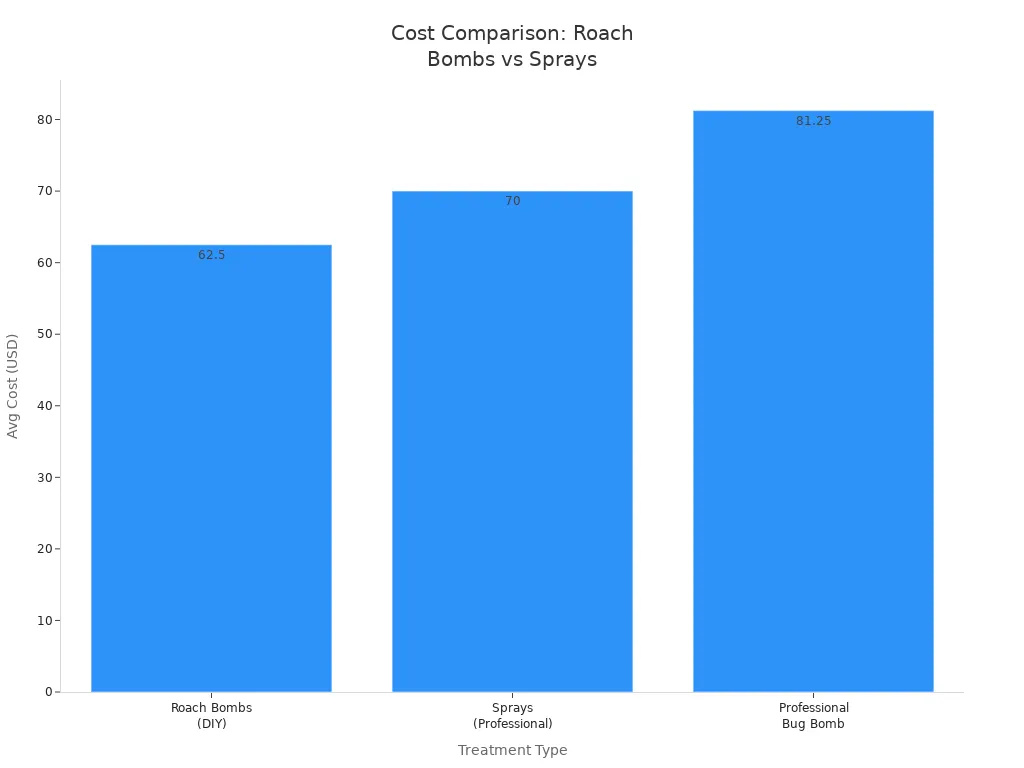
Lower upfront cost. One canister costs between $10 and $35. For an average home, you might spend $50 to $75 for a full treatment.
Cons:
Limited effectiveness. Bombs often miss roaches hiding deep in cracks or behind appliances.
Health and safety risks. You must leave your home for 2 to 4 hours. Afterward, you need to clean surfaces and wash exposed items.
Leaves residue on furniture, toys, and food surfaces.
Roaches may become resistant to the chemicals over time.
Tip: Always follow the label instructions and never use more bombs than needed.
Treatment Type | Cost Range (DIY or Professional) | Typical Use Case | Notes on Effectiveness and Frequency |
Roach Bombs (Bug Bombs) | $10 - $35 per canister (DIY) | Minor to moderate infestations, hard-to-reach areas | Average total cost ~$50-$75 for 2,000 sq.ft. home; cheaper DIY option |
Sprays
Sprays give you more control over where you treat for roaches. Here are the main pros and cons:
Pros:
Lets you target cracks, crevices, and other hiding spots.
Offers longer-lasting protection, especially with residual formulas.
Safer for your family and pets when used as directed.
No need for long evacuations. You only need to wait until the spray dries before re-entering the area.
Cleanup is simple. You avoid deep cleaning right away, which helps the treatment last longer.
Cons:
Professional sprays cost more. Each visit can range from $40 to $100, and you may need more than one treatment.
DIY sprays may not work as well as professional products.
You must reapply sprays if you clean the treated areas or if the spray gets wet.
Treatment Type | Average Time Before Re-Entry / Cleanup | Additional Cleanup Notes |
Sprays | No immediate cleaning; wait until spray dries and settles (time varies from days to months) | Avoid deep cleaning treated surfaces immediately to not disrupt treatment; gradual cleanup over time |
For best results, always follow the instructions on the product label and keep children and pets away until the area is safe.
Expert Advice
When to Use Bombs
You might think about using roach bombs when you see a sudden, large outbreak of roaches in open areas. Experts say bombs can help knock down visible pests quickly. However, bombs do not reach deep into cracks or behind appliances. You should not rely on bombs alone for long-term control. Use them only as a first step if you need fast action in a big space. Always follow safety instructions and leave your home during treatment.
Tip: Roach bombs work best as an emergency measure, not as your main solution.
When to Use Sprays
Professional exterminators recommend sprays for most home infestations. Sprays let you target cracks, crevices, and other hiding spots where roaches live. You can apply the product under sinks, behind stoves, and inside cabinets. This method kills roaches where they hide and helps prevent new ones from moving in. Sprays also reduce the amount of chemicals in the air, making them safer for your family and pets. Experts agree that sprays are more effective for long-term control because you can treat the exact places where roaches nest.
Combining Methods
Pest control experts say you get the best results when you use more than one method. They suggest a multi-step plan:
Identify the type of roach in your home.
Use bombs only for quick knockdown if you see many roaches at once.
Follow up with targeted sprays in cracks and hidden areas.
Seal entry points to stop new roaches from coming in.
Monitor the problem and repeat treatments if needed.
Step | Purpose |
Bombs (if needed) | Quick knockdown in open areas |
Sprays | Targeted, lasting control |
Sealing/Monitoring | Prevent and track infestations |
Experts call this an integrated pest management approach. You combine different tools to get the best results and keep your home safe.
Alternatives
Baits and Gels
You can use baits and gels for a safer and more effective way to get rid of roaches. These products attract roaches to eat poison, which they then carry back to their nest. This method kills more roaches, even the ones you do not see. Recent studies show that liquid and gel baits can kill at least 80% of adult roaches in less than a month. Some bait stations, like Hot Shot, can wipe out almost all roaches in just one day. These results are much better than what you get with bombs or sprays. Sprays often miss hidden roaches and do not last as long. Baits and gels work well in kitchens, bathrooms, and other places where roaches hide.
Tip: Place baits in corners, under sinks, and behind appliances for best results.
Integrated Pest Management
Integrated Pest Management (IPM) gives you a smart plan for long-term roach control. You use many tools together, not just chemicals. IPM works best when you:
Check for roaches often with traps and by looking in hiding spots.
Keep your home clean and remove clutter to take away roach hiding places.
Use gel baits with strong ingredients like indoxacarb, which can spread poison through the whole roach group.
Try non-chemical tools, such as vacuuming and sticky traps, to help lower the number of roaches.
Learn about roach habits and teach others in your home how to help.
Field studies show that IPM can cut roach numbers by over 90% in two months. You also lower the amount of allergens in your home over time. You get better results when everyone in the home helps keep things clean and follows the plan.
Prevention
You can stop roaches before they start by following simple steps. Public health experts suggest these actions:
Store food in sealed containers and keep pet dishes covered.
Clean kitchen surfaces to remove grease and crumbs.
Fix leaks to keep things dry.
Seal cracks and holes near doors and windows.
Watch for signs of roaches, like droppings or egg cases.
Remove clutter to take away hiding spots.
Use traps or baits if you see roaches.
Call a professional if you cannot control the problem.
Prevention works best when you keep your home clean, dry, and free of clutter. Regular checks and quick action help you avoid big infestations.
You get better results and safety when you use targeted methods instead of bombs. Experts and studies show that bombs often miss hidden roaches and can cause health risks. Long-term control works best when you keep your home clean, seal entry points, and use baits or professional help if needed. Regular inspections and good habits help prevent future infestations. If you face a stubborn problem, pest control experts can create a plan that fits your home.
Stay proactive with cleaning, sealing, and monitoring to keep your home roach-free.
FAQ
Can you use a roach bomb and spray together?
You can use both, but experts suggest using a bomb first for quick results. Afterward, use sprays in cracks and hidden spots. This approach helps you target both visible and hidden roaches.
How long do you need to stay out after using a roach bomb?
Most labels say you must leave your home for at least 2 to 4 hours. Always check the product instructions. Open windows and air out your home before returning.
Are roach sprays safe for pets and children?
Sprays are safer than bombs when you use them as directed. Keep pets and children away until the spray dries. Always read the label for safety tips.
Do roach bombs damage furniture or electronics?
Roach bombs can leave residue on furniture and electronics. You may need to clean surfaces after use. Cover or remove sensitive items before setting off a bomb.
What should you do if sprays or bombs do not work?
If you still see roaches, try baits or gels. Clean your home and seal entry points. For severe infestations, contact a pest control professional for help.