For gardening maintenance, agricultural spraying, and light-duty outdoor care tasks, many users find it challenging to choose between a power sprayer and a manual sprayer. Though both tools are built for liquid spraying, power sprayers use motor-driven force to deliver high-efficiency, uniform application—ideal for large-scale jobs—while manual sprayers rely on hand-generated pressure for small-area, precise spraying. This guide breaks down their core differences to help you choose the perfect tool for your needs, and answers the most common questions about these essential devices.
What is a Power Sprayer?
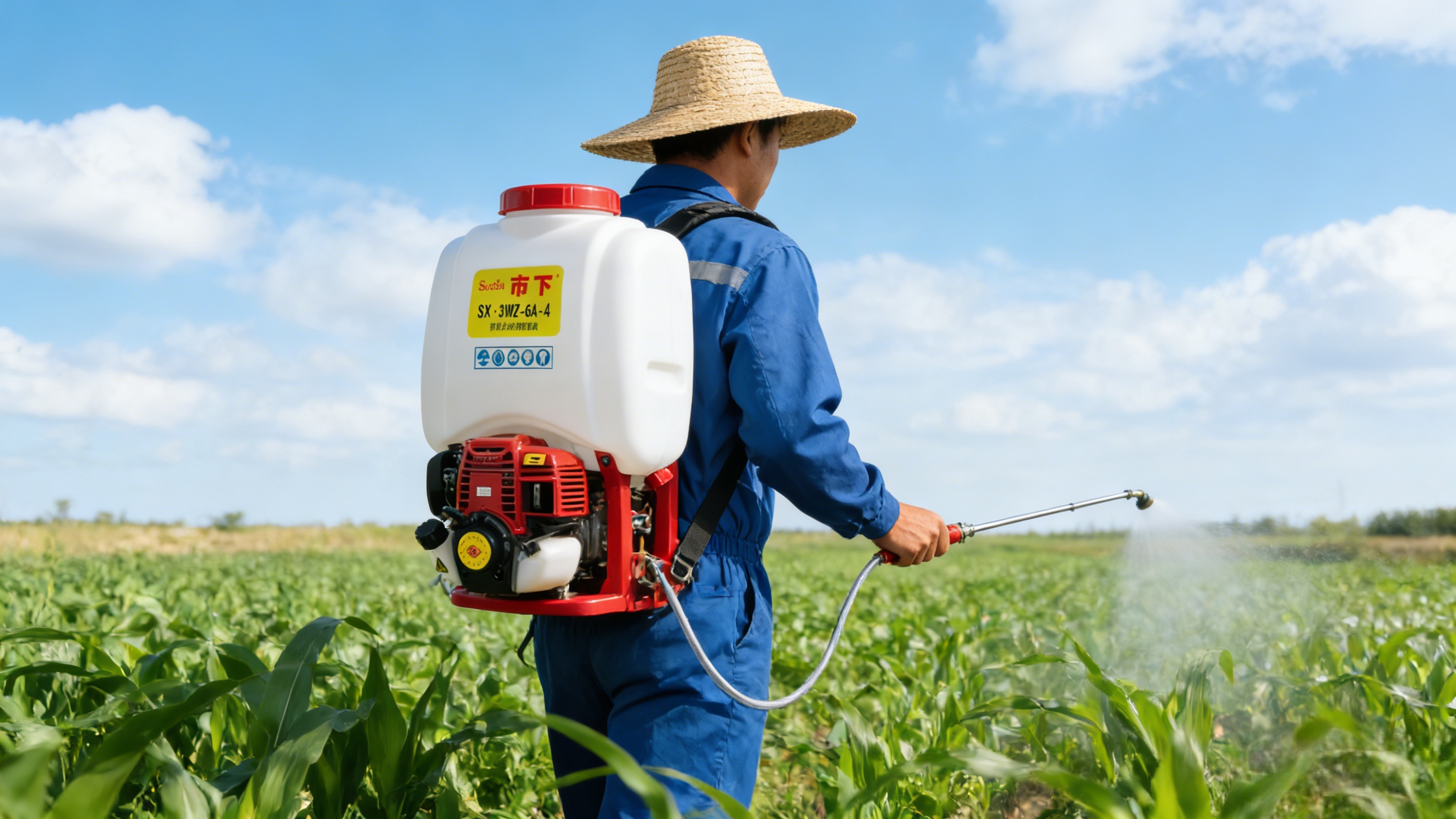
A power sprayer is a motor-driven spraying device that uses an electric or gasoline engine to power a pump, delivering liquids—including pesticides, fertilizers, herbicides, and water—from the nozzle with stable, adjustable pressure. As a versatile agricultural sprayer, it is distinctly different from high-pressure cleaning equipment: instead of focusing on strong impact force for dirt removal, it prioritizes uniform liquid distribution and spraying efficiency. Its core advantage is automating the spraying process, reducing manual labor intensity, and ensuring consistent application density, making it suitable for both home gardening and medium-scale agricultural or horticultural maintenance.
Core Features of Power Sprayers
• Pressure Rating (PSI): Measured in pounds per square inch (PSI), the output pressure typically ranges from 50-300 PSI (adjustable). Low pressure (50-100 PSI) is suitable for delicate spraying tasks like flower and seedling fertilization; medium pressure (150-300 PSI) works for large-area crop pesticide application, balancing penetration and safety.
• Liquid Flow Rate (GPM/LPM): Measured in gallons per minute (GPM) or liters per minute (LPM), it determines the liquid output per unit time. An adjustable flow rate adapts to different spraying needs—high flow for large-area plots and low flow for precise spot spraying—helping conserve resources while ensuring effective application.
• Accessory System: Equipped with adjustable nozzles (fan, cone, mist), large-capacity liquid tanks (10-50L), extendable hoses, and anti-drip devices. Fan nozzles expand coverage for large-area spraying, cone nozzles enable targeted application, and anti-drip designs prevent liquid waste and crop damage.
Application Scenarios of Power Sprayers
It is mainly used in scenarios requiring uniform liquid application, such as pesticide or herbicide spraying on agricultural crops, orchard fertilization, garden green belt maintenance, and large-area lawn watering. It is also suitable for disinfection spraying in farms, parks, and other public spaces—all situations where stable, efficient liquid distribution is the core demand, rather than cleaning impact force.
How Does a Manual Sprayer Work?
A manual sprayer is a simple tool that relies on manual pressure. Without electric or fuel-driven components, it increases tank internal pressure by manually pumping air, atomizing and spraying liquid through the nozzle. Designed for portability and simplicity (rather than cleaning capability), it is ideal for small-scale, low-intensity spraying tasks, widely used in home gardening and small-scale planting.
Core Features of Manual Sprayers
• Low-Pressure Output: Manual pressure is inherently limited, with actual working pressure typically only 10-50 PSI. The atomization effect is moderate, and it lacks the impact force needed for cleaning—functioning solely for simple liquid spraying.
• Simple Structure: Composed of a liquid storage tank, manual air pump, nozzle, and hose, with no complex accessories. It is low-cost and lightweight but has poor sealing and durability, prone to issues like liquid leakage and insufficient pressure.
• Operational Limitations: It requires frequent manual pumping (every 10-15 minutes), resulting in short continuous operation time and small coverage area. Limited to small-capacity tanks (1-5L), long-term use is likely to cause shoulder and back fatigue.
How to Choose: Power Sprayer or Manual Sprayer?
The choice depends primarily on your task type, operation scope, and functional requirements. Below is a guide to help you match the right tool to your needs:
Choose a Power Sprayer If You Need...
• Medium-Large Area Spraying: For applying pesticides, fertilizers, or disinfectants to areas over 20㎡—such as vegetable gardens, orchards, or community green belts—where efficiency and uniformity are critical.
• Continuous, Labor-Saving Operation: If you cannot perform frequent manual pumping, or if you seek consistent spraying results (avoiding uneven distribution from manual operation).
• Versatile Liquid Application: Needing to switch between different liquids (pesticides, fertilizers, disinfection solutions) and spraying modes (mist, cone, fan) for multi-scenario use.
Choose a Manual Sprayer If You Need...
• Small-Scale Spraying Tasks: Watering and fertilizing balcony potted plants, window sill greenery, or occasional pesticide spraying in small flower beds.
• Portable and Simple Operation: No need for power or fuel, prioritizing portability for low-frequency, low-intensity tasks.
• Cost-Effective Solution: If you have a limited budget, only need basic spraying functions, and don’t require high-performance equipment.
FAQ
Q1: Can a manual sprayer replace a power sprayer for cleaning?
A: No. Power sprayers are designed for liquid application, not cleaning—their pressure is too low to generate cleaning impact, so they cannot remove dirt, oil stains, or similar debris. Similarly, high-pressure cleaning equipment cannot replace power sprayers, as their excessive pressure damages crops and causes uneven liquid distribution.
Q2: Can a power sprayer be used to spray pesticides and fertilizers?
A: Yes, it is ideal for this purpose. Power sprayers are specifically designed for applying pesticides, fertilizers, and disinfectants—their adjustable low-to-medium pressure and uniform atomization ensure liquids adhere to crops without damage. Unlike high-pressure cleaning equipment, they do not disperse liquids or cause splashing, making them safe and efficient for agricultural and horticultural use.
Q3: Which is more suitable for home users: a manual sprayer or a power sprayer?
A: It depends on needs. If you only need to water and fertilize plants in gardening, a manual sprayer is more suitable for home use due to its low cost and portability; if you have needs for cleaning yards and driveways, although a power sprayer is more expensive, it can efficiently solve stubborn dirt, improve cleaning efficiency, and is more worry-free for long-term use.
Conclusion
To meet the needs of home gardening, agricultural planting, and public green space maintenance, SeeSa offers high-quality power sprayers and manual sprayers—balancing applicability, durability, and ease of use for global overseas users. Whether you need a power sprayer for efficient, uniform large-area spraying or a manual sprayer for small-scale precise care, SeeSa has you covered. With reliable quality and comprehensive after-sales service, it has become the preferred brand for overseas users in horticultural and agricultural maintenance.