Introduction
Have you ever wondered how modern farmers spray chemicals efficiently over vast fields?
The ATV Sprayer is the solution many rely on. In this article, we will explore how ATV sprayers work, their different types, and how to choose the right one for your farm. You'll gain insight into optimizing spraying efficiency and improving crop protection with the right equipment.
What Is an ATV Sprayer?
Definition of an ATV Sprayer
An ATV sprayer is a specialized spraying system mounted onto an All-Terrain Vehicle (ATV) or Utility Task Vehicle (UTV). This tool allows farmers and landowners to apply various chemicals like fertilizers, herbicides, pesticides, and fungicides across large or uneven fields, forests, or pastures. The ATV sprayer is designed to maximize efficiency by leveraging the vehicle's mobility, which can access areas that traditional tractors or push-behind sprayers cannot.
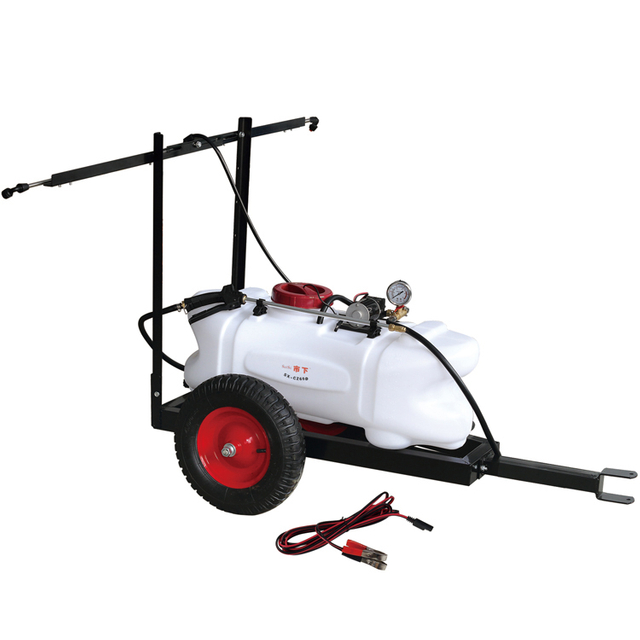
Key components of an ATV sprayer:
● Tank: Holds the spraying liquid, varying in size depending on the field's needs.
● Pump: Pressurizes the liquid to ensure a smooth flow through the hose to the nozzles.
● Hose: Carries the liquid from the tank to the spray nozzles.
● Nozzles & Booms: Distribute the chemicals over the field evenly. Booms are typically mounted horizontally, while nozzles can be adjusted to control spray patterns.
How Does an ATV Sprayer Work?
The operation of an ATV sprayer is fairly straightforward. The system works by using the ATV’s 12-volt battery to power the pump, which pressurizes the chemicals stored in the tank. This pressure forces the liquid through hoses to the spray nozzles or booms, ensuring an even and precise application over the target area.
The main advantage of this setup is that it can cover large areas faster and more effectively than handheld sprayers, making it a perfect solution for medium to large-scale farming operations. As the operator drives the ATV, the sprayer system applies the chemical across fields, ensuring the job is done in less time with minimal effort. The flexibility of the ATV allows it to handle uneven terrains or areas that are hard to reach by larger equipment.
Benefits of Using an ATV Sprayer in Farming
One of the key benefits of using an ATV sprayer in farming is its mobility. Farmers can quickly move across uneven ground, hills, or narrow paths, making it a highly versatile tool for varied agricultural needs. Here’s how it benefits farming operations:
Advantages of Mobility:
● Easy to Navigate: ATVs can access fields that are challenging for tractors or push-behind sprayers.
● Versatility: Ideal for orchards, vineyards, or small, irregularly shaped plots where larger machines can't go.
Efficiency and Speed:
An ATV sprayer can cover large areas in a shorter amount of time compared to traditional methods. This means farmers can apply fertilizers, herbicides, or pesticides without frequent breaks to refill or reposition. This also translates to reduced labor costs and higher productivity.
Different Types of ATV Sprayers
Boom Sprayers
Boom sprayers are one of the most common and versatile types of ATV sprayers. These sprayers are equipped with a horizontal frame, known as a boom, that holds multiple nozzles for spraying across wide areas. The boom allows for even distribution of chemicals, ensuring broad coverage with minimal overlap. This type of sprayer is ideal for large, flat fields where consistent and uniform coverage is essential.
Key Features of Boom Sprayers:
● Adjustable boom width: This allows farmers to customize the spray area, making it easy to cover different field sizes.
● High efficiency: Able to cover wide swaths in a single pass, reducing the overall spraying time.
● Precision control: Many modern boom sprayers, such as those from Seesa, come with adjustable pressure systems, ensuring that the right amount of chemical is applied for optimal crop protection.
Use Cases for Boom Sprayers:
● Large-scale farming operations: They are perfect for covering vast agricultural lands, such as grain fields or orchards.
● Vineyards and orchards: Precision application helps maintain crop health with minimal wastage of chemicals.
Spot Sprayers
Spot sprayers are designed for targeted spraying, making them highly effective for areas with specific issues, such as weed control or pest management. Unlike boom sprayers, spot sprayers focus on applying chemicals only where they are needed, reducing the amount of chemicals used and minimizing environmental impact. These sprayers typically have one or a few nozzles that can be aimed precisely at a particular area.
Key Features of Spot Sprayers:
● Precision: Focused application, perfect for small areas or treating specific patches.
● Flexibility: Ideal for uneven fields or areas with obstacles that larger equipment cannot reach.
● Reduced Chemical Use: Since the spray is concentrated on the affected areas, it reduces overall chemical consumption, making it more environmentally friendly.
Use Cases for Spot Sprayers:
● Smaller-scale farming: These sprayers are perfect for farms that need to treat small patches, such as vegetable gardens or orchards.
● Specific treatments: Spot sprayers are excellent for controlling weed growth in areas with heavy infestation or dealing with pest outbreaks in confined spaces.
Broadcast Sprayers
Broadcast sprayers are designed to distribute chemicals evenly across a wide area, making them highly efficient for large-scale applications. This type of sprayer works by using a high-pressure system to deliver chemicals in a uniform manner over a large surface area, ensuring quick and consistent coverage.
Key Features of Broadcast Sprayers:
● Wide Coverage: Perfect for spraying large fields, pastures, or other expansive areas.
● Even Distribution: Ensures that the chemicals are applied uniformly across the field, which helps in achieving better results.
● High Efficiency: Reduces the need for multiple passes, making it faster and more efficient compared to smaller sprayers.
Use Cases for Broadcast Sprayers:
● General Field Spraying: Broadcast sprayers are ideal for applying herbicides, fertilizers, and pesticides over large agricultural fields or orchards.
● Large-scale Crop Protection: They are essential for quickly treating broad-acre crops, ensuring the entire area is adequately covered.
Here’s a comparison table to highlight the benefits of broadcast sprayers:
Boomless Sprayers
Boomless sprayers are ideal for rough terrain and areas where maneuverability is key. These sprayers use specially designed nozzles to distribute the chemicals across a wide area, but without the traditional horizontal boom structure. This makes them more compact and easier to navigate through narrow paths or areas with obstacles like trees, rocks, or uneven surfaces.
Key Benefits of Boomless Sprayers:
● Ideal for Rough Terrain: Because they do not have a boom, these sprayers are perfect for hard-to-reach areas where a traditional sprayer might get stuck or be inefficient.
● Compact and Lightweight: The absence of a boom makes these sprayers lighter and easier to transport or store.
● Wide Spray Pattern: Boomless sprayers still cover a large area in a single pass, although the spray may not be as even as that of boom sprayers.
Trade-offs with Boomless Sprayers:
● Less Even Coverage: While they are great for large areas, boomless sprayers might not offer the precise uniformity that boom sprayers do. This is because the nozzles create a wider spray pattern that may vary in thickness.
Use Cases for Boomless Sprayers:
● Forestry and Overgrown Areas: Perfect for spraying in wooded areas, uneven terrains, or along fence lines where boom sprayers might not be practical.
● Smaller or Confined Spaces: Useful for spraying in orchards, vineyards, and gardens where access is limited.
Boomless sprayers are a great option for specialized applications in farming where traditional boom sprayers would be too bulky or ineffective. Seesa's advanced designs offer maximum flexibility without compromising on performance, especially in rugged and hard-to-reach areas.
Key Features of an ATV Sprayer
Tank Capacity
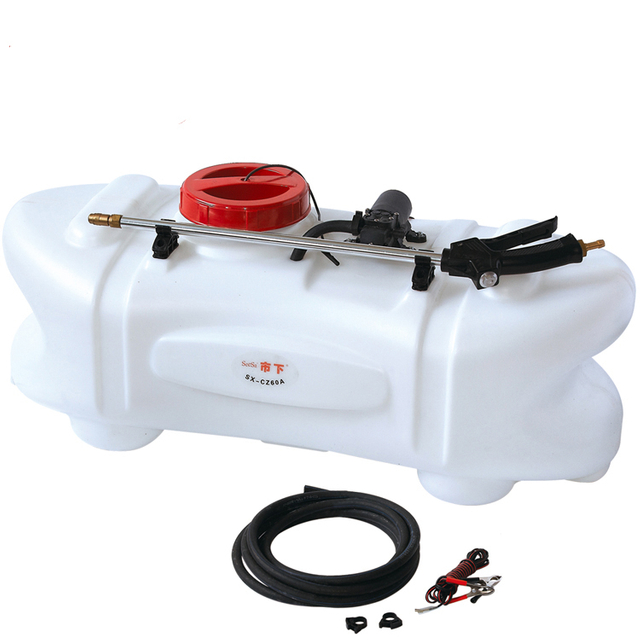
The tank capacity of an ATV sprayer is a critical feature that directly impacts the efficiency and duration of your spraying tasks. A larger tank allows you to cover more area without the need for frequent refills, making it ideal for large fields or extensive acreage. Smaller tanks, on the other hand, are more suitable for targeted treatments and smaller fields, providing flexibility and portability.
● Importance of Tank Size:Larger tanks (25-50 gallons) are perfect for larger fields or agricultural operations where high-volume application is needed.
○ Smaller tanks (15-25 gallons) are more convenient for spot spraying, treating specific areas or fields where precision is key.
Tank Size | Recommended Use |
25-50 gallons | Ideal for large acreage and extensive spraying tasks |
15-25 gallons | Best for smaller fields or targeted treatments |
Spray Width and Nozzles
The spray width and nozzle type play a significant role in the efficiency and precision of an ATV sprayer. The spray width determines how much area is covered per pass, which directly affects the speed of the spraying operation. Wider spray widths are ideal for uniform coverage in large fields, while adjustable nozzles allow you to tailor the application to specific needs, ensuring targeted treatment where it’s most needed.
● Spray Width:
○ Wider spray patterns cover more area in less time, making them suitable for fields where quick coverage is essential.
○ Narrower spray widths are better for areas with obstacles or irregular shapes.
● Nozzle Types:
○ Flat fan nozzles: Create a uniform spray pattern and are commonly used for wide, even coverage.
○ Cone nozzles: Provide a finer mist, ideal for delicate crops or fertilizer applications.
Nozzle Type | Best Use |
Flat Fan Nozzles | Provides even spray across large, open fields |
Cone Nozzles | Ideal for fine misting, especially in sensitive crops |
Drift Reduction Nozzles | Minimize spray drift, great for windy conditions |
Pressure and Flow Rate
The pressure and flow rate of an ATV sprayer are crucial factors in determining how efficiently chemicals are applied across a field. The pressure refers to the force with which the liquid is delivered to the nozzles, while the flow rate controls how much liquid is dispensed per unit of time. These factors directly influence the depth of the spray penetration and the coverage area.
● How Pressure and Flow Rate Affect Chemical Application:
○ Higher pressure is typically needed for spraying herbicides and pesticides, as it allows the chemicals to penetrate through dense vegetation or cover larger areas quickly.
○ Lower pressure is ideal for fertilizers, where a finer mist is needed to coat delicate plant leaves without damaging them.
● Adjustable Pressure for Versatility:
○ Modern ATV sprayers, like Seesa’s models, come with adjustable pressure settings, giving users the flexibility to switch between different applications with ease. For example, you can increase the pressure for pesticide application and decrease it when applying fertilizers or nutrients to crops.
Durability and Construction
The construction of an ATV sprayer is essential for its reliability and longevity. Farmers often work in tough, harsh environments where equipment is exposed to the elements, dirt, and chemicals. Therefore, choosing an ATV sprayer made from high-quality materials is crucial for ensuring it withstands wear and tear.
How to Choose the Right ATV Sprayer for Your Farm
Matching the Sprayer to Your Needs
Choosing the right ATV sprayer depends on several factors that can influence your efficiency and the effectiveness of your spraying operations. The most important factors to consider are farm size, terrain type, and chemical application needs.
Farm Size: Larger farms with extensive acreage require sprayers with larger tank capacities and wider spray widths to cover more ground efficiently. Smaller farms may benefit from more compact sprayers that allow for targeted spraying and easier maneuverability.
Terrain Type: The terrain where you’ll be spraying impacts the sprayer’s maneuverability. Rough or uneven ground may require a more flexible sprayer design, such as boomless sprayers, which are ideal for tough terrains.
Chemical Application Needs: Different types of chemicals require different pressures and flow rates. For example, herbicides may need higher pressure, while fertilizers work better with a finer mist at lower pressure.
Factors to Consider:
Tank Capacity: Larger tanks (25-50 gallons) allow longer spraying sessions without frequent refills, ideal for extensive fields. Smaller tanks are more suited for targeted treatments in specific areas.
Spray Width: A wider spray width helps you cover more area quickly, making it essential for large, open fields.
Pump Size: Ensure the pump can handle the pressure required for your application. Larger pumps can handle more demanding jobs.
ATV Compatibility: Choose a sprayer that matches your ATV’s weight capacity to ensure safe and efficient operation.
Determining Tank Size and Sprayer Capacity
The tank size of an ATV sprayer plays a crucial role in determining the operational efficiency and refill frequency. The larger the tank, the fewer times you need to stop and refill, which is essential for large-scale operations. However, choosing a tank that’s too large for your needs can make your equipment harder to maneuver, especially on uneven ground.
How to Calculate the Right Tank Size:
● Farm Size: Estimate the number of acres you need to spray. A 15-25 gallon tank may be sufficient for small operations, while a 30-50 gallon tank is more appropriate for larger acreage.
● Application Rate: The amount of liquid applied per acre will help determine the tank size. For instance, if you apply 5 gallons per acre, a 25-gallon tank can cover 5 acres without needing a refill.
Tank Size | Best For |
15-25 Gallons | Small farms, targeted applications |
25-50 Gallons | Larger fields, extensive spraying tasks |
50+ Gallons | Large-scale, high-volume spraying |
Nozzle Types and Spray Precision
The nozzle type you choose plays a crucial role in achieving spray precision with an ATV sprayer. Different nozzle types create varying spray patterns, droplet sizes, and coverage areas, influencing how effectively chemicals are applied. Selecting the appropriate nozzle ensures that the correct amount of chemical is applied exactly where it’s needed, reducing waste and improving results.
Common Nozzle Types:
● Flat Fan Nozzles: Provide an even, uniform spray across a large area. These nozzles are ideal for broad, consistent coverage over large fields.
● Cone Nozzles: Deliver a cone-shaped spray pattern, making them suitable for spraying tall crops or applying fertilizers and pesticides more delicately.
● Drift Reduction Nozzles: These nozzles minimize the drift of chemicals, particularly in windy conditions, ensuring that the spray stays within the target area and reducing environmental impact.
● Multi-Stream Nozzles: These nozzles generate multiple streams of liquid, offering better control over the spray pattern and improving efficiency by covering more area in fewer passes.
When choosing nozzles, it’s essential to consider the type of chemicals being applied, the crops, and the terrain. For instance, drift reduction nozzles are great for windy areas or sensitive environments, while multi-stream nozzles are ideal for large field applications where efficiency is key.
ATV Compatibility and Weight Considerations
Ensuring your sprayer is compatible with your ATV’s weight capacity is essential for efficient and safe spraying. The sprayer must be able to work seamlessly with your ATV without compromising its performance or maneuverability. If the sprayer is too heavy, it can reduce the stability of the ATV, making it harder to operate effectively in uneven terrains.
Key Considerations for ATV Compatibility:
● Weight Capacity of Your ATV: Make sure that the sprayer does not exceed your ATV’s weight capacity. Overloading your ATV can cause instability, affecting its ability to safely maneuver through fields or rough terrain.
● Tank Size and Weight: Larger tanks hold more liquid, allowing for longer spraying sessions without frequent refills, but they also add more weight. It's important to find the right balance between tank size and sprayer weight to maintain maneuverability while ensuring enough capacity to cover large areas.
● Maneuverability: If your ATV is small or used for more narrow applications, opt for a sprayer that is more compact and lighter in weight. This will allow for better handling, especially in tighter spaces or fields with obstacles.
Conclusion
In this article, we explored the ATV sprayer, its functionality, and various types such as boom, spot, broadcast, and boomless sprayers. We also discussed key factors like tank capacity, spray width, and nozzle types to help you select the right sprayer. Shixia Holding, known for its durable and customizable sprayers, provides tailored solutions for different farming needs, enhancing productivity and precision.
FAQ
Q: What is an ATV sprayer and how does it work?
A: An ATV sprayer is a spraying system mounted on an ATV for efficient chemical application, powered by the vehicle’s battery and pump to spray fertilizers, pesticides, and herbicides.
Q: How do I choose the right ATV sprayer for my farm?
A: Consider your farm's size, terrain, and spraying needs. Larger farms need bigger tanks and wider spray widths, while smaller operations may require more compact sprayers.
Q: What are the benefits of using an ATV sprayer?
A: ATV sprayers allow for quick, efficient chemical application over large or uneven terrain, saving time and reducing labor costs while improving spray precision.
Q: How does Seesa’s ATV sprayer compare to others on the market?
A: Seesa’s ATV sprayers stand out for their durable design, customizable features, and ability to work effectively across various terrains, making them a reliable choice for farmers.
Q: What is the price range for an ATV sprayer?
A: Prices for ATV sprayers vary based on tank size, features, and brand. Seesa offers competitive pricing and customized solutions to meet diverse farm needs.