In today’s agricultural industry, efficiency and precision define success. Rising labor costs, inconsistent spray coverage, and growing demands for sustainable practices are pushing farm managers to rethink traditional tools. That’s where the electric sprayer steps in — offering a measurable leap in productivity, consistency, and long-term savings. As one of the leading manufacturers in this field, Shixia Holding Co., Ltd., with more than four decades of expertise, provides advanced spraying solutions that help farms worldwide achieve higher yields with lower operational effort. This article explores how upgrading to a modern electric or battery powered sprayer can transform your daily operations and significantly reduce spraying time while improving coverage, crop health, and overall farm efficiency.
Faster Coverage and Consistent Pressure: What That Means on the Farm
When it comes to spraying, time and accuracy are two sides of the same coin. Manual sprayers often produce uneven pressure, leading to inconsistent droplet sizes and patchy results. An electric sprayer, on the other hand, maintains constant pressure throughout operation, ensuring every square meter receives the same amount of chemical or nutrient. This steady performance eliminates over-spraying and under-spraying issues, directly improving productivity and crop uniformity.
Coverage-Rate Examples (Area per Hour Comparisons)
Let’s look at coverage efficiency. A traditional hand-pump sprayer might cover approximately 0.4 to 0.6 hectares per hour, depending on the user’s stamina and pumping rhythm. In contrast, an electric sprayer powered by a long-lasting lithium battery can easily double that rate, handling between 1 and 1.2 hectares in the same timeframe.
For commercial farms managing dozens or even hundreds of hectares, this difference translates to major savings. Reducing spraying time not only lowers labor requirements but also minimizes downtime caused by fatigue or equipment refilling. Additionally, modern electric sprayers often allow multiple nozzles to operate simultaneously, increasing throughput and making it easier to handle uneven terrain or dense crop layouts without sacrificing uniformity.
Uniform Droplet Size → Fewer Re-Treatments
Consistent pressure also leads to uniform droplet formation. With manual sprayers, variations in pumping intensity often result in uneven coverage — fine mist in one section, heavy droplets in another. Over time, these inconsistencies cause uneven crop protection and yield variability. Electric sprayers eliminate this issue by using regulated motors that maintain exact output pressure across all nozzles.
Uniform droplet size ensures optimal leaf coverage and penetration, meaning fewer re-treatments and reduced chemical waste. Farms can also adapt the droplet size to specific crop types or growth stages, offering flexibility that hand sprayers cannot match. This adaptability further enhances operational efficiency and crop health across multiple growing cycles.
Furthermore, adjustable pressure controls on many electric sprayers allow operators to switch between fine mist for delicate seedlings and higher-pressure sprays for established crops. This versatility ensures that a single device can serve multiple purposes throughout the season, reducing the need for additional equipment purchases.
Labor Savings and Ergonomic Benefits
The shift to electric sprayers doesn’t just enhance output — it transforms the working experience. Farm work can be physically demanding, and repeated manual pumping increases fatigue and the risk of injury. Electric models are engineered to minimize these burdens, allowing workers to focus more on accuracy and less on effort.
Backpack Design & Weight Distribution
Modern electric backpack sprayers feature ergonomic harness systems, adjustable straps, and balanced weight distribution. Instead of bearing awkward loads that strain the shoulders, operators enjoy an even weight placement that reduces fatigue during long hours in the field. Shixia’s advanced sprayer designs consider both comfort and functionality, making sure the units remain stable even on uneven terrain or in humid conditions.
Some electric sprayers also integrate soft padding and ventilated back supports, helping reduce heat buildup and making them ideal for tropical or high-humidity environments. In addition, certain models incorporate quick-release straps and modular tanks, allowing operators to swap chemicals or recharge batteries rapidly without interrupting workflow — a subtle feature that enhances daily productivity on large-scale farms. For extended operations, modular battery systems allow a charged backup to be swapped in minutes, keeping the spraying process continuous and efficient.
Reduced Repetitive Pumping — Productivity Impact
The elimination of manual pumping offers more than comfort; it directly enhances productivity. Continuous pumping in traditional systems not only slows down operations but also leads to inconsistent spray rates as the operator tires. Electric sprayers automate pressure generation through an electric motor, freeing users to concentrate on precise targeting.
Studies from various agricultural research centers have shown that mechanized or battery-powered spraying systems can boost field coverage efficiency by 30–50% compared with manual methods. Over a full growing season, that improvement compounds into hundreds of saved labor hours and a measurable reduction in per-hectare operational costs. Farms with multiple workers operating simultaneously benefit even more, as consistency across operators reduces training time and mistakes. Long-term, this ergonomic advantage reduces the risk of musculoskeletal injuries, a significant consideration for farm workforce sustainability.
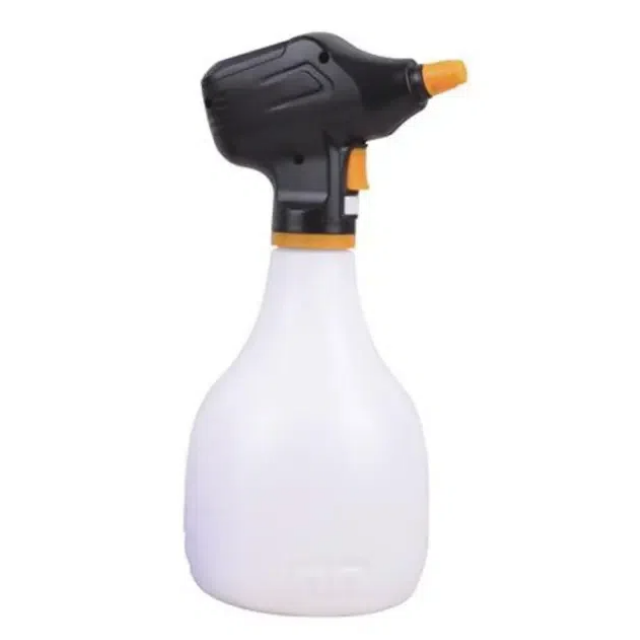
Chemical Accuracy, Waste Reduction, and Environmental Benefits
Precision application has become a top priority in modern agriculture, not only to optimize yields but also to meet stricter environmental standards. An electric sprayer gives farmers precise control over flow rates and droplet size, ensuring that chemicals reach the target area without excess runoff or drift.
Precision Spraying → Lower Chemical Use
Unlike hand sprayers that rely on user judgment, electric models often include adjustable nozzles and flow regulators. This feature allows operators to set exact volumes for herbicides, insecticides, or fertilizers. The result is more accurate application and lower chemical consumption — a critical factor as input prices continue to rise.
For example, if a farm reduces its average chemical usage by just 10% per season through improved spraying precision, the savings can easily cover the cost of the equipment within a short time. The battery powered sprayer makes such results achievable because it maintains stable flow output independent of operator effort, even during long spraying sessions or challenging crop conditions. Many models also feature automatic shut-off valves and precise electronic controls, which prevent accidental over-application and further conserve resources.
Less Drift & Better Targeted Application (Timing & Nozzle Choices)
Drift — when chemicals miss their target and spread to non-treated areas — is one of the most common inefficiencies in spraying. Electric sprayers help minimize drift by combining constant pressure with precision nozzles that produce uniform droplet sizes. Furthermore, they can be paired with timing features that allow for spraying during optimal weather conditions, ensuring chemicals land exactly where needed.
Some advanced models even integrate flow monitoring and feedback systems that alert operators if pressure drops or nozzle output becomes uneven. This additional layer of control guarantees that expensive or sensitive chemicals are applied correctly, reducing waste and environmental impact. For greenhouse operations or orchards where sensitive plants or pollinators are nearby, this level of precision ensures safer, more responsible spraying practices. The cumulative effect is better crop protection, higher yields, and a more sustainable farm operation.
Calculating ROI for Your Operation
For professional buyers and farm managers, the question is not just whether to upgrade — but when it pays off. Electric sprayers are capital investments that deliver ongoing cost reductions through higher productivity, lower labor needs, and reduced chemical usage. Estimating the return on investment (ROI) helps clarify their financial advantage.
Inputs: Purchase Price, Time Savings, Chemical Savings, Labor Costs
The calculation starts with several key inputs:
Equipment cost: The purchase price of an electric sprayer (depending on capacity and design).
Labor cost: The hourly wage for workers operating manual sprayers.
Spraying time saved: Typically 30–50% less time compared to manual methods.
Chemical savings: Estimated 10–20% reduction in pesticide or fertilizer use.
Maintenance savings: Longer lifespan and fewer moving parts mean less repair expense.
A simplified ROI formula can be written as:
ROI (%) = [(Annual Savings − Equipment Cost) / Equipment Cost] × 100
If an operation saves $2,000 annually in labor and chemical expenses using a sprayer that costs $800, the ROI in the first year is 150%. Subsequent years will deliver even higher returns since the equipment continues to generate savings with minimal maintenance. Factoring in indirect savings, such as reduced crop damage or improved yield consistency, the total financial benefit can be even higher. Additionally, durable construction and corrosion-resistant materials common in Shixia sprayers extend service life, further improving ROI over multiple seasons.
Payback Scenarios (Conservative / Typical / Aggressive)
Conservative scenario: Small-scale farms recover their investment in 12–18 months.
Typical scenario: Mid-sized operations achieve payback within one spraying season.
Aggressive scenario: Large commercial farms managing multiple hectares could break even within a few weeks during peak spraying periods.
Understanding payback timelines allows farm managers to budget for equipment upgrades confidently. When combined with proper maintenance and battery care, electric sprayers maintain optimal performance for many years, delivering long-term operational efficiency.
Case Scenarios: Which Crop or Operation Benefits Most?
Electric sprayers are versatile tools that adapt to a variety of farming systems. From broadacre row crops to high-value orchards and controlled greenhouse environments, each type of operation gains unique advantages.
Row Crops
For grains, maize, soybeans, or similar field crops, large-scale uniform spraying is essential. Electric sprayers ensure steady output even during long runs across open fields. Their extended battery life means fewer interruptions for recharging or refilling, allowing workers to cover more hectares per day. Additionally, modular tanks and multi-nozzle systems can further improve efficiency on vast tracts of farmland.
Orchards
Tree crops present different challenges — uneven terrain, canopy height variation, and dense foliage. Electric backpack sprayers with adjustable nozzles and high-pressure output make it easier to penetrate thick canopies without excessive chemical use. This feature reduces drift and waste, protecting both fruit quality and the surrounding environment. Some units also allow for customized spray angles, optimizing coverage for tall or irregularly shaped trees. Regular maintenance of filters and pumps ensures consistent performance over many seasons.
Greenhouses
In greenhouse environments, precision is everything. Over-spraying can damage delicate plants or contaminate nearby seedlings. Compact electric sprayers provide quiet, controlled spraying ideal for enclosed spaces. Because they operate without combustion engines, they produce no fumes — maintaining the clean air conditions necessary for sensitive crops. The ability to fine-tune pressure and droplet size helps greenhouse managers maintain consistent humidity and pest control conditions, increasing overall productivity while lowering chemical consumption. Additional features like variable spray patterns and programmable pressure settings allow greenhouse operators to automate certain tasks, saving labor and reducing human error.
Specialty Crops and Vineyards
Electric sprayers are increasingly used in vineyards, berry fields, and other high-value specialty crops. Their precision ensures delicate fruits are not damaged, and reduced drift protects neighboring plants or water sources. The lightweight design also makes navigating narrow rows and trellises easier, which is impossible with larger traditional sprayers.
Maintenance and Battery Care Tips
To maximize the lifespan of electric sprayers, regular maintenance is essential. Cleaning nozzles, checking seals, and inspecting tanks after each use prevent clogging and corrosion. Lithium batteries should be charged according to manufacturer guidelines and stored in a cool, dry place. Periodic calibration of flow rates ensures consistent spraying performance. Shixia sprayers are designed with easy-access parts and modular components, simplifying maintenance for busy farm teams.
Conclusion
For modern farms aiming to increase efficiency, sustainability, and crop yield, adopting an electric sprayer is a strategic move that delivers immediate and long-term rewards. It enables faster coverage, consistent pressure, ergonomic comfort, precise chemical control, and easier maintenance — all while reducing operational costs, improving crop health, and protecting the environment. As one of the most experienced manufacturers in the field, Shixia Holding Co., Ltd. continues to innovate in electric and battery sprayer technology, providing global customers with reliable, high-performance solutions designed for real-world agricultural demands.
If you’re ready to modernize your spraying operations and see measurable gains in productivity, contact us today to learn more about our full range of professional sprayers, request technical specifications, or inquire about volume pricing.