|


| Quantity: | |
|---|---|
ST80B
Seesa
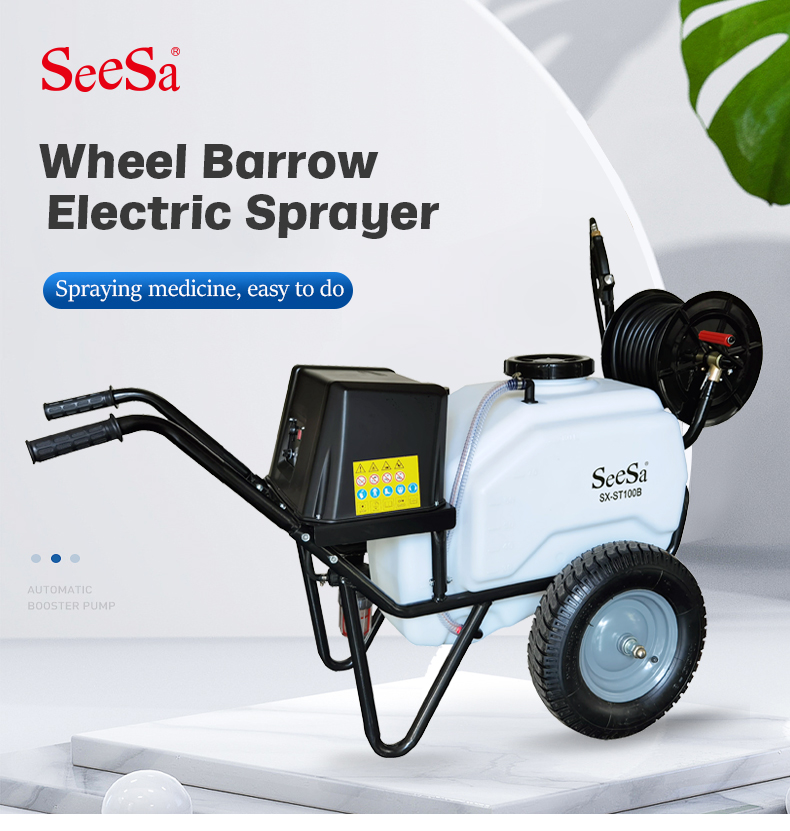

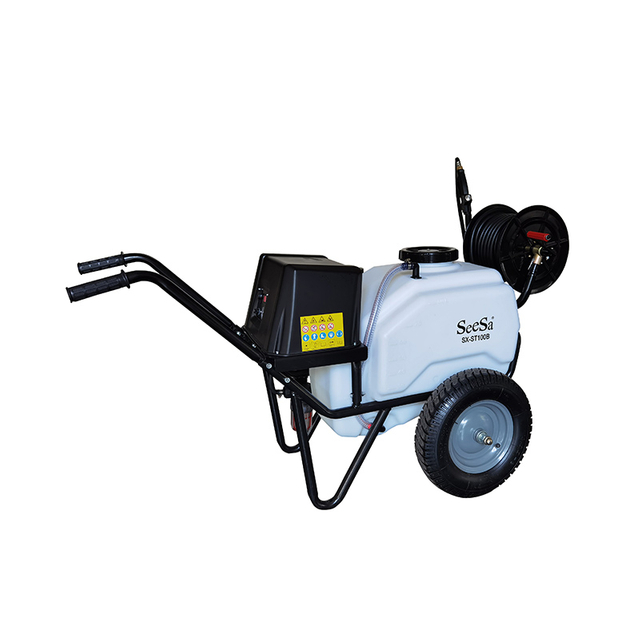
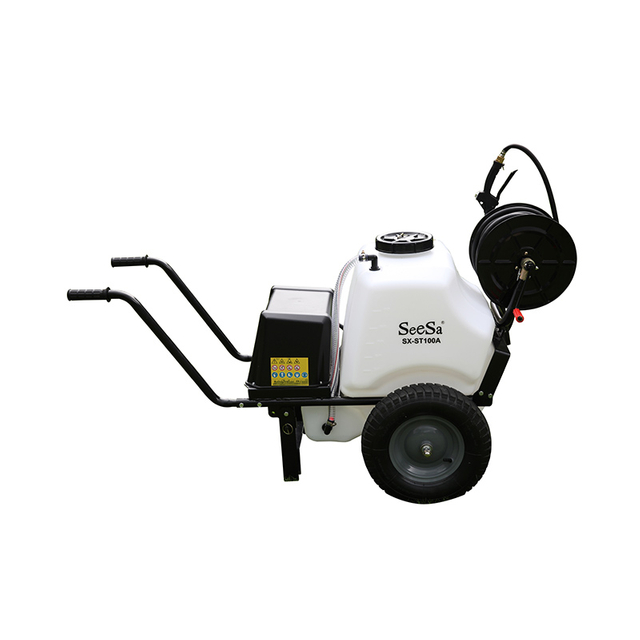
The SX-ST80B combines an 80L spray tank, battery-powered pressure system and push-pull wheelbarrow frame in one mobile spraying unit. It is designed for users who need more liquid capacity and working range than a typical backpack sprayer while still requiring equipment that can be moved manually between crop rows, greenhouse areas, orchards and landscaped sites.
Its 12V electrical system drives a 100W diaphragm pump, removing the need for continuous manual pumping. A pressure regulator with gauge allows the operator to monitor and adjust pressure for different spraying tasks, while the adjustable nozzle supports both fine mist and more concentrated jet spraying.
The integrated 30m reinforced hose and hose reel allow the spray tank to remain in a convenient position while the operator works around nearby plants, trees or treatment areas.

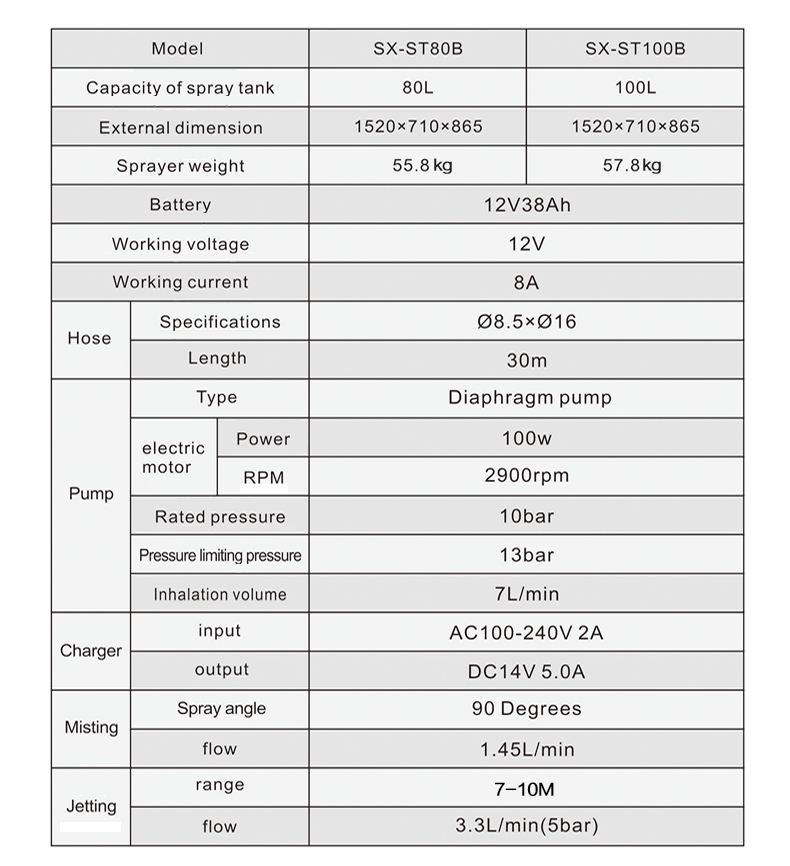
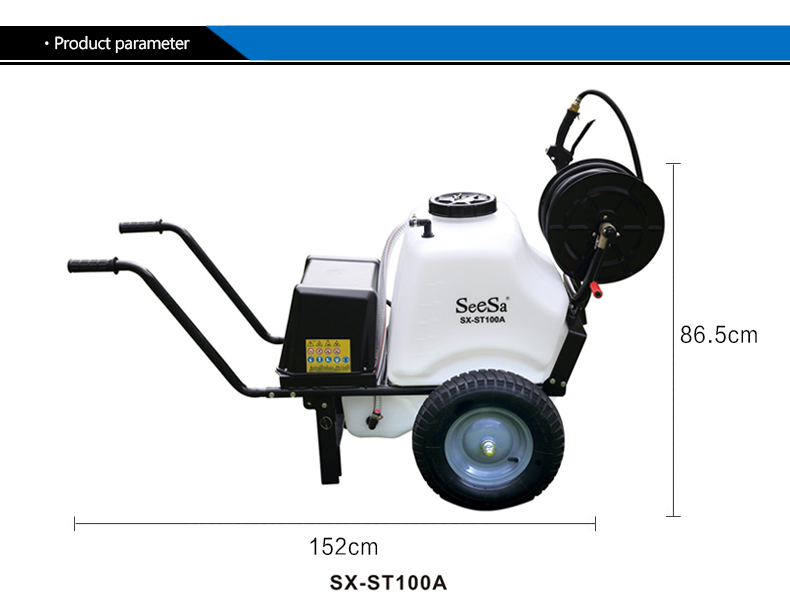
Model | SX-ST80B | SX-ST100B | ||
Capacity of spray tank | 80L | 100L | ||
External dimension | 1520×710×865 | 1520×710×865 | ||
Sprayer weight | 55.8 kg | 57.8 kg | ||
Battery | 12V 38Ah | |||
Working voltage | 12V | |||
Working current | 8A | |||
Hose | Specifications | Ø8.5 × Ø16 | ||
Length | 30m | |||
Pump | Type | Diaphragm pump | ||
Electric | Power | 100W | ||
RPM | 2900 rpm | |||
Rated pressure | 10 bar | |||
Pressure limiting pressure | 13 bar | |||
Inhalation volume | 7 L/min | |||
Charger | Input | AC 100-240V 2A | ||
Output | DC 14V 5.0A | |||
Misting | Spray angle | 90 Degrees | ||
Flow | 1.45 L/min | |||
Jetting | Range | 7 – 10 M | ||
Flow | 3.3 L/min (5 bar) | |||
The SX-ST80B wheelbarrow sprayer combines spray control, liquid management, hose storage and mobile operation in a single frame. Its components are arranged to make filling, pressure adjustment, spraying, movement and cleaning more practical during routine agricultural and landscape work.
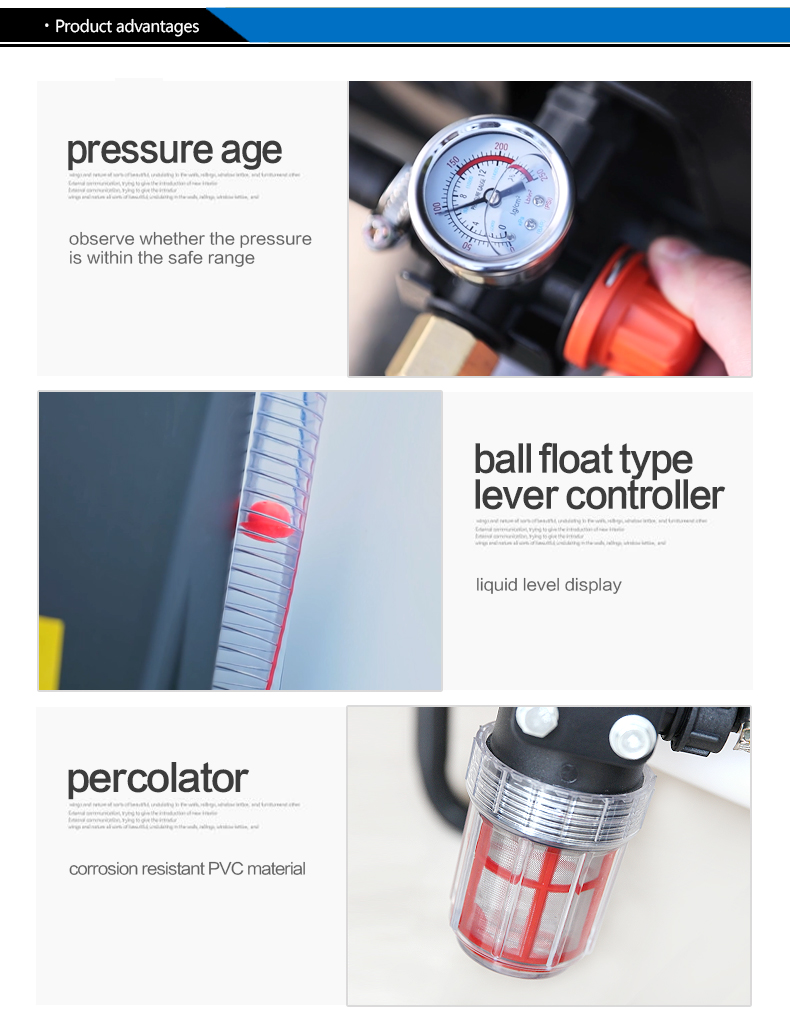
The built-in pressure gauge gives the operator a clear visual reference while adjusting working pressure.
Pressure can be increased or reduced according to the required spray pattern and application. The pump has a rated pressure of 10 bar, with a pressure limiting value of 13 bar.

This arrangement helps operators avoid relying only on visual spray appearance when setting the machine for different tasks.
A transparent liquid-level tube with a floating indicator provides a quick way to check the remaining liquid in the tank.

The operator can see the approximate tank level without repeatedly opening the tank lid, making it easier to decide when the sprayer needs refilling.
The SX-ST80B uses an external filter with a transparent housing.

The visible filter chamber makes accumulated debris easier to notice, while the external position allows the filter to be accessed for routine cleaning. Filtering the liquid before it reaches downstream components also helps reduce the chance of impurities entering the pump, hose or spray nozzle.
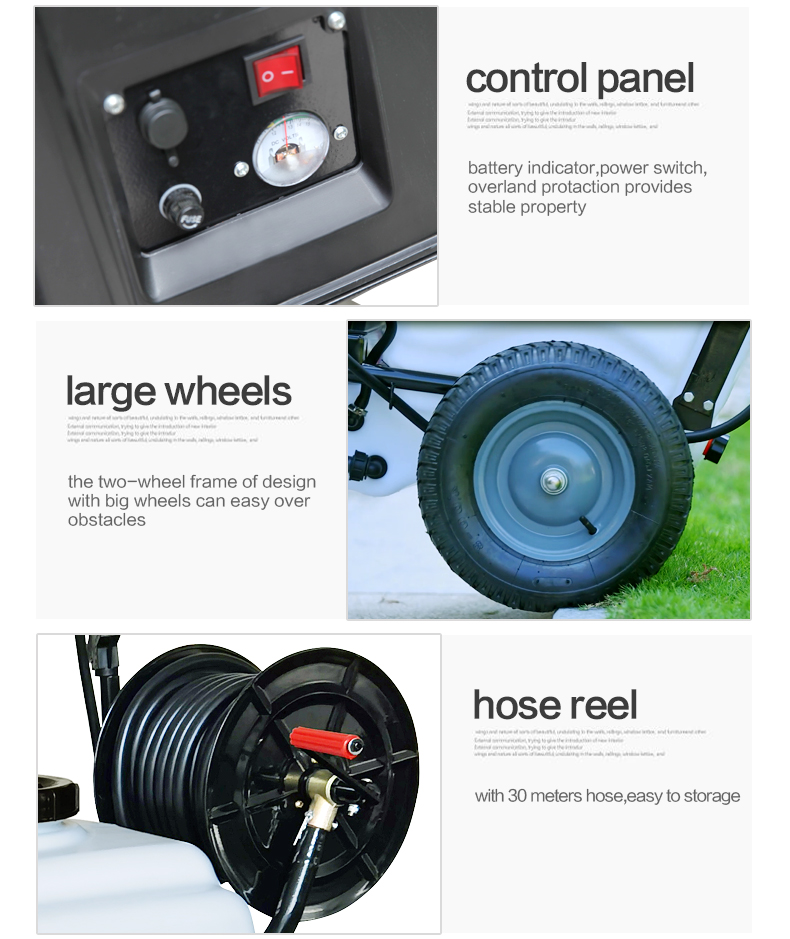
The control panel groups the main electrical controls in one accessible location.

It includes the power switch and battery indication, while the electrical system incorporates overload protection. The layout allows the operator to check the power status and control the spraying system without unnecessary adjustment around the pump assembly.
Large inflatable wheels support the push-and-pull design of the wheelbarrow sprayer.

Combined with the reinforced trolley frame, the wheel arrangement is intended to make the unit easier to move over common farm paths, garden surfaces and uneven working areas than a small-wheel trolley.
The wheels also help the operator reposition the 80L sprayer between treatment areas without carrying the tank.
A 30m reinforced high-pressure hose extends the operator's working area around the sprayer.

The hand-operated hose reel provides a dedicated place to store the hose after use, reducing loose hose around the machine during transport or storage.
For orchard rows, greenhouse sections and landscape areas, the long hose can also reduce the frequency with which the complete sprayer needs to be repositioned.
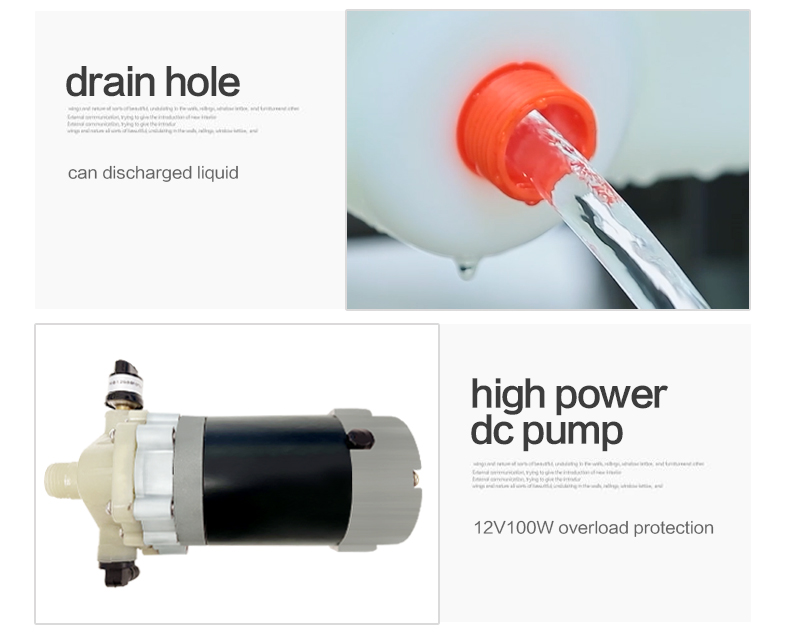
A dedicated drain outlet is positioned near the lower part of the tank.

It provides a practical route for discharging remaining liquid and draining rinse water during cleaning. This is especially useful after a spraying task when the tank and liquid circuit need to be emptied before changing formulations or storing the equipment.
The SX-ST80B is powered by a 12V, 100W electric diaphragm pump operating at 2900 rpm.

The pump has a rated pressure of 10 bar and an intake capacity of 7 L/min. Electric operation provides continuous pressure without the repeated hand pumping required by manual sprayers.
Overload protection is incorporated into the system to help protect the electrical components during operation.
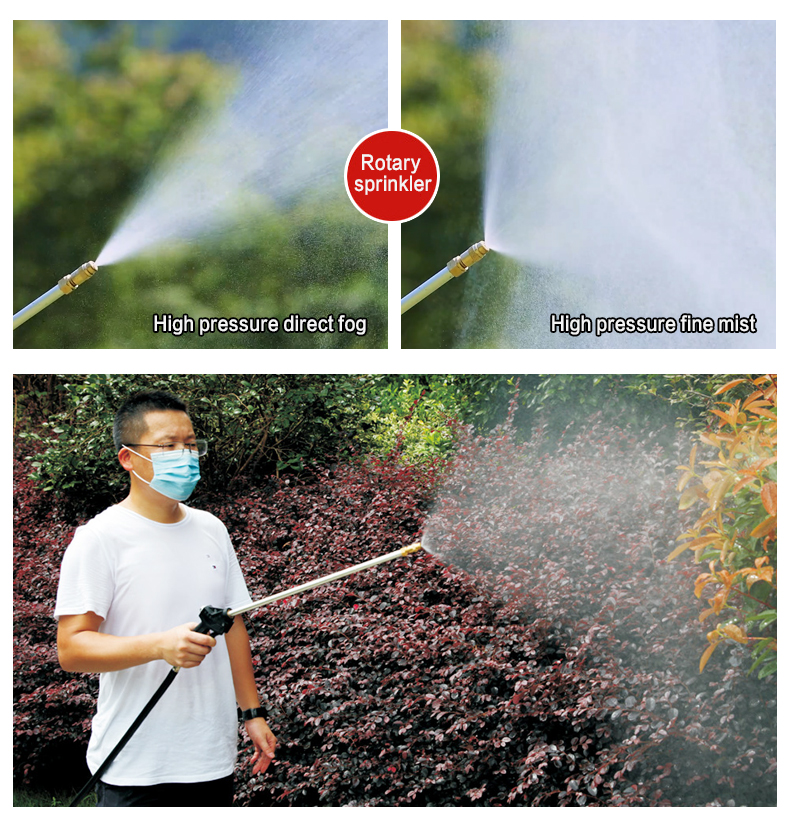
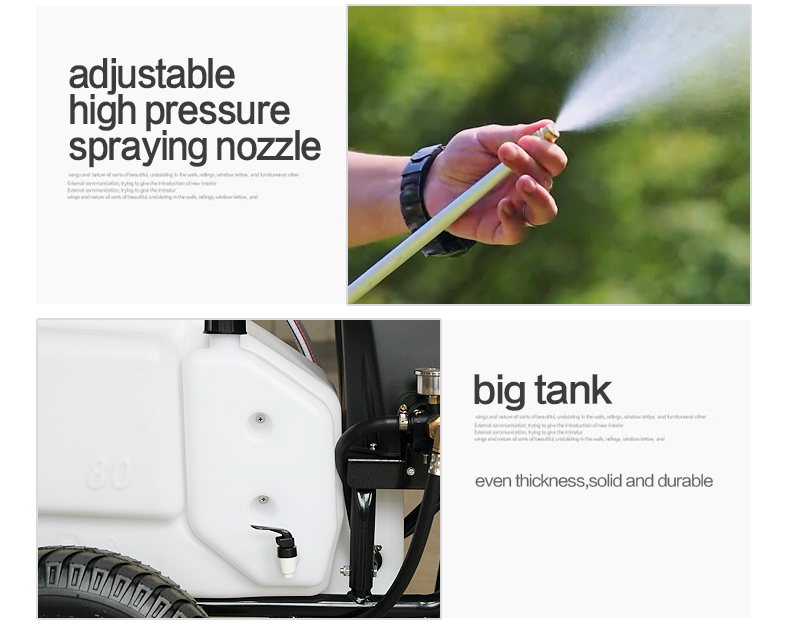
The spray nozzle can be adjusted between a fine mist pattern and a more concentrated jet.

Fine mist spraying is suitable when broader surface coverage is required, while the jet setting provides more focused spraying and additional reach.
The system provides a jetting range of up to 7 m, helping operators reach shrubs, trees and other areas that may be difficult to approach directly.
The 80L tank provides a useful balance between liquid capacity and wheelbarrow-style mobility.

The tank is manufactured from high-density polyethylene and designed with controlled wall thickness for strength and resistance to normal agricultural spraying environments.
A large filling opening simplifies refilling, while the liquid-level indicator and lower drain outlet make the tank easier to monitor and clean during daily operation.
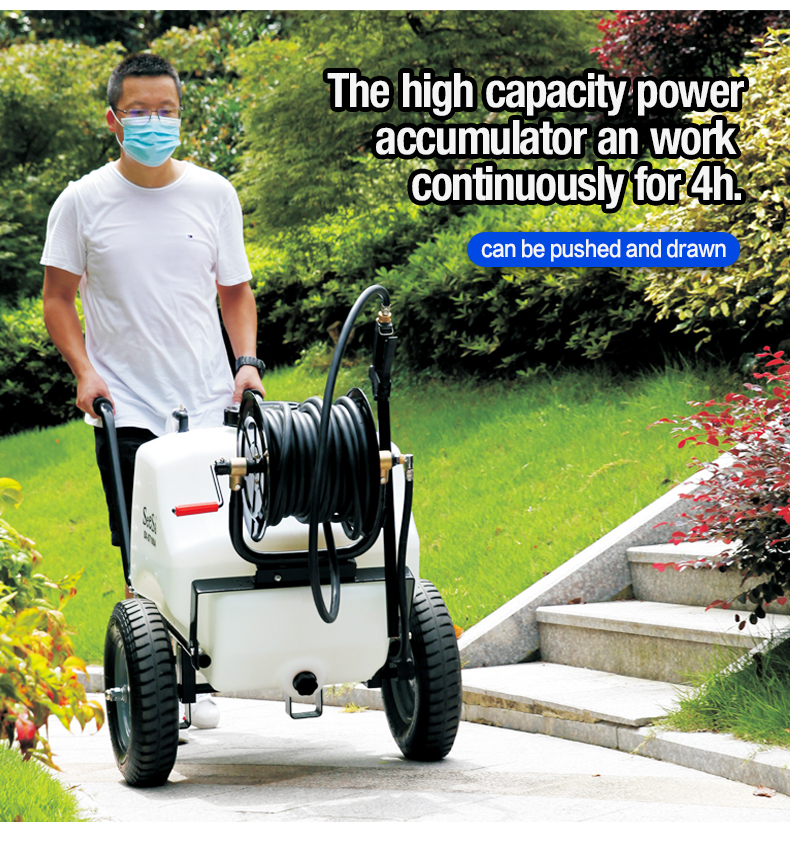
The SX-ST80B uses a 12V 38Ah rechargeable battery to power the spraying system.
With a working voltage of 12V and working current of 8A, the battery provides cordless pump operation without requiring a nearby electrical connection during spraying. Under suitable operating conditions, the high-capacity battery can support continuous operation for up to approximately four hours.
Battery power is particularly practical for orchards, greenhouses, farms and landscaping sites where the operator needs to move between separate treatment areas.
The supplied charging system accepts AC 100–240V input and provides DC 14V, 5.0A output for the battery.
Different crops and treatment areas do not always require the same spray pattern.
The SX-ST80B adjustable nozzle allows the operator to change from a fine mist to a more concentrated spray according to the task.
For misting operation, the nozzle provides a 90° spray angle with a flow rate of approximately 1.45 L/min. For jetting, the sprayer can reach up to 7 m, with a flow rate of approximately 3.3 L/min at 5 bar.
This flexibility allows one sprayer to handle both broader coverage and more targeted application without requiring a completely different spraying unit.
An 80L tank provides useful working capacity, but mobility is equally important once the tank has been filled.
The SX-ST80B uses a two-wheel push-pull frame with large pneumatic wheels to make the sprayer easier to move through working areas. Instead of carrying the liquid on the operator's back, the tank weight is supported by the wheeled frame.
Once the sprayer is positioned, the 30m hose allows the operator to move away from the main tank while spraying.
This combination is useful in locations where the sprayer needs to work around greenhouse beds, orchard trees, crop rows, gardens or landscaping without repeatedly moving the entire unit.
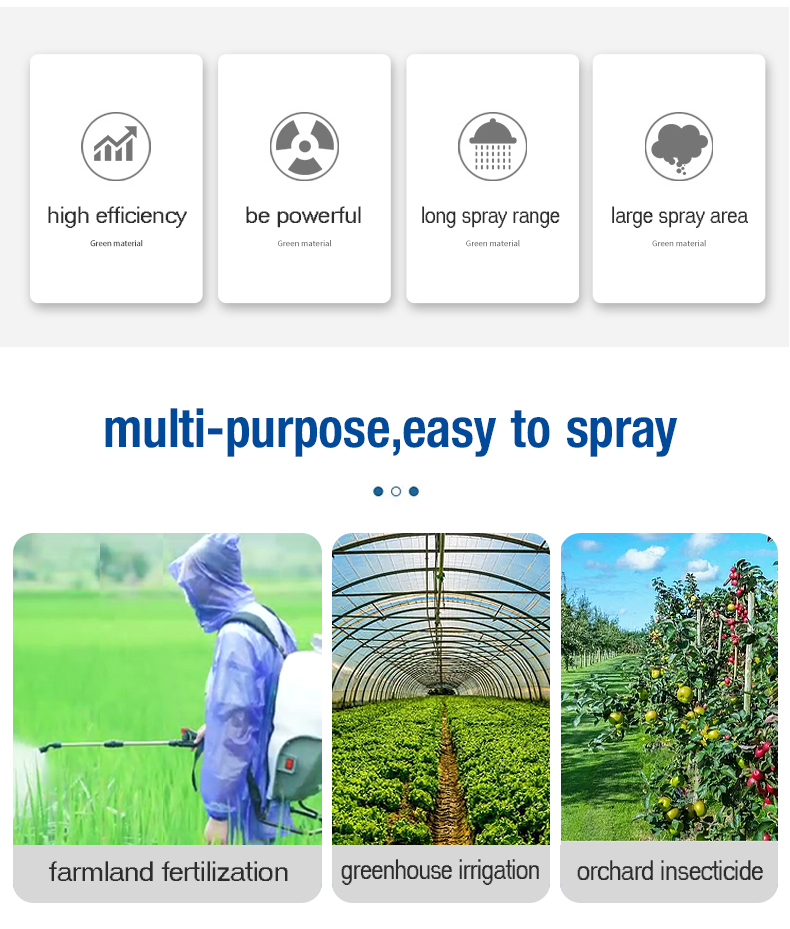
The SX-ST80B 80L wheelbarrow sprayer is designed for a range of agricultural, horticultural and landscape spraying tasks.

The large tank and battery-powered pump can be used for applying compatible liquid fertilizers across crop areas where repeated manual pumping would be inconvenient.
The adjustable pressure and nozzle allow the spray output to be adapted to the required application method.
Battery power eliminates the need for a combustion engine to drive the spray pump, making the unit practical for mobile spraying around greenhouse crop rows.
The 30m hose gives the operator additional reach around planting areas while the main tank remains positioned in an accessible location.
Always follow the product label, ventilation requirements and local safety procedures when applying plant-protection products in enclosed growing environments.
The adjustable high-pressure nozzle and long hose are useful when treating fruit trees and other orchard plants.
Operators can select a mist pattern for broader foliage coverage or a more concentrated jet when additional reach is required.
The SX-ST80B can also be used around gardens, nurseries, shrubs, lawns and landscaped areas where a larger mobile sprayer is more practical than repeatedly refilling a small portable unit.
Only use liquids that are compatible with the sprayer materials and approved for the intended application.

Correct routine care helps maintain consistent spraying performance and reduces unnecessary blockage or downtime.
Before each use, check the battery condition, hose connections, spray nozzle and visible filter. Make sure the pressure adjustment is set appropriately before beginning the spraying task.
When filling the tank, prevent leaves, soil or other debris from entering the liquid. The external filter provides additional protection, but keeping contamination out of the tank reduces unnecessary filter and nozzle cleaning.
After spraying, discharge the remaining liquid according to the instructions for the product being applied. Flush the tank, hose, filter and nozzle using an appropriate cleaning method for the formulation.
The transparent external filter should be inspected regularly and cleaned when debris becomes visible.
Before long-term storage, remove residual liquid from the tank, pump and hose system. In locations where freezing temperatures occur, make sure water is not left inside the pump or pipelines.
Battery charging and long-term battery maintenance should follow the instructions supplied with the sprayer.
No. The battery powers the spraying pump rather than the wheels. The SX-ST80B uses a push-and-pull wheelbarrow frame with large wheels for manual movement.
The spraying system is designed around modular spray components. Depending on the required configuration, a high-pressure spray gun or suitable spray wand arrangement may be available. Confirm the required spraying accessory when placing an order.
Chemical compatibility depends on the formulation and the materials used in the tank, pump, seals, hose, filter and nozzle. Before using pesticides, herbicides, fertilizers or other solutions, check the chemical manufacturer's instructions and confirm compatibility with the sprayer.
Switch off the sprayer and release system pressure before servicing the filter. Remove the transparent filter housing according to the operating instructions, clean accumulated debris, inspect the sealing components and reinstall the filter securely before restarting the machine.
Empty and clean the tank, flush the hose and spraying components, remove residual water from the pump and pipeline, and store the machine in an appropriate protected location. The battery should also be maintained according to the charging and storage instructions in the user manual.
For a more accurate quotation, provide the required quantity, destination country, intended application, preferred spray gun or wand configuration, and any packaging or product configuration requirements.