|


ST80A
SeeSa


When a backpack sprayer is too small but a vehicle-mounted unit is unnecessary, the SX-ST80A offers a practical middle option. The 80L tank reduces refill interruptions, while the two-wheel frame and twin handles let the operator position the sprayer near the work area. For other capacities and configurations, explore the full range of battery-powered wheelbarrow sprayers.
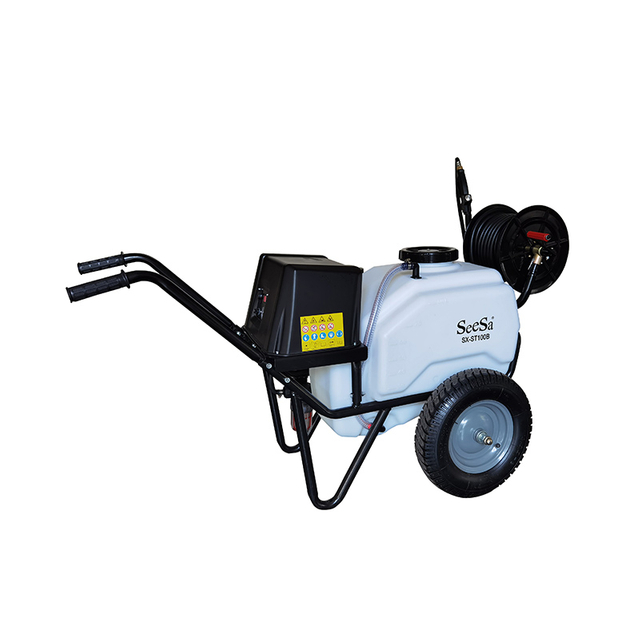
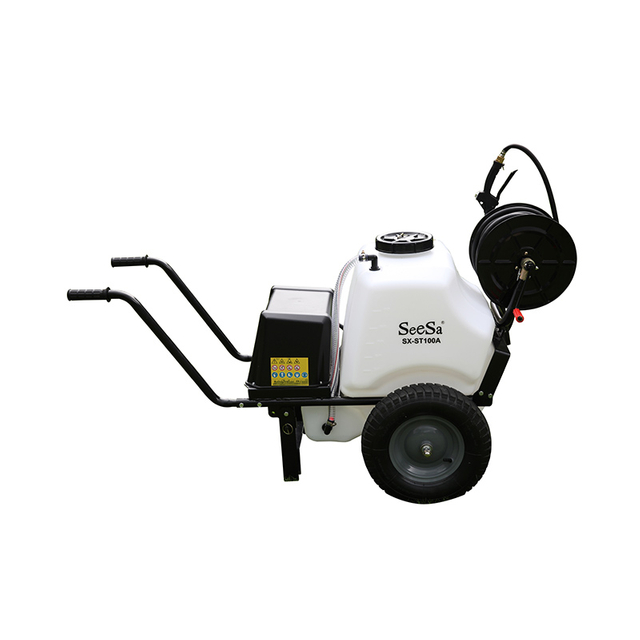
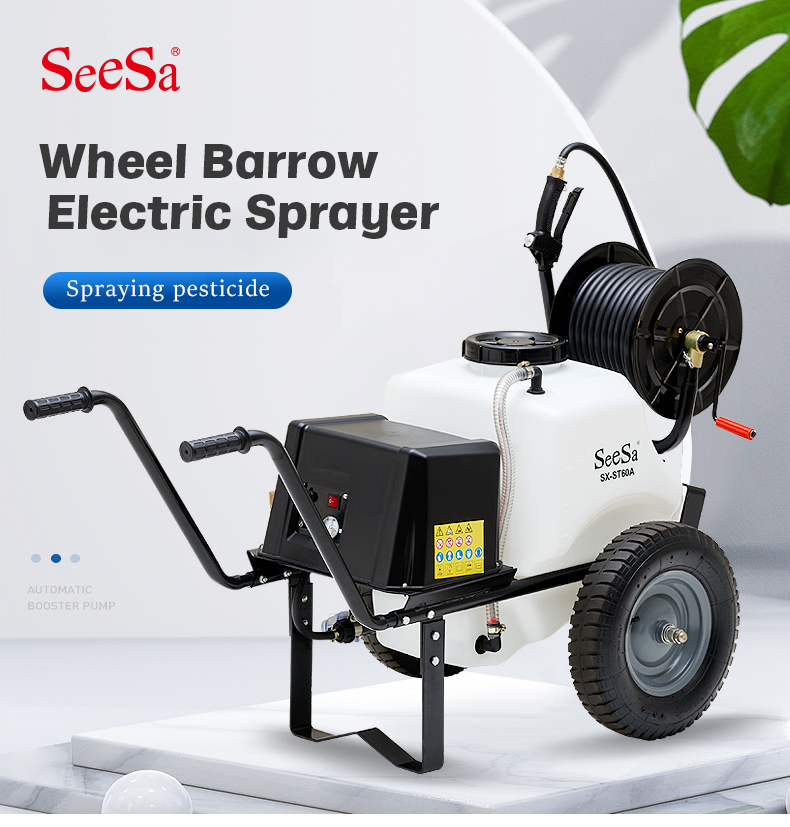
The machine carries the tank, pump, battery and hose reel on one frame. This arrangement keeps the spraying system together during transport and provides a stable standing position when the front support is placed on level ground.
The SX-ST80A combines its tank, battery, pump, hose reel and operating controls on one mobile frame. Each component shown in the product images supports a specific part of the spraying process, from filling and pressure control to hose management and end-of-job cleaning.
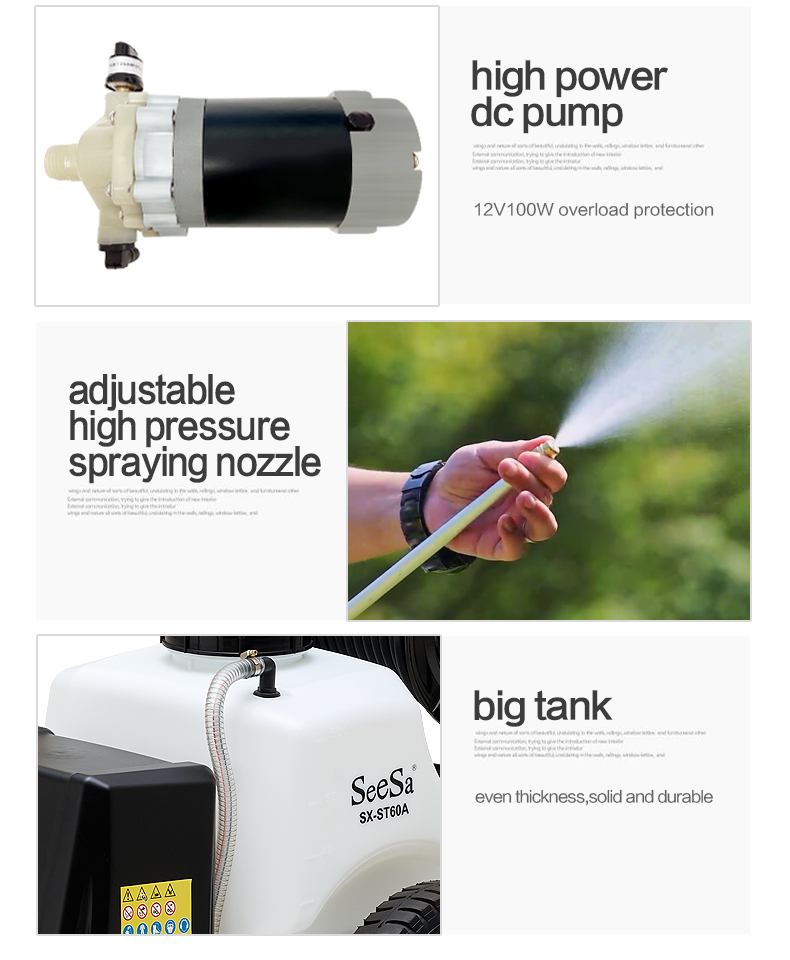
The 80L tank provides more working capacity than a backpack sprayer and reduces the number of refill stops during orchard, greenhouse and farmland spraying. Its molded, even-wall construction is designed to remain securely supported by the wheelbarrow frame during filling, transport and operation.

The 12V electrical system drives a 100W DC diaphragm pump at 2,900 rpm, removing the need for manual pumping. The product is rated for 10 bar working pressure and includes a 13 bar pressure-limiting setting. Overload protection is incorporated into the electrical system to help protect the pump during operation.

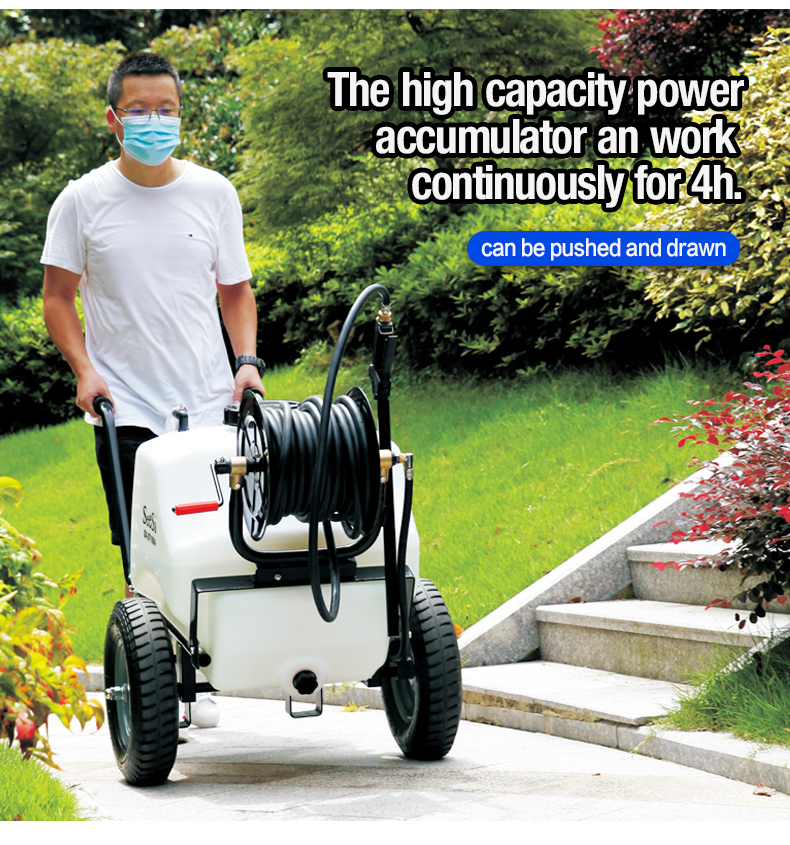
The 12V 38Ah battery is designed for extended mobile spraying. The product imagery indicates approximately four hours of continuous operation; actual runtime can vary with pressure, spray pattern, operating cycle, battery condition and ambient temperature.
SeeSa also supplies other electric sprayer configurations for different tank sizes, carrying methods and field requirements.
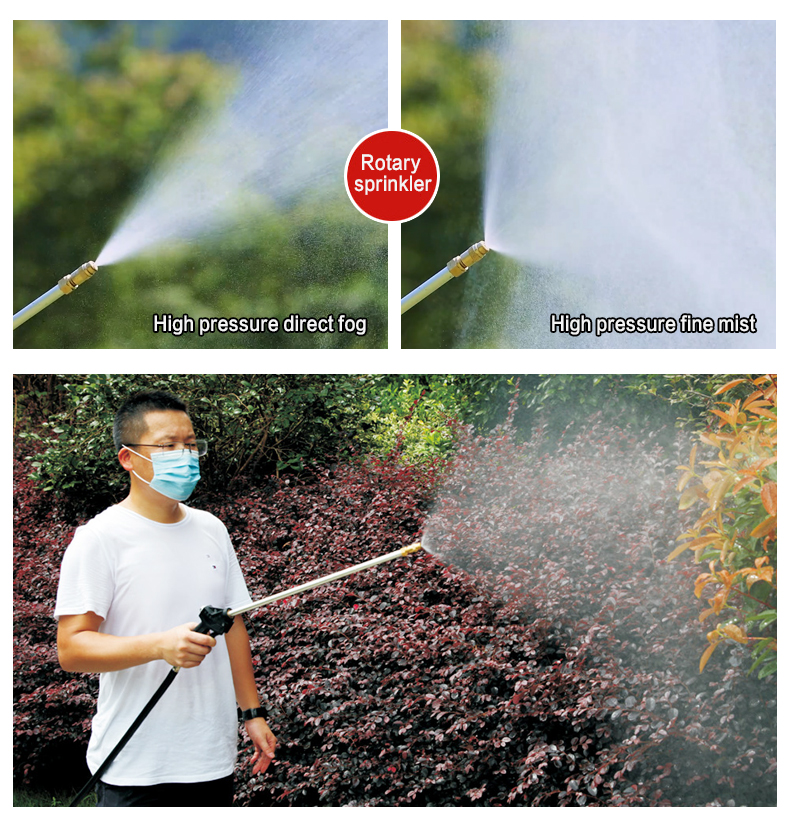
The adjustable nozzle switches between a concentrated direct spray and a finer mist. The direct setting helps reach selected plants or surfaces, while the fine-mist setting distributes smaller droplets over a broader target area. The specified misting angle is 90°, with a mist flow of 1.45 L/min. In jetting mode, the listed range is 7m and the flow is 3.3 L/min at 5 bar.

Before spraying, match the nozzle pattern and pressure to the chemical label, crop, target area and weather conditions. Test the selected pattern with clean water whenever the nozzle or pressure setting has been changed.

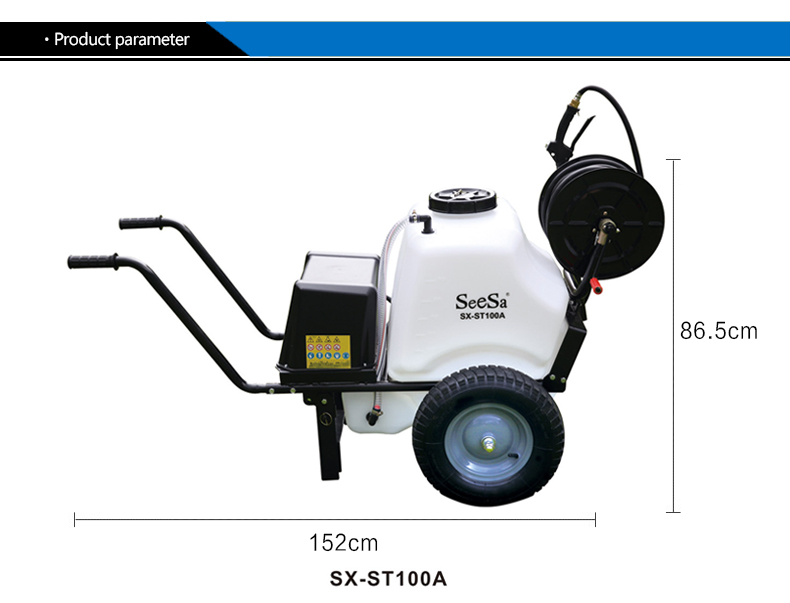
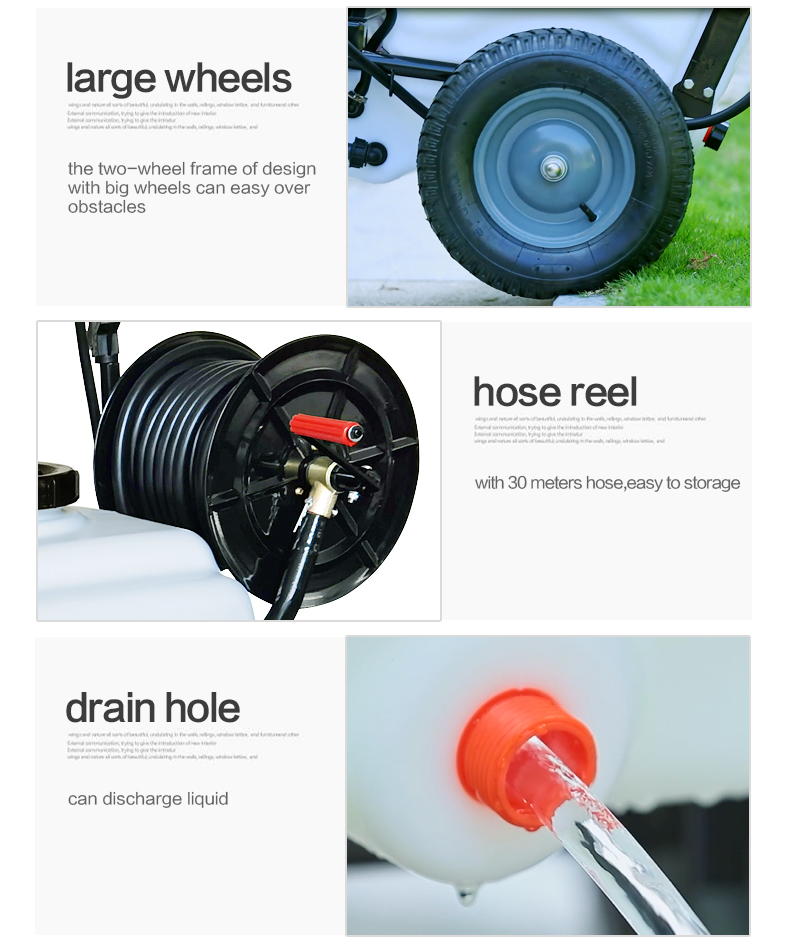
The integrated reel keeps the supplied 30m hose stored on the frame instead of leaving it loose around the tank. The operator can park the sprayer, extend only the required hose length and move through nearby rows or planted areas with the lance. Rewinding the hose after use keeps storage more orderly and helps reduce twisting and kinking.

The hose specification is listed as Ø8.5 × Ø16. Its 30m length is useful in greenhouses, gardens and orchard rows where repeatedly moving a filled tank would be inefficient.
Two large wheels support the tank and spraying system during manual transport. The paired handles allow the unit to be pushed or pulled, while the front support holds the frame upright when parked. The wheel size helps the cart pass over minor surface irregularities encountered in gardens and managed planting areas.

Plan the route before filling. Reduce the liquid load when slopes, narrow access or uneven ground make a full 80L tank difficult to control, and do not leave a filled machine where it could roll or tip.
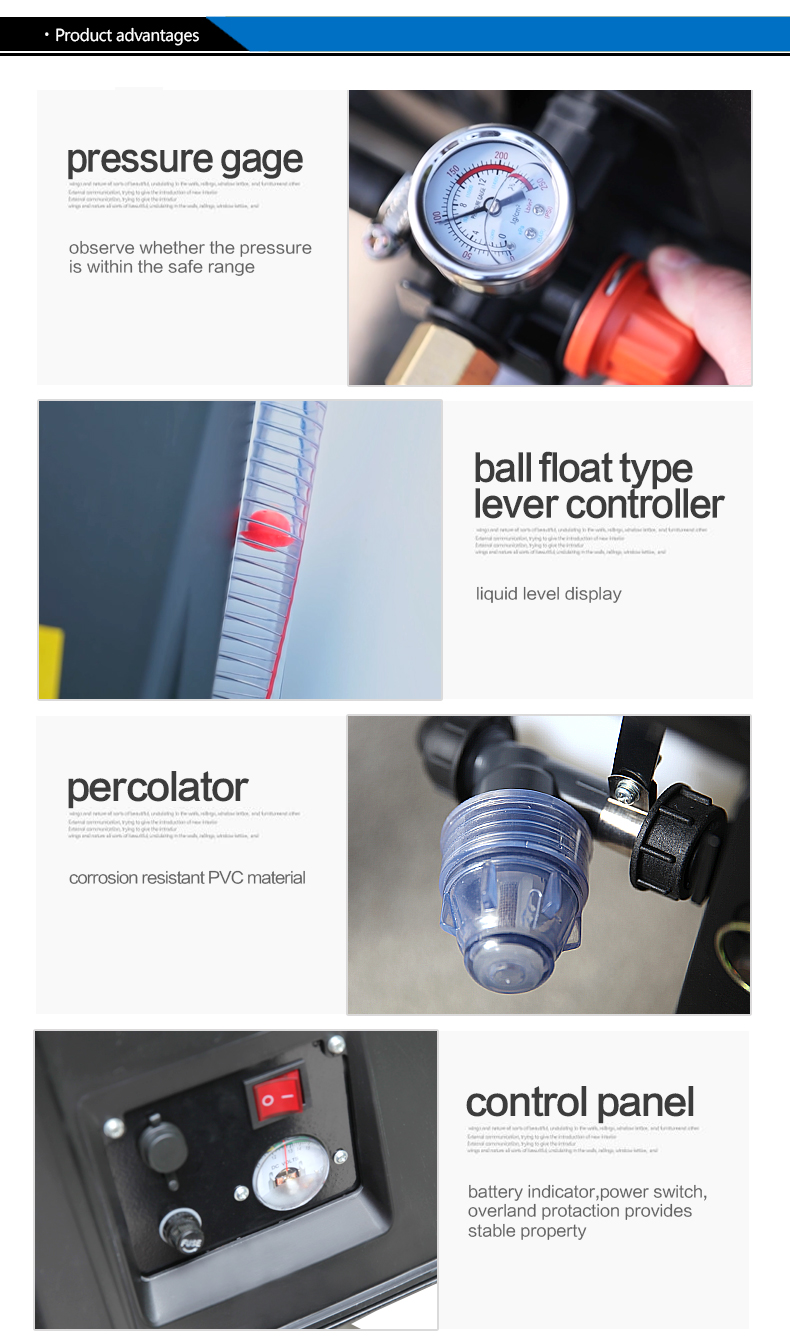
The pressure gauge gives the operator a direct reading while spraying, making it easier to keep the system within its intended working range. Pressure can be adjusted gradually according to the required pattern and reach rather than relying on the highest setting for every task.

A float-type level indicator provides a visible reference for the liquid remaining in the tank. This helps the operator plan refills and stop the pump before the tank runs empty.

The transparent, corrosion-resistant PVC inline filter helps intercept debris before it reaches the pump and nozzle. Its clear housing allows the operator to inspect the filter condition without first opening the liquid system.

A drain outlet at the bottom of the tank makes it easier to remove residual liquid and rinse water. After spraying, empty the tank according to the chemical label, circulate clean water through the hose and nozzle, inspect the filter and drain the system before storage.

The battery indicator, power switch, charging connection and system protection components are grouped on one panel. This arrangement gives the operator a quick battery-status check and straightforward access to the main electrical controls before starting work.

The supplied charger accepts AC 100–240V, 2A input and provides DC 14V, 5.0A output. Confirm the destination plug type when ordering and keep the charger in a dry area during use and storage.
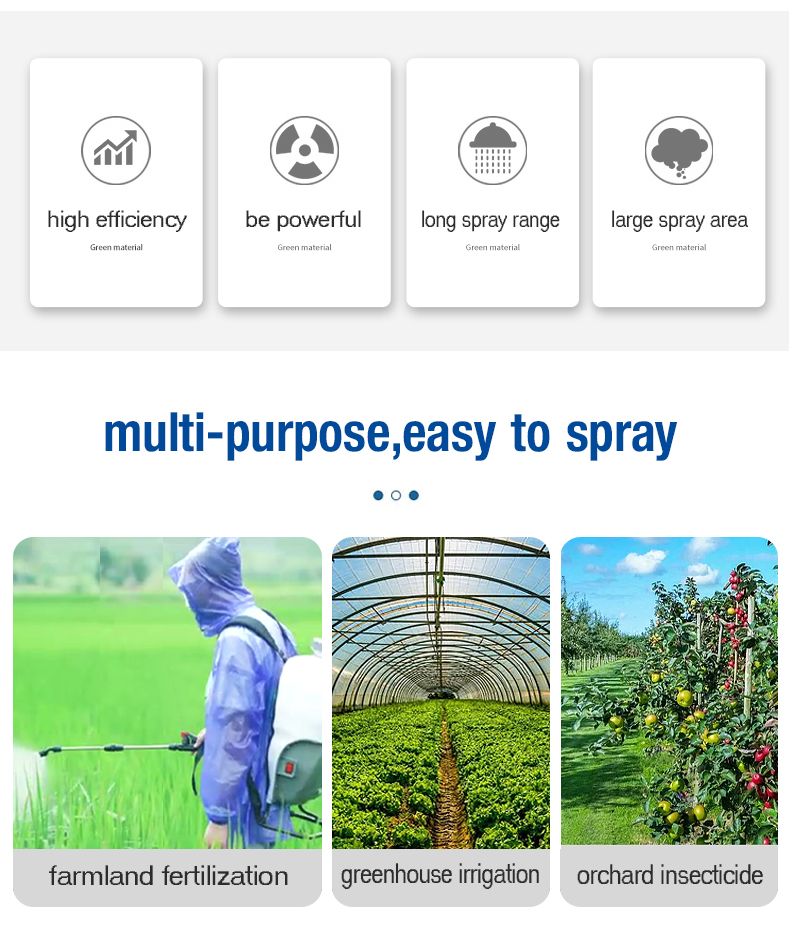
The SX-ST80A is designed for mobile liquid application where a larger tank and a long hose improve access. Typical work includes:

Crop-protection spraying in orchards and planted areas
Foliar fertilizer application on farmland
Greenhouse plant treatment and irrigation support
Garden and landscape maintenance
Targeted spraying around nurseries and managed green spaces

Chemical compatibility must be confirmed before use. Do not assume that every pesticide, fertilizer, disinfectant or cleaning solution is suitable for the tank, pump, seals, filter, hose and nozzle.
Inspect the hose, nozzle, filter, tank outlet and electrical connections.
Confirm that the battery is adequately charged for the planned work.
Place the machine on stable ground and fill only the amount required.
Wear the personal protective equipment specified by the chemical manufacturer.
Test the spray pattern with clean water and check the gauge for a stable reading.
Switch off the unit and release pressure from the hose and lance.
Dispose of residual liquid according to the product label and local rules.
Flush the tank, filter, hose and nozzle with a suitable cleaning solution.
Drain the system and allow components to dry before storage.
Store the sprayer and charger in a dry, protected area away from children and unauthorized users.
Specification | SX-ST60A | SX-ST80A | SX-ST100A |
|---|---|---|---|
Spray tank capacity | 60L | 80L | 100L |
External dimensions | 107.5 × 57 × 82cm | 107.5 × 58.5 × 84cm | 107.5 × 61 × 90cm |
Sprayer weight | 54.4 | 56.5 | 58.5 |

Item | Specification |
|---|---|
Battery | 12V 38Ah |
Working voltage | 12V |
Working current | 8A |
Hose specification | Ø8.5 × Ø16 |
Hose length | 30m |
Pump type | Diaphragm pump |
Electric motor power | 100W |
Motor speed | 2,900 rpm |
Rated pressure | 10 bar |
Pressure-limiting setting | 13 bar |
Inlet volume | 7 L/min |
Charger input | AC 100–240V, 2A |
Charger output | DC 14V, 5.0A |
Misting spray angle | 90° |
Misting flow | 1.45 L/min |
Jetting range | 7m |
Jetting flow | 3.3 L/min at 5 bar |
The SX-ST80A balances liquid capacity with manual mobility. It is suited to buyers who need fewer refills than a 60L model but do not require the full capacity of a 100L unit. When comparing models, consider the area treated per batch, access width, ground conditions, transport method and the weight the operator can safely control.

For a smaller tank, review the SX-ST60A wheelbarrow sprayer. For longer work cycles where access allows a larger machine, compare the SX-ST100A wheelbarrow sprayer.
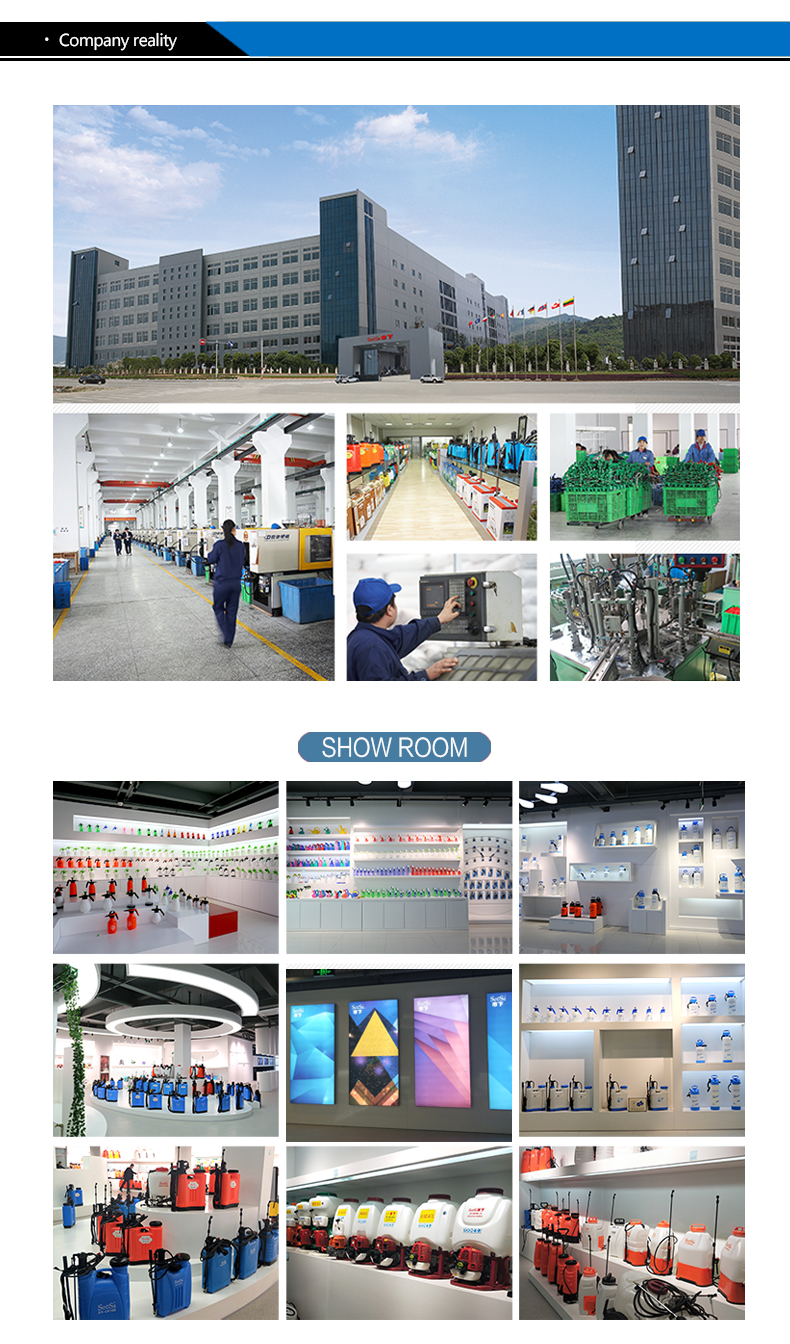
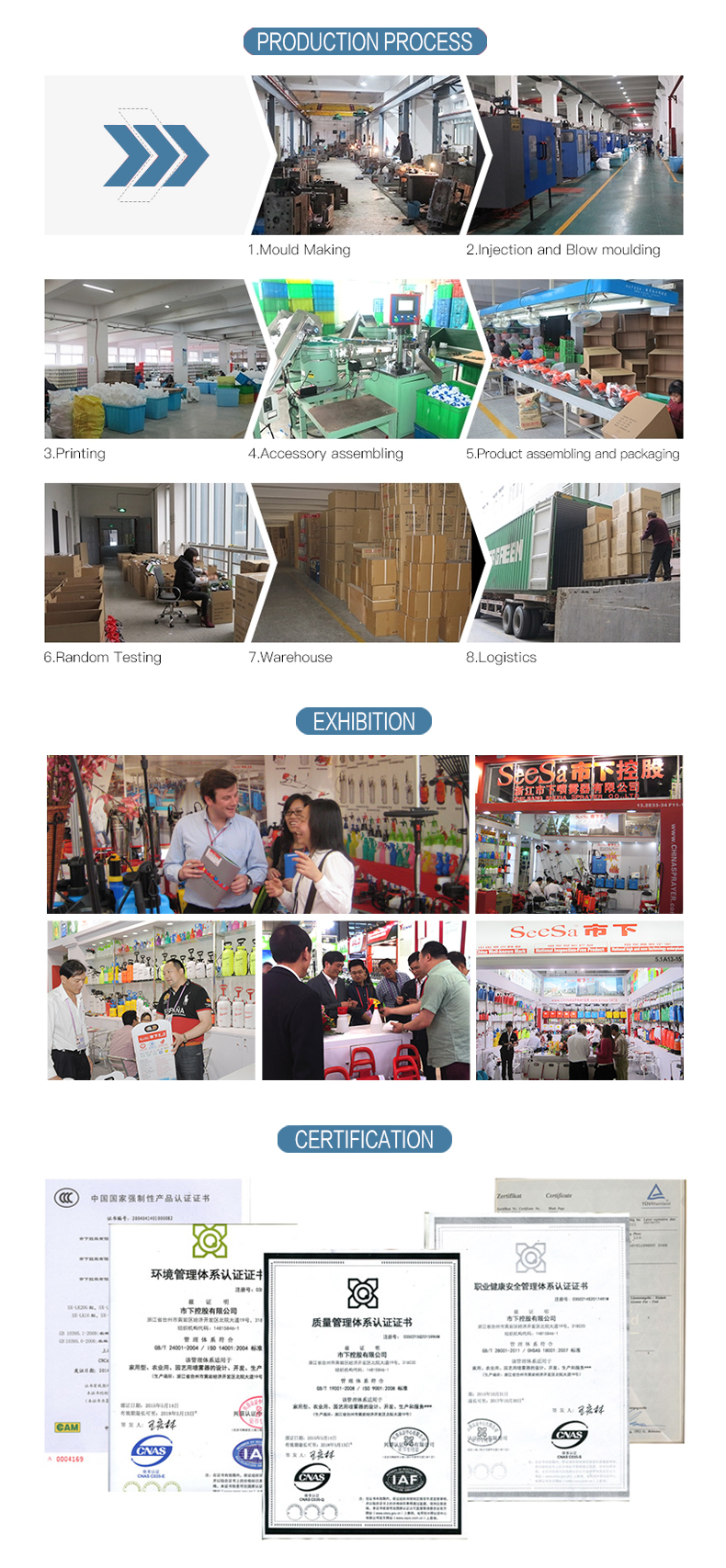
The SX-ST80A is manufactured by Shixia Holding Co., Ltd., the company behind the SeeSa sprayer brand. Established in 1978, the company develops and manufactures manual, electric and power sprayers for agricultural, garden and related liquid-application work. Learn more about SeeSa’s manufacturing background.
No self-propelled drive is specified for this model. It is a two-wheel sprayer designed to be moved manually using its push-pull handles. Buyers requiring powered traction should not treat “battery-powered” as meaning the wheels are motor-driven.
Compatibility depends on the complete formulation and every wetted component, including the tank, pump diaphragm, seals, hose, filter and nozzle. Provide the liquid name, concentration, pH and safety data sheet for review before ordering. Do not use flammable liquids unless the manufacturer has expressly approved the application.
The product information does not specify charging-time operation. Use the sprayer on battery power after charging, and keep the charger in a dry area. Only operate while connected to a charger if the supplied manual and manufacturer explicitly permit it.
No. The listed rated pressure is 10 bar. The 13 bar figure is the pressure-limiting setting and should not be presented as the normal operating pressure.
The current product information shows a spray lance, adjustable nozzle, 30m hose and hose reel, but it does not confirm a spray boom as standard equipment. Ask SeeSa to confirm the packing list and any optional attachments required for the intended application.
Provide the required quantity, destination market, intended spray liquid, application, expected daily operating time, plug standard and any packaging or documentation requirements. This allows the supplier to check configuration and compatibility before quotation.
The listed charger input is AC 100–240V, 2A, but the current product information does not identify the wall-plug type. Specify the destination country in the inquiry and ask SeeSa to confirm the plug before shipment.